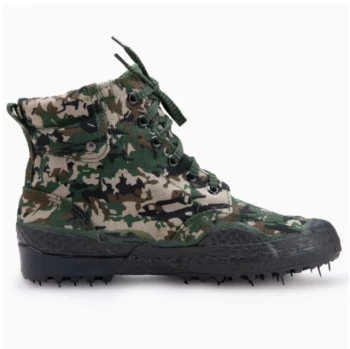
At their core, hunting boots are specialized equipment designed to provide environmental protection, stability, and comfort in demanding conditions. The key features that enable this are robust waterproofing to keep feet dry, targeted insulation for warmth, rigid ankle support for stability on uneven terrain, aggressive outsoles for superior traction, and reinforced construction for protection and durability.
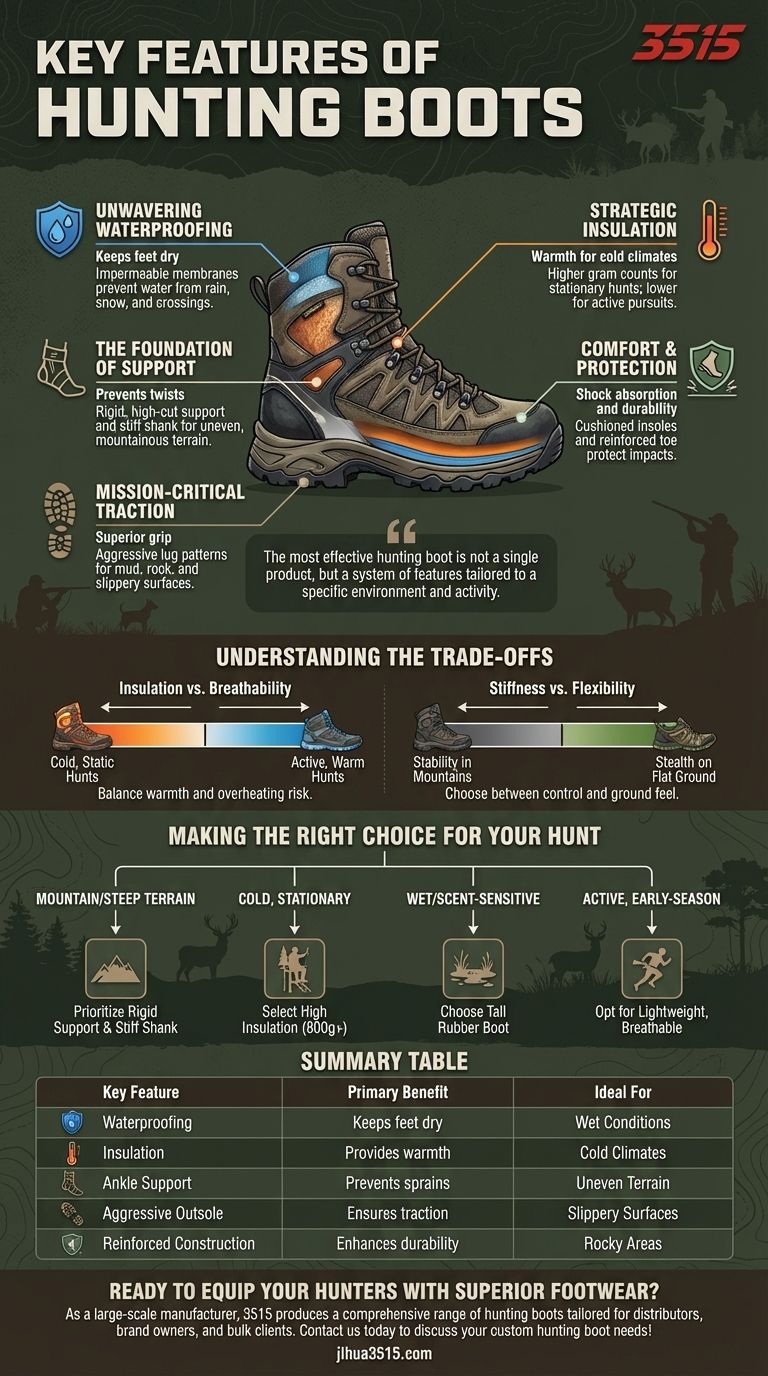
The most effective hunting boot is not a single product, but a system of features tailored to a specific environment and activity. Understanding how waterproofing, support, and insulation function as a unit is the key to selecting footwear that enhances your safety and endurance in the field.
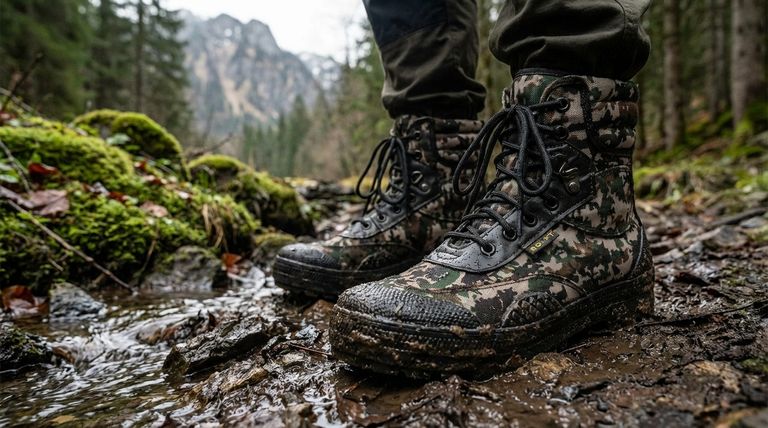
Core Features for Environmental Dominance
A hunting boot's value is measured by its performance when conditions are at their worst. Each feature serves a critical function in keeping you safe, comfortable, and focused on the hunt, not on your feet.
Unwavering Waterproofing
Your feet must stay dry. Waterproof membranes are a non-negotiable feature, preventing water from rain, snow, or creek crossings from soaking your socks.
This is critical not only for comfort but for preventing blisters and maintaining proper body temperature regulation in cold weather.
Strategic Insulation
Insulation provides warmth in cold climates and is measured in grams. A higher gram count means more insulation for colder, more stationary hunts, like sitting in a tree stand.
Lower insulation levels are better for milder weather or active, high-exertion hunts where your body generates more heat.
The Foundation of Support
Hunting often involves navigating treacherous and uneven ground. Sturdy, high-cut ankle support is essential for preventing twists and sprains.
For mountainous terrain, this is even more critical. A stiff boot with a thick internal shank provides the rigidity needed to maintain control and reduce foot fatigue when side-hilling or climbing.
Mission-Critical Traction
The outsole is where the boot meets the ground. A high-quality hunting boot features an aggressive lug pattern designed to grip mud, rock, and slippery surfaces.
These outsoles are often made from durable, non-slip rubber compounds that shed mud and debris, ensuring consistent traction when you need it most.
Comfort and Protection
Beyond the primary features, components like cushioned insoles provide shock absorption, reducing the impact of walking on hard ground over long distances.
Many boots also include reinforced toe caps, which protect your feet from impacts with rocks, roots, and other hazards.
Understanding the Trade-offs
Choosing the perfect boot involves balancing competing needs. The right choice for a late-season mountain hunt is the wrong choice for an early-season stalk in the lowlands.
Insulation vs. Breathability
Heavily insulated boots are excellent for cold, static hunts but will cause your feet to overheat and sweat during active, early-season pursuits.
Conversely, a lightweight, uninsulated boot offers maximum breathability for warm weather but provides no protection when the temperature drops.
Stiffness vs. Flexibility
A rigid boot with a strong shank is ideal for providing stability in the mountains. However, that same stiffness can feel clumsy and loud when stalking game on flat, quiet ground.
More flexible boots offer a better "feel" for the ground beneath you, allowing for a stealthier approach at the cost of maximum support.
Material and Scent Control
Different materials offer unique benefits. Rubber boots, for example, are exceptionally waterproof and help contain human scent, a critical factor for many hunters.
However, they often lack the breathability and long-distance comfort of traditional leather or synthetic lace-up boots. Proper cleaning and scent control practices are vital regardless of material.
Making the Right Choice for Your Hunt
Your specific hunting environment and style should dictate your boot's features. Match the tool to the task to ensure comfort and safety.
- If your primary focus is mountain or steep-terrain hunting: Prioritize rigid ankle support and a stiff shank for maximum stability.
- If your primary focus is cold-weather, stationary hunting: Select a boot with a high gram count of insulation (800g or more) to stay warm.
- If your primary focus is wet, swampy, or scent-sensitive hunting: Choose a tall rubber boot for its superior waterproofing and scent containment.
- If your primary focus is active, early-season hunting: Opt for a lightweight, breathable boot with minimal or no insulation for all-day comfort.
Ultimately, your hunting boots are one of the most critical pieces of gear you will own, directly impacting your endurance and effectiveness.
Summary Table:
| Key Feature | Primary Benefit | Ideal For |
|---|---|---|
| Waterproofing | Keeps feet dry in wet conditions | Rain, snow, creek crossings |
| Insulation | Provides warmth in cold climates | Cold, stationary hunts (tree stands) |
| Ankle Support | Prevents twists/sprains on uneven ground | Mountainous or treacherous terrain |
| Aggressive Outsole | Ensures superior traction | Mud, rock, slippery surfaces |
| Reinforced Construction | Enhances durability and protection | Long-distance hikes, rocky areas |
Ready to Equip Your Hunters with Superior Footwear?
As a large-scale manufacturer, 3515 produces a comprehensive range of hunting boots tailored for distributors, brand owners, and bulk clients. Our production capabilities ensure durable, high-performance boots with the right balance of waterproofing, insulation, and support for any terrain. Let us help you provide the gear that enhances safety and endurance in the field.
Contact us today to discuss your custom hunting boot needs!
Visual Guide
Related Products
- Wholesale Lightweight Tactical Boots Custom Manufacturer for Desert & Combat Use
- High-Traction Suede Tactical Boots Wholesale & Custom Manufacturing
- Durable Leather Tactical Boots Wholesale & Custom Manufacturing for Brands
- Durable Military Combat Boots with Water Drainage for Wholesale & OEM
- Wholesale Waterproof Tactical Boots Custom Suede & High-Traction Soles
People Also Ask
- What are the common types of combat boots? Find the Right Boot for Your Mission
- What specialized protections do tactical boots offer? Maximize Endurance with High-Performance Footwear
- How is the compatibility of polymer materials demonstrated in smart footwear? Enhancing Tactical & Training Performance
- How does additive manufacturing equipment reduce environmental risks? Sustainable Tactics for Modern Footwear Production
- What are the main construction similarities between tactical boots and tactical sneakers? Built for Performance & Durability