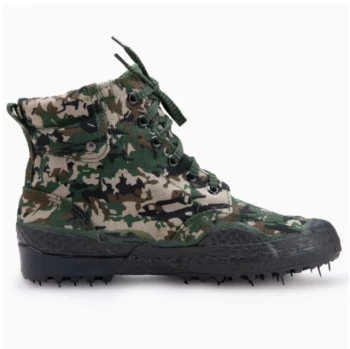
At its core, choosing the right hunting boot comes down to three critical environmental and physical factors: the terrain you will be hunting, the season and weather you expect, and the total weight of your body plus your pack. These three contextual elements directly dictate the specific boot characteristics—like stiffness, insulation, and material—that will serve you best.
The most common mistake is shopping for features before defining your mission. The goal is not to find the "best" boot, but to select the right tool for a specific job by matching the boot's design to the demands of your hunt.
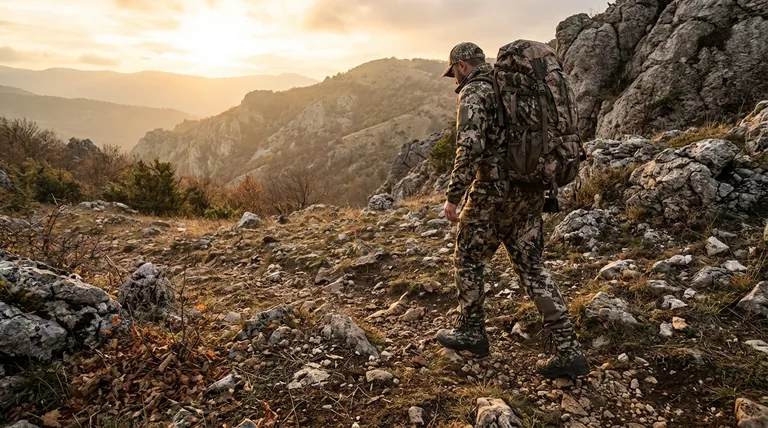
The Core Framework: Context Dictates Design
A hunting boot is a piece of technical equipment. To choose correctly, you must first analyze the environment where the equipment will be used. Every design choice in a boot is a trade-off intended to solve a specific problem.
Factor 1: The Terrain
The ground beneath your feet is the single most important consideration. It determines the necessary stiffness, support, and traction.
For Steep, Mountainous Terrain: You need a stiff boot with significant ankle support. The stiffness prevents your foot from flexing over uneven rocks and side-hills, which drastically reduces fatigue on long treks. Look for rigid soles and taller boot heights.
For Rolling Hills or Farmland: A more flexible boot is advantageous. It allows for a more natural, quieter stride, which is critical for stalking. Less rigidity is needed, so you can prioritize lighter weight and comfort.
For Wet, Muddy, or Swampy Areas: The priority shifts to waterproofing and aggressive outsoles. Rubber or boots with a reliable waterproof membrane (like Gore-Tex) are essential. The tread pattern should be deep to shed mud and maintain traction.
Factor 2: The Season & Climate
Weather conditions determine the need for insulation and breathability. This is a delicate balance, as sweaty feet can become dangerously cold.
For Cold, Late-Season Hunts: This requires insulated boots. Insulation is typically measured in grams (e.g., 200g for cool weather, 800g+ for extreme cold). For stationary hunts, like in a treestand, you can use more insulation.
For Mild or Early-Season Hunts: The focus is on breathability. A non-insulated or lightly insulated boot made of leather or synthetic fabrics with a waterproof membrane will keep you dry from external moisture while allowing sweat to escape.
Factor 3: The Load (You + Your Pack)
The total weight you carry has a profound impact on the support your feet need. This factor is frequently underestimated.
For Heavy Packs (Multi-day Hunts): A stiffer, more supportive boot is non-negotiable. The added weight of a heavy pack puts immense strain on the muscles and tendons in your feet. A rigid boot acts like an external chassis, bearing the load and preventing foot fatigue and potential injury.
For Light Packs (Day Hunts): With less weight, you can opt for a lighter, more flexible boot. Without the demand of a heavy pack, the need for extreme rigidity decreases, and you can gain the advantage of less weight on your feet.
Common Pitfalls to Avoid
Selecting a boot based on the right framework can still be undermined by a few common mistakes during the final selection process.
Ignoring the Primacy of Fit
A boot's features are useless if it doesn't fit correctly. An improper fit leads to blisters, restricted blood flow, and a ruined hunt. Always try on boots with the actual socks you plan to hunt in, and preferably at the end of the day when your feet are slightly swollen.
Misunderstanding Stiffness
A stiff mountain boot will feel awkward and inflexible when walking on a flat floor in a store. This is by design. Its purpose is to provide support on angled, uneven ground, not to feel like a sneaker. Don't mistake a critical performance feature for a flaw.
Over-Insulating for Active Hunts
More insulation is not always better. If you are actively hiking, a heavily insulated boot will cause your feet to sweat profusely. This moisture eliminates the insulating properties of your sock and can lead to rapid heat loss and cold feet once you stop moving.
Making the Right Choice for Your Hunt
Use your specific hunting scenario to guide your decision-making process.
- If your primary focus is high-mountain hunts with a heavy pack: You need a tall, stiff boot made from durable leather or synthetics, likely with minimal insulation for active hiking.
- If your primary focus is early-season archery in rolling hills: You need a flexible, lightweight, and quiet boot that prioritizes breathability over insulation.
- If your primary focus is late-season treestand hunting in the cold: You need a heavily insulated, waterproof boot where overall weight and flexibility are secondary concerns.
Ultimately, choosing the right boot is about a precise match between your environment and your equipment.
Summary Table:
| Factor | Key Consideration | Ideal Boot Characteristic |
|---|---|---|
| Terrain | Steep mountains vs. rolling hills vs. swamps | Stiffness, ankle support, and outsole traction |
| Season & Climate | Extreme cold vs. mild, early-season | Insulation level and breathability |
| Load (You + Pack) | Heavy multi-day pack vs. light day pack | Overall boot stiffness and support |
Ready to equip yourself with the perfect hunting boots for your next expedition?
As a large-scale manufacturer, 3515 produces a comprehensive range of durable, high-performance footwear designed for the demands of the hunt. We provide the right tools for distributors, brand owners, and bulk clients, with production capabilities encompassing all types of hunting boots and boots for any terrain.
Let's discuss how we can support your business or brand with reliable, purpose-built footwear.
Contact our expert team today to get started!
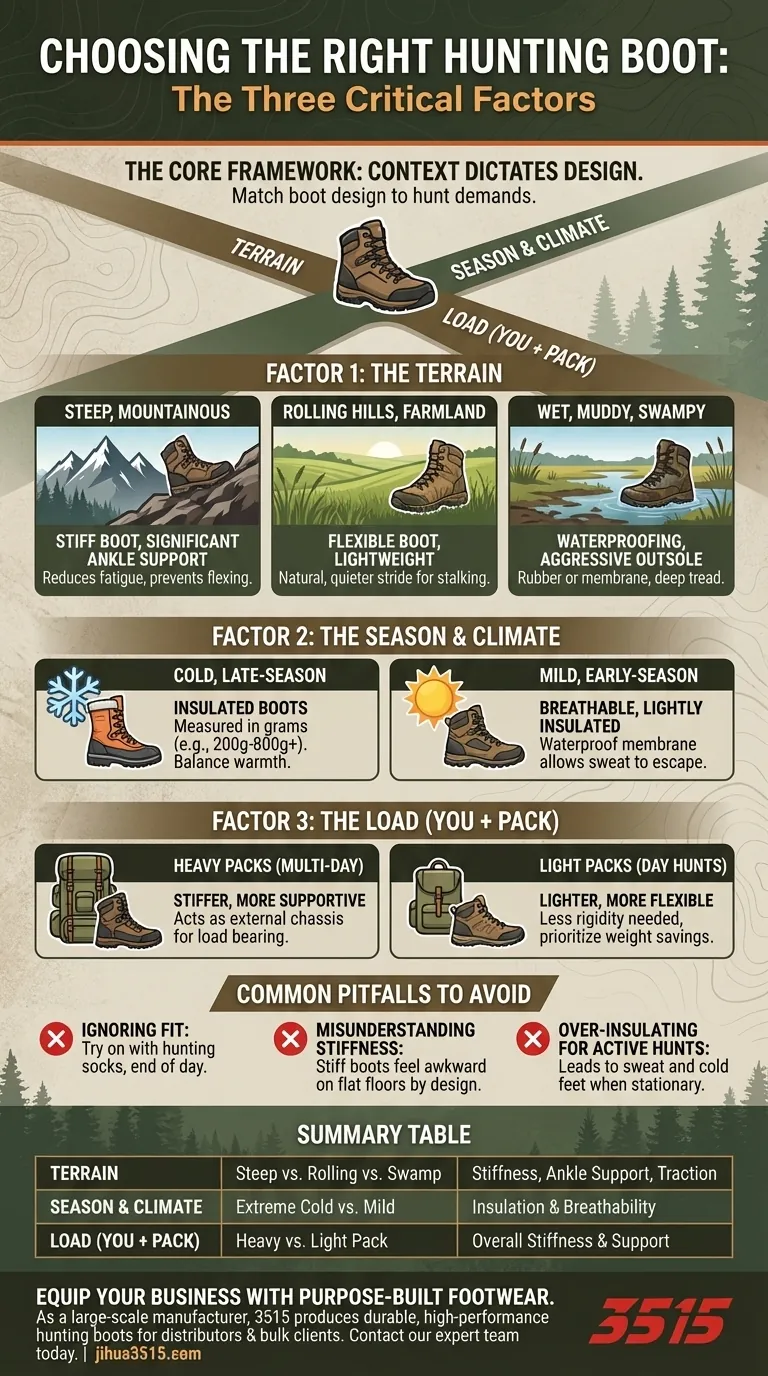
Visual Guide
Related Products
- Wholesale Lightweight Tactical Boots Custom Manufacturer for Desert & Combat Use
- High-Traction Suede Tactical Boots Wholesale & Custom Manufacturing
- Durable Leather Tactical Boots Wholesale & Custom Manufacturing for Brands
- Durable Military Combat Boots with Water Drainage for Wholesale & OEM
- Wholesale Waterproof Tactical Boots Custom Suede & High-Traction Soles
People Also Ask
- What are the common types of combat boots? Find the Right Boot for Your Mission
- What specialized protections do tactical boots offer? Maximize Endurance with High-Performance Footwear
- What are the different types of tactical boots available? Find the Right Boot for Your Mission
- What is the role of high-frequency acquisition hardware in technical skill analysis for outdoor and tactical boots?
- How is the compatibility of polymer materials demonstrated in smart footwear? Enhancing Tactical & Training Performance