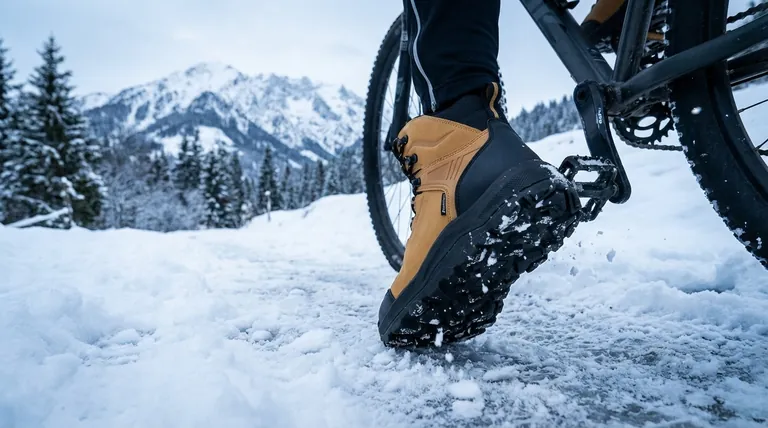
In short, two primary structural elements enhance the performance of winter cycling shoes: a stiff, power-transferring midsole for on-bike efficiency, and a high-grip rubber outsole for critical off-bike stability. These components work together to address the unique challenges of riding in cold and often slippery conditions.
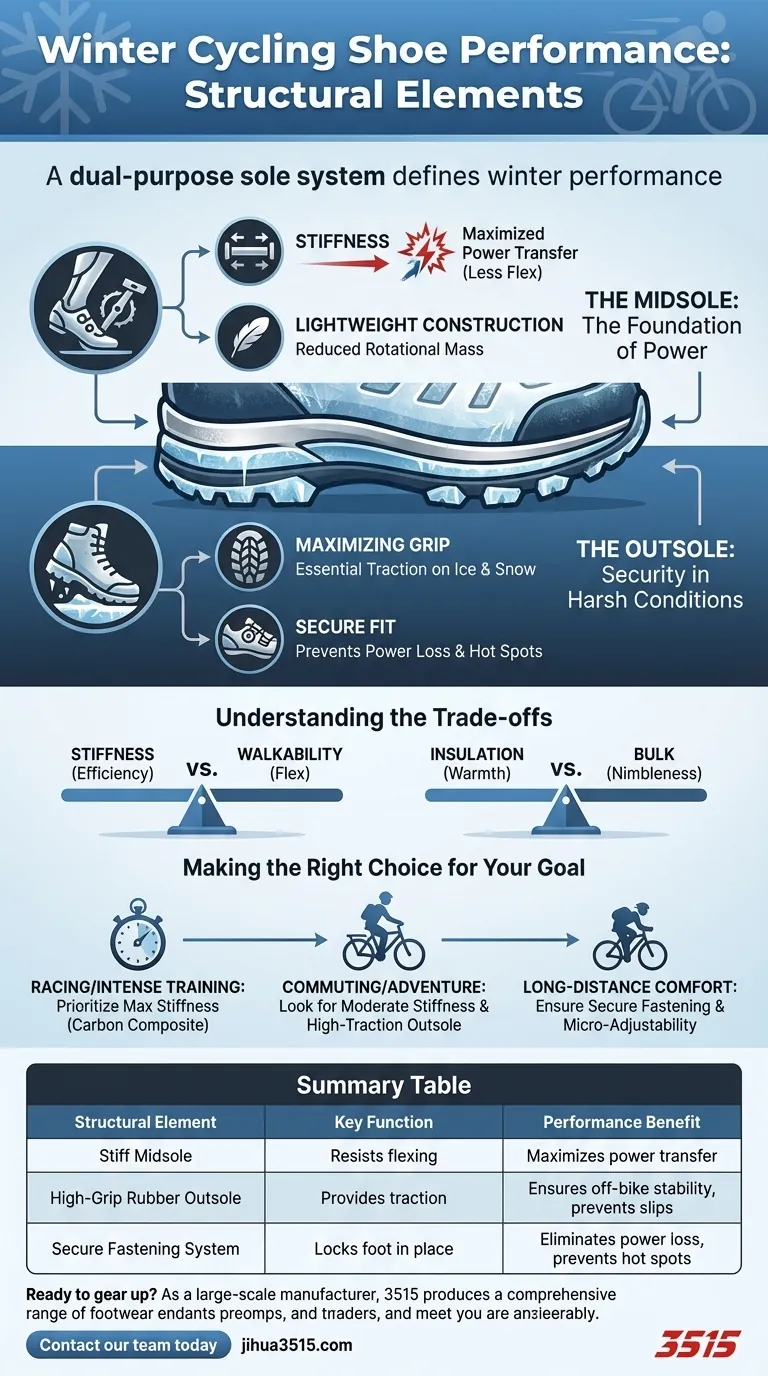
The performance of a winter cycling shoe is defined by a dual-purpose sole system. A rigid internal midsole maximizes power transfer to the pedals, while a robust external outsole ensures secure traction in hazardous off-bike conditions.
The Foundation of Power: The Midsole
The midsole is the core engine of a cycling shoe. It sits between your foot and the cleat, and its characteristics directly determine how much of your effort translates into forward motion.
The Role of Stiffness
A stiff midsole is the single most important feature for pedaling efficiency. It resists flexing under the immense pressure of a pedal stroke.
This rigidity ensures that nearly all the power generated by your legs is transferred directly into the pedals, rather than being wasted by the shoe bending and absorbing energy.
The Advantage of Lightweight Construction
While stiffness is paramount, a lightweight midsole reduces rotational mass. This makes each pedal revolution feel slightly easier and less fatiguing, an advantage that accumulates significantly over a long ride.
Security in Harsh Conditions: The Outsole
Winter riding performance isn't just about what happens on the pedals. The outsole provides the necessary safety and confidence for the moments when you are off the bike.
Maximizing Grip
Winter conditions often mean ice, snow, or slick mud. A high-grip rubber outsole with an aggressive tread pattern provides essential traction for walking or for putting a foot down at a stop.
This is a critical safety feature that prevents dangerous slips and falls, enhancing the performance of the entire ride experience.
The Importance of a Secure Fit
A shoe's structure extends beyond the sole. The fastening system plays a crucial role in performance by locking your foot in place.
Systems like Boa dials or ratcheting buckles allow for a precise, uniform fit. This eliminates foot movement within the shoe, which prevents power loss and uncomfortable hot spots.
Understanding the Trade-offs
Choosing the right winter shoe involves balancing competing demands. No single design is perfect for every scenario.
Stiffness vs. Walkability
An extremely stiff, carbon-soled shoe offers maximum power transfer but can be very difficult and uncomfortable to walk in.
Winter shoes must find a balance. They need to be stiff enough for efficient pedaling but have just enough engineered flex—and a capable outsole—to allow for safe walking on slippery surfaces.
Insulation vs. Bulk
Effective insulation is essential for winter comfort, but it adds material, weight, and bulk.
This can make the shoe feel less nimble and responsive than a summer-weight shoe. The trade-off is accepting slightly more bulk in exchange for the warmth required to perform in cold weather.
Making the Right Choice for Your Goal
Select a shoe where the structural elements align with your primary use case.
- If your primary focus is maximum power transfer for racing or intense training: Prioritize a shoe with the stiffest possible midsole, often made of a carbon composite, to ensure no energy is wasted.
- If your primary focus is versatility for commuting or adventure riding: Look for a shoe with a moderately stiff sole and a more aggressive, high-traction rubber outsole for confident walking.
- If your primary focus is comfort on long-distance rides: Pay close attention to the fastening system, ensuring it allows for micro-adjustments to relieve pressure points and adapt to your foot.
Ultimately, the best winter cycling shoe is a system where each element delivers efficiency, safety, and comfort for your specific needs.
Summary Table:
| Structural Element | Key Function | Performance Benefit |
|---|---|---|
| Stiff Midsole | Resists flexing during pedal strokes | Maximizes power transfer and pedaling efficiency |
| High-Grip Rubber Outsole | Provides traction on ice, snow, and mud | Ensures off-bike stability and prevents slips |
| Secure Fastening System | Locks foot in place with a precise fit | Eliminates power loss and prevents hot spots |
Ready to gear up with high-performance winter cycling shoes?
As a large-scale manufacturer, 3515 produces a comprehensive range of footwear for distributors, brand owners, and bulk clients. Our production capabilities encompass all types of shoes and boots, including high-performance cycling footwear designed for efficiency and safety.
Let us help you equip your customers with the right gear for cold-weather riding. Contact our team today to discuss your specific needs and explore our manufacturing solutions.
Visual Guide
Related Products
- Premium Insulated Safety Boots and Shoes for Wholesale & Bulk Orders
- Premium Suede Sport Safety Shoes for Wholesale & Bulk Orders
- Lightweight Breathable Sneakers with Wet-Traction Grip for Wholesale & Private Label
- Durable Rubber Sole Outdoor Shoes Wholesale & Custom Manufacturing
- Wholesale Durable Camouflage Canvas Shoes with High-Traction Cleated Rubber Sole
People Also Ask
- What are the recommended insulation ratings for mild winter conditions? A Guide for Active & Stationary Workers
- How does insulation thickness correlate with temperature ranges? A Guide to Choosing the Right Warmth
- What insulation level is needed for severe cold and stationary work? 1200g or Higher is Essential
- What safety advantages do insulated boots offer beyond warmth? Dielectric Protection & Superior Grip
- How does fleece lining contribute to the warmth of insulated boots? Trapping Air for Superior Cold Protection