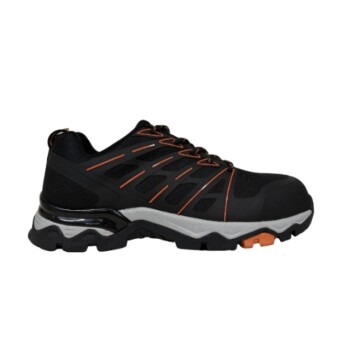
Continuous worker tracking acts as the stabilizing force in automated safety monitoring. By utilizing algorithms to maintain a consistent identity for each individual across video sequences, this technology moves beyond analyzing single, isolated frames. It ensures that safety shoe compliance is verified reliably even when workers are moving through complex, busy environments where their feet may be temporarily hidden.
Reliability in safety monitoring comes from context, not just instantaneous detection. Continuous tracking bridges the gaps caused by movement and obstacles, ensuring the system remembers who a worker is—and that they are compliant—even when visual contact is briefly lost.
The Mechanics of Consistent Monitoring
Moving Beyond Frame-by-Frame Analysis
In a busy job site, analyzing video frame-by-frame is often insufficient. If a system treats every moment as a new event, a single second of poor visibility can trigger a false non-compliance alert.
Continuous worker tracking solves this by creating a timeline. The algorithms assign a unique digital identity to a worker and follow that specific identity as they move across the screen.
Maintaining Identity in Motion
The core strength of this technology is its ability to lock onto a subject. As a worker moves rapidly or changes direction, the system understands that the person in Frame A is the same as the person in Frame B.
This continuity is essential for establishing a compliance history for that specific individual during their time in the camera's view.
Handling Real-World Interferences
Overcoming Visual Obstructions
Job sites are cluttered with equipment, pillars, and moving machinery. It is inevitable that a worker's feet—or their entire body—will be momentarily blocked from view.
Tracking algorithms allow the system to handle these temporary visual obstructions. Because the system retains the worker's identity, it "remembers" they were wearing safety shoes before they walked behind a pallet and re-verifies them upon re-emergence.
Bridging Model Detection Gaps
Even the most advanced AI detection models can occasionally fail to spot a shoe due to lighting changes or awkward angles. These are known as model detection gaps.
Continuous tracking smooths over these momentary lapses. If the detection model misses the shoe for a fraction of a second but the tracking algorithm knows it is the same compliant worker, the system avoids generating a false alarm.
Understanding the Constraints
The Limits of Obstruction Handling
While tracking improves reliability, it relies on the obstruction being temporary. If a worker disappears behind a structure for an extended period, the system may eventually drop the "lock" on their identity. Upon reappearing, the worker may need to be re-scanned and re-identified as a new subject.
Complexity in Crowded Scenes
In extremely dense crowds, "identity switching" remains a technical challenge. If two workers cross paths closely or look very similar, the algorithm must work harder to ensure the compliance status of Worker A isn't accidentally swapped with Worker B.
Making the Right Choice for Your Site
Optimizing for Reliability
To get the most out of this technology, consider the specific challenges of your environment.
- If your primary focus is heavy machinery areas: Rely on tracking to mitigate occlusions caused by moving equipment or passing vehicles.
- If your primary focus is reducing false alarms: specific tracking algorithms are essential to bridge the micro-gaps where detection models momentarily fail.
Continuous tracking transforms safety monitoring from a series of disjointed snapshots into a coherent, reliable narrative of worker compliance.
Summary Table:
| Feature | Frame-by-Frame Analysis | Continuous Worker Tracking |
|---|---|---|
| Consistency | Low; resets every frame | High; creates a digital timeline |
| Obstructions | Triggers false alarms if feet are hidden | Remembers compliance during gaps |
| Accuracy | High sensitivity to lighting/angles | Smooths over momentary detection lapses |
| Identity | Treats every view as a new event | Maintains a unique ID across the scene |
Partner with 3515 for Superior Footwear Solutions
As a leading large-scale manufacturer serving global distributors and brand owners, 3515 delivers the production excellence required to meet modern safety and operational standards. Our flagship Safety Shoes series is engineered for durability and compliance, providing the perfect physical foundation for advanced AI tracking systems.
Our extensive portfolio includes:
- Tactical & Work Boots: Built for rugged job site performance.
- Outdoor & Training Shoes: Versatile designs for active environments.
- Sneakers & Dress/Formal Shoes: Meeting diverse bulk requirements with style and precision.
Whether you are stocking a brand or outfitting a workforce, we offer comprehensive manufacturing capabilities to bring your footwear vision to life. Contact us today to discuss your bulk requirements and see how our expertise can strengthen your supply chain.
References
- Yeo-Reum Lee, Han-Guk Ryu. Deep learning-based framework for monitoring wearing personal protective equipment on construction sites. DOI: 10.1093/jcde/qwad019
This article is also based on technical information from 3515 Knowledge Base .
Related Products
- Premium Suede Sport Safety Shoes for Wholesale & Bulk Orders
- Premium Lightweight Safety Shoes for Wholesale & Bulk Orders
- Wholesale Anti-Smash & Puncture-Proof Safety Shoes Custom Manufacturing for Brands
- Premium KPU Injection Athletic Style Safety Shoes
- Premium Safety Shoes with Rotating Buckle Safety Sneakers
People Also Ask
- What industries have specific OSHA footwear requirements? Ensure Compliance & Protect Your Workforce
- What are the primary functions of professional safety shoes? Maximize Safety in Water Supply Confined Spaces
- What role do specialized safety shoes play in preventing falls? Engineering Stability in Industrial Environments
- What are the main safety features of S1-S5 shoes? The 3 Essential Protections Explained
- What happens during the cutting stage of safety shoes manufacturing? Precision, Process & Quality