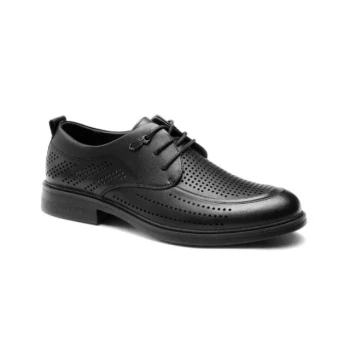
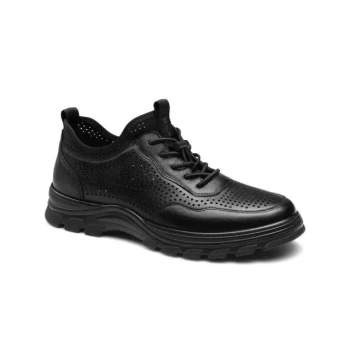
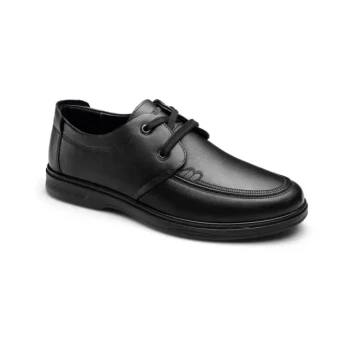
The selection of high-quality raw materials is the defining variable in the structural integrity, comfort, and longevity of finished leather footwear. Specifically, premium natural leather dictates the shoe's ability to "breathe," resist wear, and maintain its shape, acting as the foundation for the product's overall market competitiveness.
The Core Reality While craftsmanship is essential, the raw material sets the absolute limit of a shoe's quality. Premium leather allows for precise manufacturing without failure, ensuring the final product retains its form and provides orthopedic support long after the initial purchase.
The Mechanical Advantages of Premium Leather
Superior Ductility during Manufacturing
High-quality leather possesses excellent ductility, which is the material's ability to stretch and deform under stress without breaking.
This is critical during the lasting and shaping stages of production. Premium leather adapts more effectively to the shoe mold, allowing manufacturers to create complex shapes without risking structural integrity.
Resistance to Deformation
Once the shoe is completed, the quality of the leather determines its stability.
Lower-quality materials often warp or lose their silhouette over time. In contrast, superior leather resists post-production deformation, ensuring the shoe maintains its intended design and fit during long-term wear.
Optimized Wear Resistance
The durability of the shoe's surface is directly tied to the raw material selection.
High-quality natural leather is inherently more resistant to abrasion and friction. This natural wear resistance extends the lifecycle of the footwear, preventing premature degradation even under daily stress.
Impact on Manufacturing Precision
Consistency in Processing
Beyond the final outcome, raw material quality dictates the efficiency of the manufacturing line.
Premium materials—whether leather, synthetic fibers, or elastomers—offer consistent physical properties. This consistency ensures that cutting and stitching processes are precise, eliminating unexpected tearing or deformation that can occur with inferior, unpredictable materials.
Building a Physical Foundation
For specialized footwear, such as safety shoes or tactical boots, this consistency is non-negotiable.
The raw material provides the necessary physical foundation to support protective features. Without a high-quality base, the structural safety of the boot is compromised before it ever leaves the factory.
Understanding the Trade-offs: The Impact of Finishing
The Breathability Paradox
While "high quality" often implies better performance, the specific finishing treatment applied to the raw material can drastically alter its physiological properties.
You must distinguish between the quality of the hide and the type of finish. A premium hide treated with a heavy finish may lose one of its most valuable traits: air permeability.
The Varnished Leather Limitation
A common pitfall is assuming all leather breathes equally.
Varnished finishes, often used for high-gloss dress shoes, involve sealing the leather surface with a polyurethane film. Testing shows this often results in zero air permeability, severely restricting air circulation inside the shoe cavity compared to unfinished leather or textiles.
Making the Right Choice for Your Goal
To select the correct material, you must align the raw attributes with the end-user's primary need.
- If your primary focus is long-term comfort: Prioritize unfinished or lightly treated premium leather to maximize breathability and air circulation.
- If your primary focus is structural durability: Select high-ductility leather that can withstand the lasting process and resist deformation over time.
- If your primary focus is manufacturing efficiency: Invest in materials with consistent physical properties to minimize errors during cutting and stitching.
True quality in footwear is not just about aesthetics; it is the result of materials that successfully bridge the gap between manufacturing precision and wearer physiology.
Summary Table:
| Key Property | Impact on Finished Footwear | Benefit to Manufacturer/User |
|---|---|---|
| High Ductility | Allows precise shaping during the lasting stage | Retains complex designs without structural failure |
| Wear Resistance | Increases surface durability against friction | Extends product lifecycle and maintains aesthetics |
| Consistency | Ensures uniform cutting and stitching results | Minimizes production errors and material waste |
| Permeability | Regulates air circulation within the shoe cavity | Enhances long-term wearer comfort and hygiene |
| Structural Stability | Resists post-production warping or deformation | Maintains the original fit and orthopedic support |
Partner with 3515 for Premium Footwear Excellence
As a large-scale manufacturer serving distributors and brand owners, 3515 offers comprehensive production capabilities for all footwear types, anchored by our flagship Safety Shoes series. Our extensive portfolio covers work and tactical boots, outdoor shoes, training shoes, and sneakers, as well as Dress & Formal shoes to meet your diverse bulk requirements.
By prioritizing high-quality raw materials and precision manufacturing, we ensure your brand delivers unmatched durability and comfort to the end-user. Let us help you scale your business with footwear built on a foundation of excellence.
Contact us today to discuss your bulk production needs!
References
- Indah Ivanka, Arnida Wahyuni Lubis. Analisis Rasio Profitabilitas Dan Rasio Aktivitas Sebagai Dasar Penilaian Kinerja Keuangan PT. Sepatu Bata Tbk. DOI: 10.55606/jumia.v2i3.3225
This article is also based on technical information from 3515 Knowledge Base .
Related Products
- Dial Closure Leather Business Casual Shoes for Wholesale & Private Label
- Factory Direct Wholesale Leather Comfort Shoes with Dial Closure
- Durable Leather Work Boots for Wholesale & Custom Manufacturing
- Wholesale Breathable Perforated Leather Derby Shoes with Modern Comfort Sole
- Durable Leather High-Ankle Tactical Boots for Wholesale & Custom Manufacturing
People Also Ask
- What are the top three recommended business casual shoes? Build a Polished, Versatile Wardrobe
- Why is choosing the right shoes important for a business casual look? Elevate Your Professional Image
- What materials are commonly used in business casual shoes? A Guide to Leather, Suede & More
- What factors should be considered when choosing business casual shoes? Find the Perfect Balance of Style & Comfort
- Are black or brown shoes better for business casual? Master the Versatile Choice for Your Wardrobe