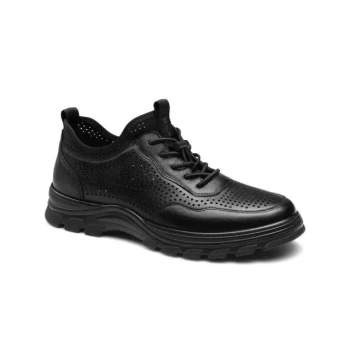
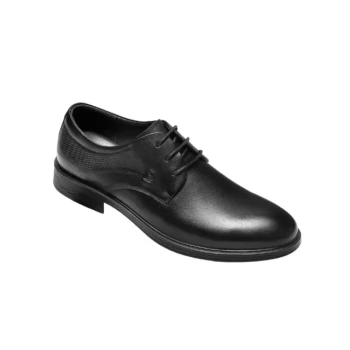
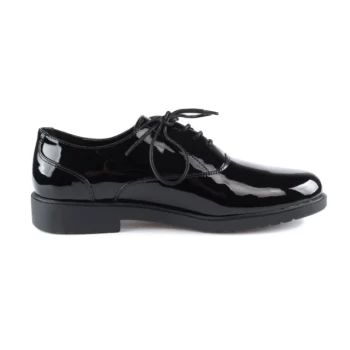
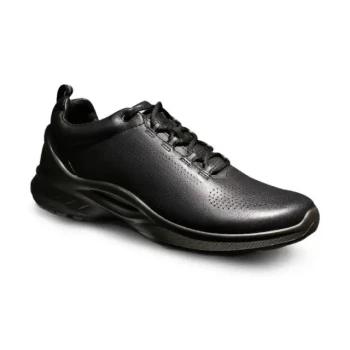
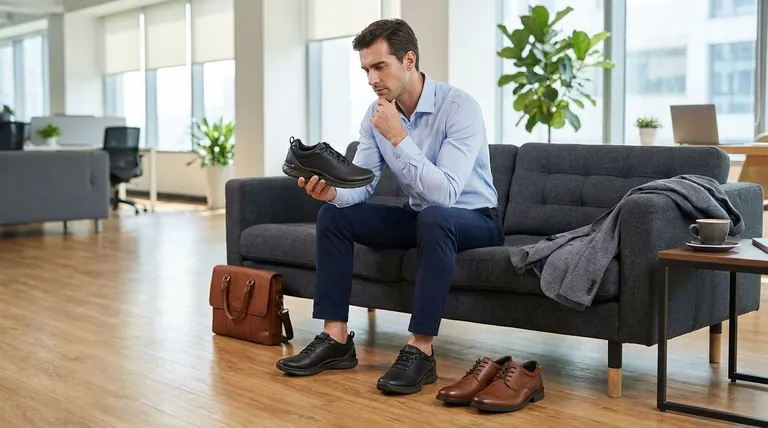
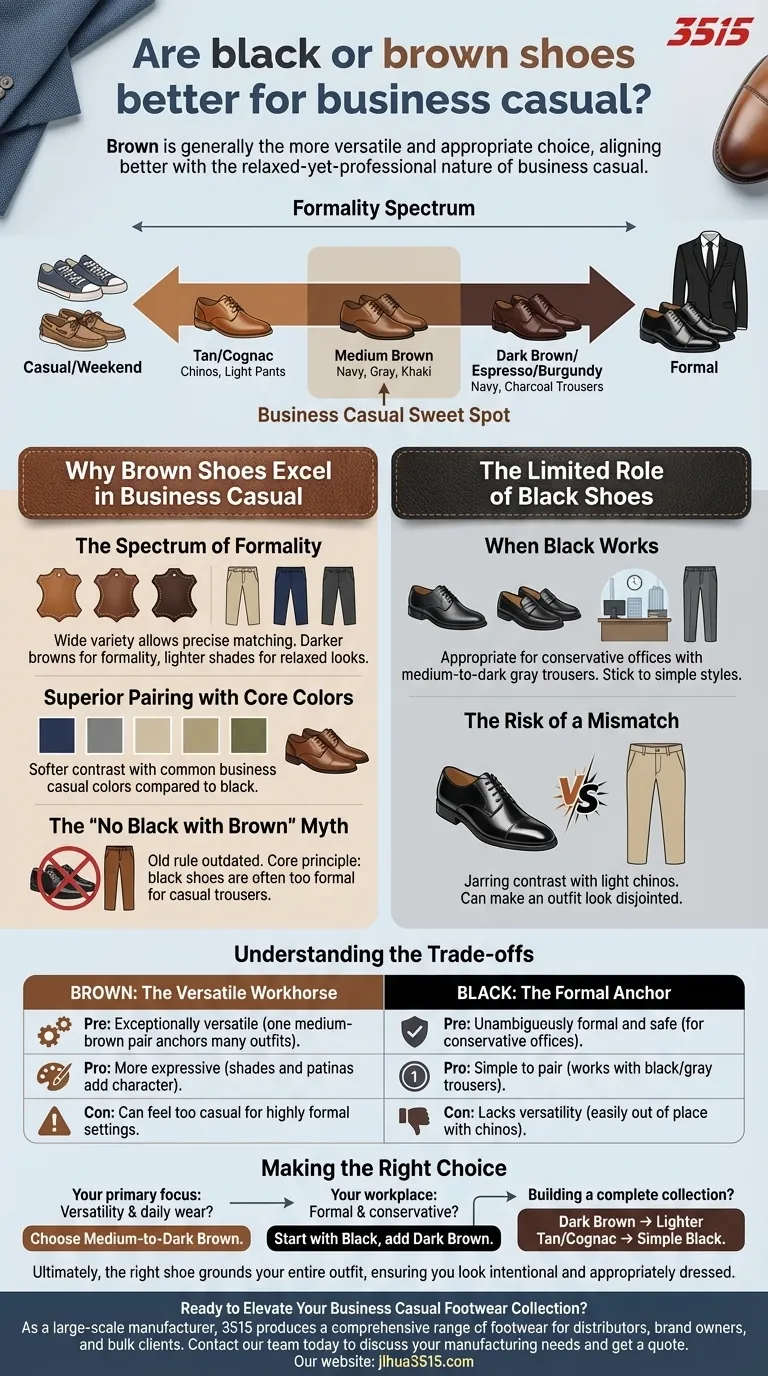
When choosing between black and brown shoes for business casual, brown is generally the more versatile and appropriate choice. Black shoes are traditionally more formal and are best reserved for suits and more conservative office environments, while brown shoes offer a wider range of tones that pair better with the typical business casual palette of navies, grays, and khakis.
The core issue isn't simply color, but formality. Brown shoes inherently align better with the relaxed-yet-professional nature of business casual, whereas black shoes often create a formal clash with casual trousers.
Why Brown Shoes Excel in Business Casual
The business casual dress code thrives in the space between formal suits and weekend wear. Brown shoes naturally occupy this same middle ground.
The Spectrum of Formality
Brown leather exists in a wide spectrum, from dark chocolate to light tan. This variety allows you to precisely match the formality of your outfit.
Darker browns, like espresso or burgundy, are more formal and pair excellently with navy or charcoal trousers. Lighter shades like tan or cognac are more relaxed, ideal for chinos or lighter-colored pants.
Superior Pairing with Core Colors
Business casual wardrobes are built on colors like blue, gray, and beige. Brown is the perfect complement to these shades.
Brown shoes create a softer, more approachable contrast with navy or gray trousers compared to the starkness of black. They also create a harmonious look with earth tones like khaki and olive.
The "No Black with Brown" Myth
The old rule about not mixing black and brown is outdated. A black shirt or belt can work with brown shoes, but the core principle holds true for trousers: black shoes are best with black or dark charcoal pants, which are often too formal for business casual.
The Limited Role of Black Shoes
Black shoes are not inherently "bad" for business casual, but their use case is much narrower and requires more care to get right.
When Black Works
If your workplace leans heavily toward the "business" side of business casual, black shoes can be appropriate. They work best with medium-to-dark gray trousers.
A simple black leather derby or loafer is the safest bet. Avoid highly polished, formal styles like oxford cap-toes, as they will look out of place without a suit.
The Risk of a Mismatch
The primary danger of wearing black shoes is creating a jarring contrast. Pairing black dress shoes with light-colored chinos, for instance, looks disjointed because the shoes are significantly more formal than the pants.
This mismatch can inadvertently make an outfit look less put-together than if a more casual brown shoe were chosen.
Understanding the Trade-offs
Choosing your shoe color isn't just about matching; it's about defining the overall tone of your professional appearance.
Brown: The Versatile Workhorse
- Pro: Exceptionally versatile. A single pair of medium-brown dress shoes can anchor almost any business casual outfit.
- Pro: More expressive. Different shades and patinas in brown leather can add personality and visual interest.
- Con: Can feel too casual for highly conservative or formal office settings that border on "business professional."
Black: The Formal Anchor
- Pro: Unambiguously formal and safe. If your office is conservative, black removes any doubt.
- Pro: Simple to pair. Black shoes go with black belts and gray or black trousers, requiring less thought.
- Con: Lacks versatility. They can easily look out of place with the chinos and lighter trousers common in business casual.
Making the Right Choice for Your Goal
Your shoe choice should be dictated by your specific workplace environment and the statement you want to make.
- If your primary focus is versatility and daily wear: Choose a medium-to-dark brown leather shoe, like a derby or loafer, as your foundational pair.
- If your workplace is more formal and conservative: Start with a simple black leather shoe, but invest in a dark brown pair as your second option for variety.
- If you want to build a complete business casual shoe collection: Begin with dark brown, then add a lighter tan or cognac, and finally a simple black pair for more sober occasions.
Ultimately, the right shoe grounds your entire outfit, ensuring you look intentional and appropriately dressed for your professional environment.
Summary Table:
| Shoe Color | Best For | Key Advantage |
|---|---|---|
| Brown | Most business casual settings | Versatile; pairs well with navy, gray, and khaki |
| Black | Formal or conservative offices | Unambiguously formal and safe |
Ready to Elevate Your Business Casual Footwear Collection?
As a large-scale manufacturer, 3515 produces a comprehensive range of footwear for distributors, brand owners, and bulk clients. Whether you need versatile brown derbies, classic black loafers, or any other style to meet market demand, our production capabilities encompass all types of shoes and boots.
Let us help you stock the perfect styles for your customers. Contact our team today to discuss your manufacturing needs and get a quote.
Visual Guide
Related Products
- Wholesale Comfortable Business Casual Shoes Custom Manufacturing
- Dial Closure Leather Business Casual Shoes for Wholesale & Private Label
- Wholesale Leather Business Casual Shoes with Dial Closure - Manufacturer of Comfort Dress Sneakers
- Wholesale Modern Perforated Leather Derby Shoes with Chunky Sole for Custom Branding
- Custom Manufactured Air Cushion Leather Business Shoes for Wholesale
People Also Ask
- What are the key characteristics of business casual shoes? Achieve Polished Versatility for Your Wardrobe
- What should be considered when selecting shoes for a casual business setting? Achieve the Perfect Balance of Style and Comfort
- Which types of shoes should be avoided with business casual attire? Maintain a Polished Professional Image
- What is the recommended approach to trying on business casual shoes? Ensure a Perfect Fit for Your Workday
- What are some types of business casual shoes? Build a Versatile & Professional Footwear Wardrobe