
A properly fitted motorcycle boot should be snug around the heel and ankle while leaving enough room for you to wiggle your toes freely. The boot must not pinch or create pressure points, and a secure fit ensures it will stay on and protect you in an accident without restricting the control you need to operate your motorcycle.
The goal is to find a boot that balances all-day comfort with the non-negotiable need for it to remain securely on your foot. The right fit allows for precise control of your bike and, most critically, provides maximum protection during an accident.
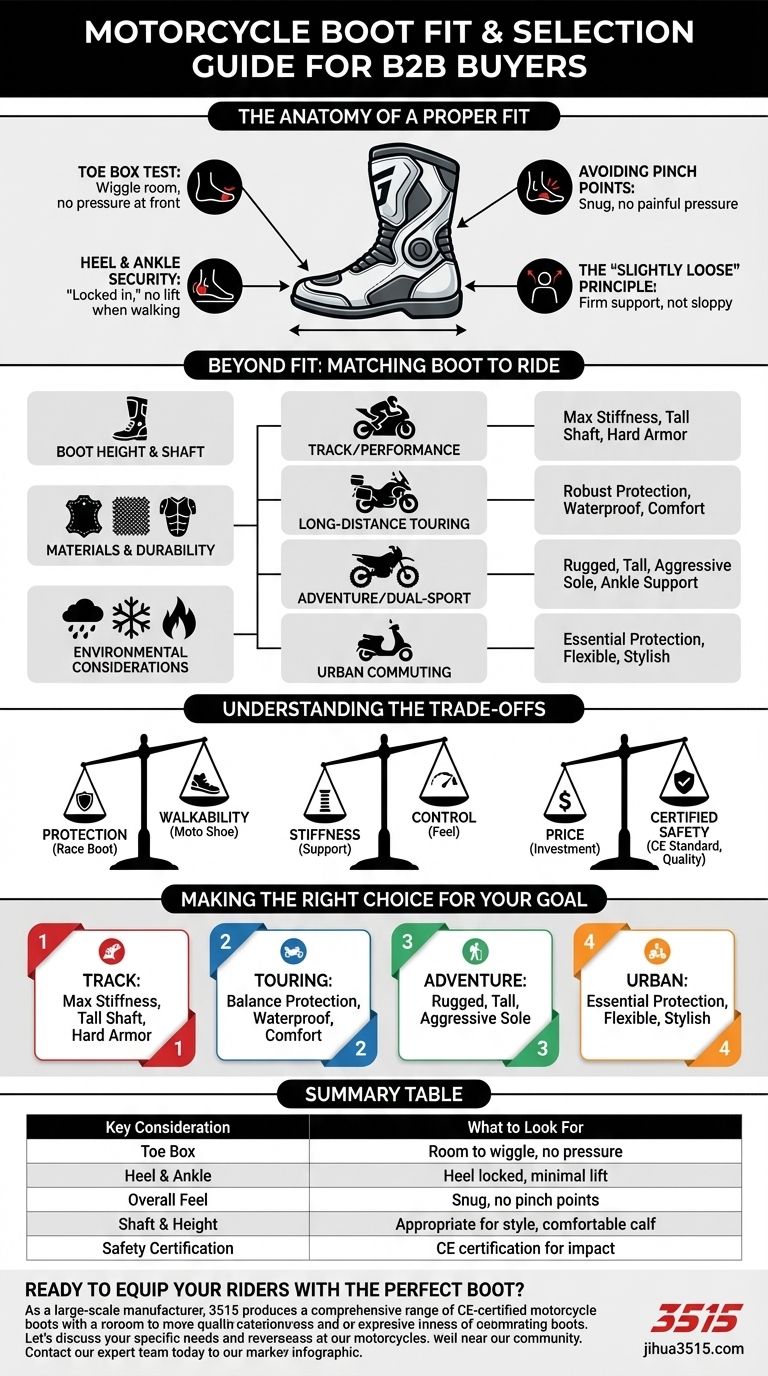
The Anatomy of a Proper Fit
Achieving the correct fit is a tactile process. It’s about how the boot feels and interacts with your foot, both when stationary and when mimicking the motions of riding.
The Toe Box Test
Your toes should never be pressed against the end of the boot. You need enough room to move them slightly, which prevents discomfort and maintains circulation on longer rides or in warmer weather when your feet naturally swell.
Heel and Ankle Security
This is a critical safety check. While your toes need room, your heel should feel "locked in." When you walk, your heel should not lift up inside the boot. A loose heel is a major red flag, as it suggests the boot could come off in a crash.
Avoiding Pinch Points
Pay close attention to any pinching or unusual pressure, especially around the widest part of your foot, the ankle bones, and the top of your arch. A minor annoyance in the store can become a painful distraction after an hour on the road.
The "Slightly Loose" Principle
When in doubt, a boot that feels slightly loose is better than one that is painfully tight. However, "slightly loose" should not be confused with "sloppy." The boot must still provide firm support and not allow your foot to slide around inside.
Beyond Fit: Matching the Boot to Your Ride
The right fit is only half the equation. The right type of boot depends entirely on the kind of riding you do, as different environments present different hazards.
Boot Height and Shaft Circumference
The height of the boot's shaft is your primary defense for your shin and ankle. Track riders need maximum height for impact and abrasion resistance, while adventure riders need it for off-road debris. A city commuter might opt for a shorter boot for flexibility, but it must still cover and protect the ankle bones. Ensure the shaft also fits comfortably around your calf.
Materials and Durability
The materials dictate the boot's protective qualities and weather resistance. Full-grain leather offers excellent abrasion resistance, while modern textiles can provide superior waterproofing. Hard armor, like TPU sliders and shin plates, is essential for high-speed riding.
Environmental Considerations
Consider the conditions you ride in most often. If you frequently ride in the rain, certified waterproof boots are essential. For cold climates, insulated boots can be the difference between a comfortable ride and a dangerous one. For hot weather, look for boots with venting.
Understanding the Trade-offs
Choosing a motorcycle boot is an exercise in balancing competing needs. Being aware of these trade-offs will help you make a more informed decision.
Protection vs. Walkability
A full-height, heavily armored race boot offers phenomenal protection on the bike but is stiff and awkward to walk in. A shorter, more casual "moto shoe" is comfortable for walking but offers significantly less protection, especially against twisting forces on the ankle.
Stiffness vs. Control
A very stiff boot provides excellent support and protects against hyper-extension, but it can reduce your feel for the rear brake and gear shifter. Most new boots require a break-in period for the materials to soften slightly and conform to your movements.
Price vs. Certified Safety
While price isn't always an indicator of quality, it often correlates with better materials, construction techniques, and certified safety features. Always look for CE certification, which ensures the boot has been tested to meet specific safety standards for impact, abrasion, and rigidity.
Making the Right Choice for Your Goal
Select your boots based on your primary riding style to ensure you have the right protection for the risks you are most likely to encounter.
- If your primary focus is track or performance riding: Prioritize maximum stiffness, tall shaft height, and extensive, certified hard armor.
- If your primary focus is long-distance touring: Balance robust protection with certified waterproofing and features designed for all-day comfort.
- If your primary focus is adventure or dual-sport riding: Choose rugged, tall boots with aggressive soles for off-road grip and strong ankle support.
- If your primary focus is urban commuting: Select a boot that provides essential, certified ankle protection while offering the flexibility and style for off-bike wear.
Investing the time to find the right fit and type of boot is a direct investment in your comfort, control, and safety on every ride.
Summary Table:
| Key Fitting Consideration | What to Look For |
|---|---|
| Toe Box | Room to wiggle toes; no pressure at the front. |
| Heel & Ankle | Heel feels 'locked in' with minimal lift when walking. |
| Overall Feel | Snug fit with no pinch points or pressure spots. |
| Shaft & Height | Appropriate height for your riding style; comfortable calf fit. |
| Safety Certification | Look for CE certification for verified impact protection. |
Ready to Equip Your Riders with the Perfect Boot?
As a large-scale manufacturer, 3515 produces a comprehensive range of CE-certified motorcycle boots for distributors, brand owners, and bulk clients. Our production capabilities encompass all types of riding boots—from high-protection race models to comfortable touring and urban styles—ensuring your customers get the ideal combination of safety, fit, and durability.
Let's discuss your specific needs and how we can support your business. Contact our expert team today to explore our catalog and custom manufacturing options.
Visual Guide
Related Products
- Wholesale Tactical Boots High-Traction & Reflective for Bulk & Brand Orders
- High Performance Fire-Retardant Waterproof Safety Boots
- Durable Goodyear Welt Leather Work Boots for Wholesale & Private Label
- Wholesale High-Traction Camo Boots - Custom Manufacturer for Brands
- Heavy-Duty Waterproof Nubuck Safety Boots Safety Shoes for Bulk Supply
People Also Ask
- How do tactical boots protect against injuries? Discover the Integrated Safety System
- What are the primary characteristics of tactical boots? Lightweight, Agile, and Built for All-Day Missions
- How do combat boots and tactical boots differ in design and purpose? Choose the Right Boot for Your Mission
- What role does repairable design play in tactical boots? Extend Lifespan & Cut Total Ownership Costs
- What factors should be considered when choosing between tactical boots and sneakers for daily activities? Find Your Perfect Fit



















