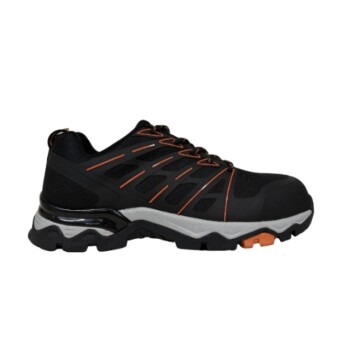
The integrity of clinical safety depends entirely on the absolute completeness of the Personal Protective Equipment (PPE) set. A fully utilized set—specifically consisting of gloves, masks, aprons, haircaps, and safety shoes—functions as a unified physical defense system rather than a collection of individual accessories. When the set is incomplete, the entire protective hierarchy collapses, allowing pathogens to bypass local defenses and breach the safety barrier.
Clinical safety is not cumulative; it is binary. A defense system is either complete or it is compromised, as the absence of a single PPE component breaks the physical seal against pathogens and significantly raises the probability of hospital-acquired infections.
The Architecture of Defense
The Unified Physical System
In clinical practice, PPE must be viewed as a comprehensive physical defense system.
It is not merely a checklist of items, but an interlocking suit of armor where every component plays a critical role.
This system comprises five essential elements: gloves, masks, aprons, haircaps, and safety shoes.
Closing the Vectors of Transmission
Each component addresses a specific vector of transmission.
While gloves and masks protect against contact and respiratory threats, items like haircaps and safety shoes seal off less obvious routes of contamination.
Omitting any one of these items leaves a specific physical surface exposed to the environment.
The Mechanics of Failure
Creating Vulnerability in the Hierarchy
The primary reference emphasizes that safety relies on a defense hierarchy.
This hierarchy assumes that all barriers are in place to lower the risk level to an acceptable standard.
The absence of a single component creates an immediate vulnerability, effectively dismantling the hierarchy and rendering the remaining equipment less effective.
Pathogen Bypass
When a gap exists in the PPE set, it creates a path of least resistance.
Pathogens are opportunistic; they will bypass local protection (such as a mask or gloves) to colonize exposed areas like hair or footwear.
Once these pathogens breach the perimeter, they can be transported out of the clinical zone, spreading contamination.
The Critical Trade-off: Partial Compliance vs. Safety
The Danger of Partial Protection
A common pitfall is the belief that wearing "most" of the PPE set provides "most" of the protection.
This is objectively false.
Partial adherence provides a false sense of security, leading workers to engage in high-risk behaviors while remaining physically vulnerable to exposure.
The Systemic Risk of Outbreaks
The cost of incomplete PPE extends beyond the individual healthcare worker.
A breach in individual protection is the leading precursor to outbreaks of hospital-acquired infections.
Therefore, the completeness of the set is not just a personal safety measure, but a critical control point for institutional epidemiology.
Ensuring Systemic Safety
To maintain a secure clinical environment, the focus must shift from individual items to the integrity of the whole system.
- If your primary focus is individual clinician safety: Verify that all five components (gloves, mask, apron, haircap, shoes) are present before entering a risk zone to maintain the defense hierarchy.
- If your primary focus is infection control management: Treat the absence of any single PPE component as a critical system failure capable of triggering a wider outbreak.
True clinical protection requires the discipline to maintain the physical barrier without exception.
Summary Table:
| Aspect | Description/Impact |
|---|---|
| Complete PPE Components | Gloves, Masks, Aprons, Haircaps, Safety Shoes |
| Core Principle | PPE is a unified physical defense system, not individual items. |
| Mechanism of Defense | Each component seals a specific transmission vector. |
| Risk of Incompleteness | Creates vulnerabilities, allows pathogen bypass, nullifies defense hierarchy. |
| Consequence | Significantly raises probability of hospital-acquired infections (HAIs), systemic outbreaks. |
| False Sense of Security | Partial PPE provides inadequate protection, increasing risky behavior. |
As a large-scale manufacturer serving distributors and brand owners, 3515 offers comprehensive production capabilities for all footwear types, anchored by our flagship Safety Shoes series. Our extensive portfolio covers work and tactical boots, outdoor shoes, training shoes, and sneakers, as well as Dress & Formal shoes to meet diverse bulk requirements. Ensure your clinical teams are protected from the ground up with our high-quality safety footwear solutions, designed for maximum durability and compliance. Enhance your product line with reliable, industry-leading safety shoes. Contact 3515 today to discuss your bulk PPE footwear needs and fortify your clients' safety protocols with unmatched quality and robust protection!
References
- Solehudin Solehudin, Nurul Ainul Shifa. Analisis Penerapan Penggunaan Alat Pelindung Diri (APD). DOI: 10.55606/jurrike.v3i1.2767
This article is also based on technical information from 3515 Knowledge Base .
Related Products
- Premium Suede Sport Safety Shoes for Wholesale & Bulk Orders
- Premium Lightweight Safety Shoes for Wholesale & Bulk Orders
- Wholesale Anti-Smash & Puncture-Proof Safety Shoes Custom Manufacturing for Brands
- Premium KPU Injection Athletic Style Safety Shoes
- Premium Safety Shoes with Rotating Buckle Safety Sneakers
People Also Ask
- What are the primary functions of professional safety shoes? Maximize Safety in Water Supply Confined Spaces
- What industries have specific OSHA footwear requirements? Ensure Compliance & Protect Your Workforce
- What role do specialized safety shoes play in preventing falls? Engineering Stability in Industrial Environments
- How does professional industrial cleaning equipment maintain the performance stability of safety shoes? Pro Maintenance
- Why is barefoot walking used as a baseline in gait safety research? Unlocking Natural Biomechanics for Shoe Design