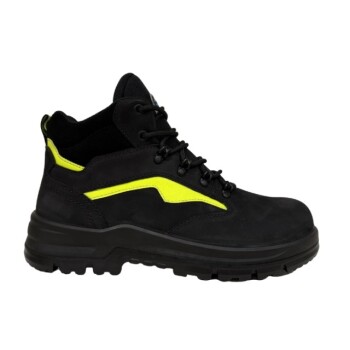
To choose the right fit for PVC work boots, you must go beyond your standard shoe size. The key is to measure your feet in the afternoon when they are largest, wear the thick work socks you'll use on the job during the fitting, and ensure a secure fit around the heel and ankle with about a half-inch of wiggle room for your toes.
A proper fit is not just about a size number; it's a critical alignment between the boot's construction, your foot's dimensions, and the specific demands of your work environment to ensure all-day safety and comfort.
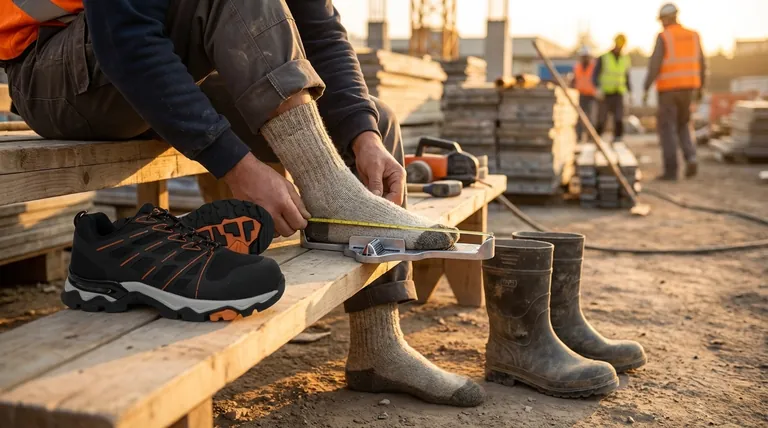
Beyond the Size Tag: The Core Elements of a Perfect Fit
Achieving the right fit involves a few key steps that account for how your feet change throughout the workday and the gear you wear with them. Overlooking these details is a common cause of discomfort and blistering.
Why Timing Matters
Your feet naturally swell throughout the day due to gravity and activity. Measuring them in the afternoon or evening provides the most accurate measurement, preventing a fit that feels fine in the morning but becomes painfully tight by the end of your shift.
The Role of Work Socks
Heavy-duty work socks are significantly thicker than casual socks. Always wear your intended work socks when trying on boots, as their thickness is a critical part of the overall volume inside the boot.
The "Wiggle Room" Test
A proper fit should be snug, but not restrictive. Your heel and ankle should feel locked in place with minimal slipping. Crucially, you should be able to freely wiggle your toes, with about a half-inch of space between your longest toe and the end of the boot.
Considering Boot Height
The height of the boot is an element of fit and protection. Taller boots offer greater protection from splashes, debris, and impacts to the shin and lower leg, which is essential in many wet or hazardous environments.
Aligning Fit with Your Work Environment
A boot that fits perfectly in a store may fail you on the job site. The concept of a "good fit" must extend to how the boot performs in your specific workplace conditions and daily physical activities.
Underfoot Conditions
The environment dictates the outsole you need. Consider if you'll be on uneven, muddy, or slippery surfaces. The boot's tread and slip-resistance rating are part of its functional fit for your job.
Physical Job Demands
Your daily tasks matter. If you are constantly climbing ladders, jumping from a truck, or standing for ten hours on concrete, you need a boot that fits these demands with appropriate ankle support, cushioning, and flexibility.
Essential Safety Features
Safety features are non-negotiable components of a proper fit-for-purpose. A boot only truly "fits" your job if it has the required toe protection, slip resistance, and waterproofing to meet industry standards and protect you from specific hazards.
Understanding the Trade-offs
Choosing the perfect PVC work boot often involves balancing competing priorities. Understanding these trade-offs is key to selecting a boot that serves you well in the long term.
Protection vs. Mobility
Heavier, taller, and more rigid boots offer maximum protection but can sometimes limit your range of motion. A lighter, more flexible boot may improve agility but offer less defense against impacts and punctures.
Material Quality and Longevity
High-grade PVC is more resistant to cracking and chemical breakdown, ensuring a longer service life. While this may come at a higher initial cost, it often prevents the premature failure and replacement common with lower-quality materials.
All-Day Comfort vs. Initial Cost
The most protective boot is useless if it's too uncomfortable to wear. Investing in a boot with better ergonomic design and cushioning might cost more upfront but prevents the long-term costs associated with foot pain, fatigue, and potential injury.
Making the Right Choice for Your Goal
Select your boot by prioritizing the single most important factor for your daily work.
- If your primary focus is all-day comfort on hard surfaces: Prioritize a boot with excellent cushioning and a snug fit that prevents your foot from sliding inside.
- If your primary focus is maximum protection in wet or hazardous sites: Emphasize a taller boot height, certified safety features like a steel toe, and high-grade, waterproof PVC.
- If your primary focus is agility and movement over uneven terrain: Seek a balance between ankle support and flexibility, ensuring the boot secures your foot without restricting natural motion.
Ultimately, the right PVC work boot is an essential tool that should feel like a natural extension of your body.
Summary Table:
| Key Consideration | Why It Matters |
|---|---|
| Measure in the Afternoon | Feet swell during the day; ensures a comfortable fit all shift. |
| Wear Your Work Socks | Accounts for the true volume and fit inside the boot. |
| Check Toe & Heel Fit | A half-inch of toe room and a locked-in heel prevent blisters and ensure stability. |
| Assess Boot Height | Taller boots offer superior protection from debris, splashes, and impacts. |
Ready to equip your workforce with perfectly fitting PVC work boots?
As a large-scale manufacturer, 3515 produces a comprehensive range of durable footwear for distributors, brand owners, and bulk clients. Our production capabilities encompass all types of safety boots, ensuring you get the right combination of fit, protection, and comfort for your specific industry needs.
Contact our experts today to discuss your requirements and discover how we can support your business with high-quality, reliable footwear.
Visual Guide

Related Products
- Wholesale Customizable Safety Boots Durable & Protective Footwear Manufacturing
- Wholesale Heavy-Duty Waterproof Steel Toe Work Boots OEM Manufacturer
- Durable Leather Moc Toe Work Boots for Wholesale & Custom Manufacturing
- Durable Leather Work Boots for Wholesale & Custom Manufacturing
- Durable Leather Work Boots for Wholesale & Custom OEM Manufacturing
People Also Ask
- Why are industrial safety boots with steel toes necessary for machine operators? Essential Foot Protection for Safety
- What is the history of steel toe work boots? From German Invention to Modern Safety Standard
- What are the different types of steel toe work boots? Choose the Right Boot for Your Job
- What are the pros and cons of steel toe work boots? A Guide to Maximum Protection vs. Comfort
- What styles can safety toe work boots come in? From Classic to Casual, Find Your Perfect Fit