
Expect a period of distinct structural rigidity. When unboxing new Western boots, you should anticipate initial stiffness and a snug sensation that may temporarily restrict range of motion. This is not a defect, but a mechanical necessity as the leather begins the process of relaxing and conforming to your specific anatomy.
The break-in period is a functional requirement of high-quality leather, not a manufacturing error. It represents the transition from a generic factory shape to a custom-molded fit that supports your foot’s unique contours.
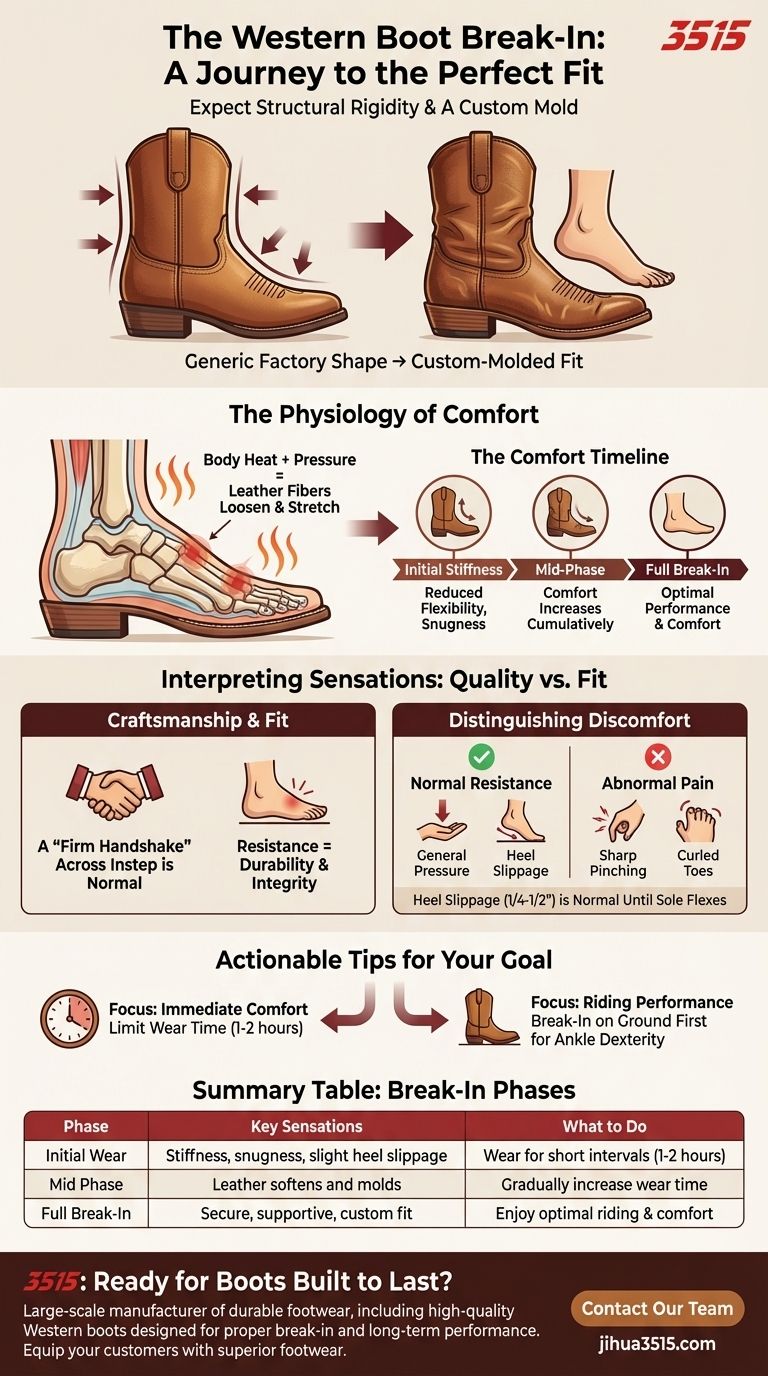
The Physiology of the Break-In
The Molding Process
High-quality leather is an organic material that reacts to heat, pressure, and moisture.
As you wear the boots, your body heat warms the oils in the leather. This allows the fibers to loosen and stretch precisely where your foot exerts pressure.
Initial Stiffness and Performance
References indicate that new boots are inherently stiff.
You should expect a temporary reduction in ankle flexibility. This stiffness can initially hinder performance, making fine motor cues in the stirrups feel less subtle than usual.
The Timeline of Comfort
Patience is the primary requirement during this phase.
While the boots may feel restrictive on day one, this sensation is transient. The references confirm that comfort increases cumulatively over time as the molding process completes.
Interpreting the Sensations
A Sign of Craftsmanship
A boot that requires a break-in period often indicates superior construction.
Soft, flimsy materials feel comfortable immediately but lack durability. The resistance you feel initially is a hallmark of quality leather that is built to maintain its structural integrity over years, not just weeks.
The Feel of the Fit
You should feel a firm "handshake" across the instep and around the ball of the foot.
This compression is necessary. As the leather stretches, this snugness will relax into a secure, supportive fit.
Distinguishing Discomfort from Poor Fit
It is critical to distinguish between the normal pains of breaking in a boot and the red flags of an incorrect size.
Normal Resistance vs. Sharp Pain
Normal: General pressure, stiffness in the shaft, and a feeling of confinement.
Abnormal: Sharp pinching, toes curling due to lack of length, or numbness. If you experience these, the boot does not fit, and no amount of "breaking in" will solve the problem.
Heel Slippage
Expect a small amount of heel slippage (roughly a quarter to half an inch) when you walk.
This occurs because the leather sole has not yet flexed. Once the sole becomes flexible, it will move with your foot, and the heel slippage will disappear.
Making the Right Choice for Your Goal
While the break-in is inevitable, how you approach it depends on your immediate needs.
- If your primary focus is Immediate Comfort: Limit wear time to short intervals (1-2 hours) initially to prevent blistering before the leather softens.
- If your primary focus is Riding Performance: Break the boots in on the ground first to ensure you have full ankle dexterity before mounting a horse.
The initial rigidity of your boots is simply the investment required to achieve a personalized, durable fit that synthetic alternatives cannot provide.
Summary Table:
| Break-In Phase | Key Sensations | What to Do |
|---|---|---|
| Initial Wear | Stiffness, snugness, slight heel slippage | Wear for short intervals (1-2 hours) |
| Mid Phase | Leather begins to soften and mold to foot | Gradually increase wear time |
| Full Break-In | Secure, supportive, custom fit | Enjoy optimal riding performance and comfort |
Ready for Boots Built to Last?
As a large-scale manufacturer, 3515 produces a comprehensive range of durable footwear for distributors, brand owners, and bulk clients. Our production capabilities encompass all types of shoes and boots, including Western riding boots crafted from high-quality leathers designed for a proper break-in and long-term performance.
Let us help you equip your customers with superior footwear. Contact our team today to discuss your manufacturing needs and how we can support your business.
Visual Guide
Related Products
- Durable Goodyear Welt Leather Work Boots for Wholesale & Private Label
- Wholesale High-Traction Camo Boots - Custom Manufacturer for Brands
- High-Traction Suede Tactical Boots Wholesale & Custom Manufacturing
- Wholesale Waterproof Tactical Boots Custom Suede & High-Traction Soles
- Durable Military Combat Boots with Water Drainage for Wholesale & OEM
People Also Ask
- What is the difference between full-grain and top-grain leather? Premium Material Guide for Boot Manufacturers
- What are the advantages of leather as an upper material for work boots? Unmatched Durability & Custom Comfort
- Why is it important to waterproof leather work boots? Protect Your Investment and Performance
- How should new leather work boots be broken in? A Guide to Comfort and Durability
- What are the advantages of leather uppers in work boots? Unmatched Durability & Protection


















