
When choosing motorcycle boots for optimal safety, riders must prioritize features designed to mitigate specific crash scenarios. The most critical elements are robust ankle support to prevent twisting injuries, certified impact-absorbing padding, construction from highly abrasion-resistant materials, and non-slip soles that provide confident control when stopped. A boot’s height is also a key safety factor, ensuring it protects the shin and stays on during a slide.
The safest motorcycle boot is not a single product, but a category of footwear. The core challenge for any rider is to correctly match the level of protection a boot offers to the specific demands and risks of their personal riding style.
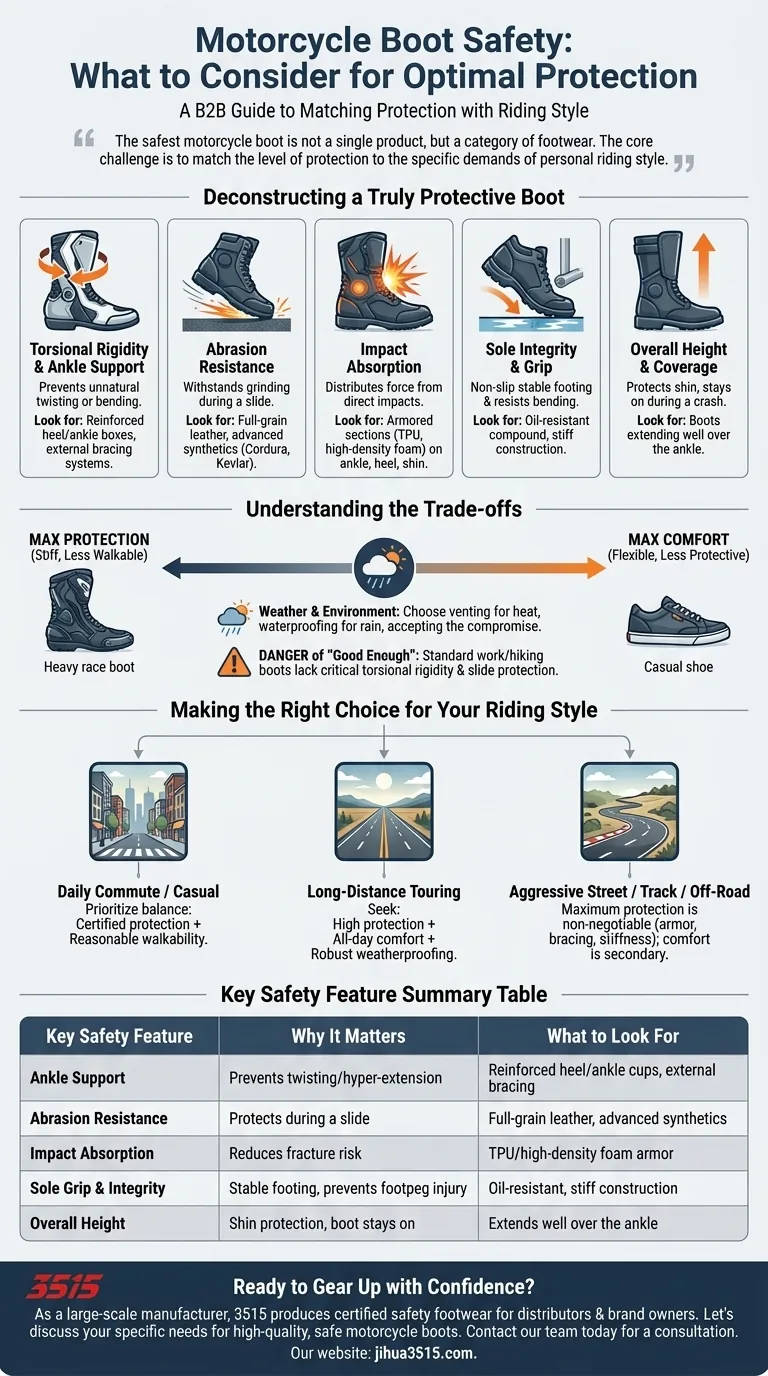
Deconstructing a Truly Protective Boot
To make an informed decision, you must understand the functional purpose behind each key safety feature. A motorcycle boot is an engineered piece of safety equipment where every component serves a distinct protective role.
Torsional Rigidity and Ankle Support
A primary function of a true riding boot is to prevent the ankle from twisting, hyper-extending, or bending in unnatural ways during an impact. This torsional rigidity is often achieved through reinforced heel and ankle boxes or external bracing systems. Regular shoes offer zero protection in this regard.
Abrasion Resistance
When a rider falls, they often slide. A boot must be made from materials that can withstand grinding against asphalt without wearing through. Full-grain leather and advanced synthetic textiles like Cordura or Kevlar are the industry standards for providing this critical abrasion resistance.
Impact Absorption
Direct impacts from the motorcycle, the road surface, or other objects can cause crushing injuries and fractures. Look for boots with reinforced or armored sections covering the ankle, heel, and shin. This padding, often made from high-density foam or TPU (thermoplastic polyurethane), is designed to absorb and distribute the force of an impact.
Sole Integrity and Grip
The sole of a motorcycle boot serves two safety functions. It must be made of a non-slip, oil-resistant compound to ensure stable footing on various surfaces when you stop. It also needs to be stiff enough to resist bending or folding around the footpegs in a crash, which helps prevent foot injuries.
Overall Height and Coverage
A low-cut shoe offers inadequate protection. A proper boot should extend well over the ankle. Taller boots provide an additional layer of protection for the shin against impacts and ensure the boot remains securely on your foot during the violence of a crash and slide.
Understanding the Trade-offs
Selecting the right boot is rarely about finding a single "best" option. It involves a deliberate compromise between maximum protection and practical, real-world usability.
The Protection vs. Comfort Spectrum
There is a direct trade-off between absolute safety and off-the-bike comfort. A full-height, heavily armored race boot offers the highest level of protection but is stiff and awkward to walk in. Conversely, a casual "riding shoe" is comfortable for walking but sacrifices significant ankle support and abrasion resistance.
Weather and Environmental Factors
Your choice is also influenced by your riding environment. A boot with extensive venting will be comfortable in hot weather but useless in the rain. Waterproof boots are excellent for touring but can become too warm on a summer day. Choosing a boot often means prioritizing for your most common riding conditions.
The Danger of "Good Enough"
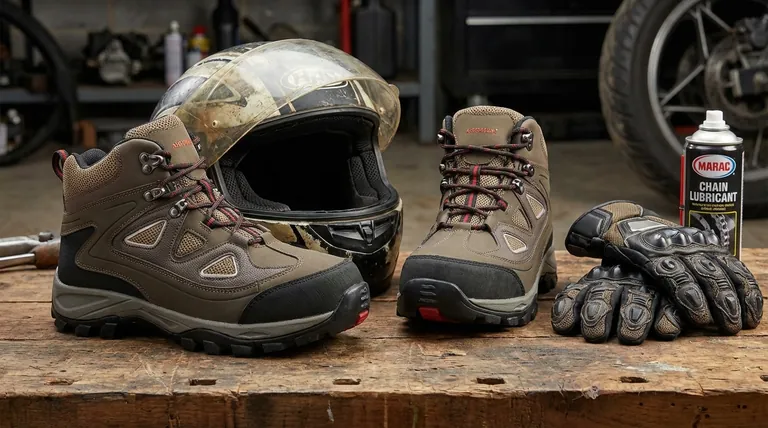
The most common mistake is assuming standard footwear, like work boots or hiking boots, is sufficient. These boots lack the specific torsional rigidity, slide protection, and impact absorption engineered into motorcycle-specific gear, and they will fail to protect you when you need them most.
Making the Right Choice for Your Riding Style
Your final decision should be guided by a realistic assessment of how you ride. Aligning the boot's features with your primary activity is the key to optimal safety and function.
- If your primary focus is daily commuting or casual riding: Prioritize a balance of certified protection (especially in the ankle and heel) with features that allow for reasonable walkability.
- If your primary focus is long-distance touring: Seek out boots that offer high levels of protection combined with all-day comfort and robust weatherproofing features.
- If your primary focus is aggressive street, track, or off-road riding: Maximum protection is non-negotiable. Choose boots with the highest levels of armor, bracing, and torsional stiffness, accepting that off-bike comfort is a secondary concern.
Ultimately, choosing the right boot is an active safety decision that protects you on every single ride.
Summary Table:
| Key Safety Feature | Why It Matters | What to Look For |
|---|---|---|
| Ankle Support & Rigidity | Prevents twisting and hyper-extension injuries in a crash. | Reinforced heel/ankle cups, external bracing, torsional stiffness. |
| Abrasion Resistance | Protects against wear-through during a slide on asphalt. | Full-grain leather, advanced synthetics (e.g., Cordura, Kevlar). |
| Impact Absorption | Reduces force from impacts to prevent fractures. | Armored sections (ankle, shin, heel) made of TPU or high-density foam. |
| Sole Grip & Integrity | Ensures stable footing when stopped and prevents footpeg injuries. | Oil-resistant, non-slip compound; stiff construction that resists bending. |
| Overall Height & Coverage | Protects the shin and ensures the boot stays on during a crash. | Boots that extend well over the ankle for maximum coverage. |
Ready to Gear Up with Confidence?
As a large-scale manufacturer, 3515 produces a comprehensive range of certified safety footwear for distributors, brand owners, and bulk clients. Our production capabilities encompass all types of protective motorcycle boots and boots, engineered with the critical features outlined above.
We help you offer your customers the optimal blend of protection, comfort, and style for every riding discipline. Let's discuss your specific needs and how we can deliver high-quality, safe footwear for your market.
Contact our team today for a consultation to explore our catalog and manufacturing solutions.
Visual Guide
Related Products
- Wholesale Tactical Boots High-Traction & Reflective for Bulk & Brand Orders
- High Performance Fire-Retardant Waterproof Safety Boots
- Durable Goodyear Welt Leather Work Boots for Wholesale & Private Label
- Wholesale High-Traction Camo Boots - Custom Manufacturer for Brands
- Heavy-Duty Waterproof Nubuck Safety Boots Safety Shoes for Bulk Supply
People Also Ask
- How do tactical boots protect against injuries? Discover the Integrated Safety System
- Why is the management of Initial Inventory (II) critical in the production and supply of tactical boots?
- What makes tactical boots valuable for specialized use? Essential Protection & Performance for High-Stakes Roles
- What are the advantages and disadvantages of tactical boots? Lightweight Comfort vs. Rugged Durability
- How do social media interactivity features enhance procurement engagement for tactical and work boots?



















