
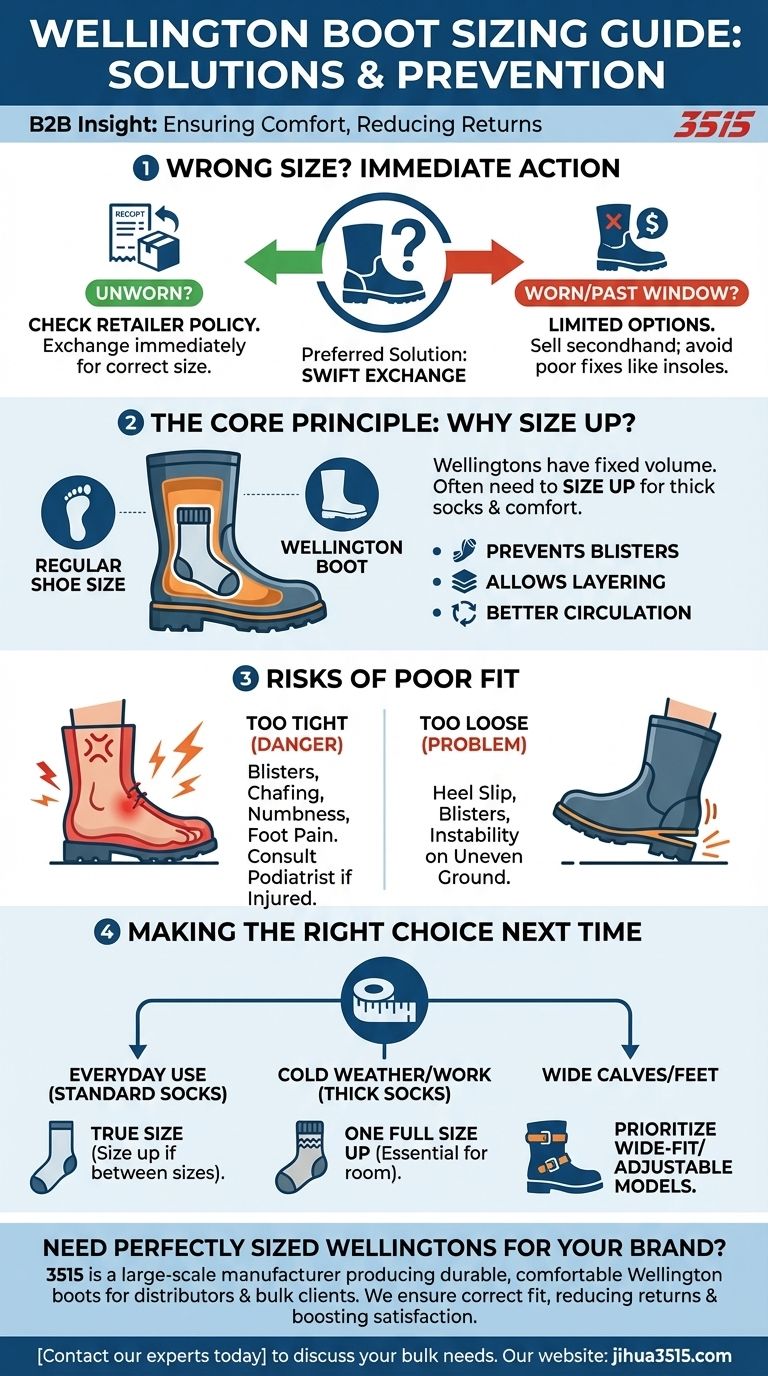
If your Wellington boots are the wrong size, your immediate and most effective course of action is to check the retailer's return or exchange policy. Most reputable brands will allow you to exchange unworn boots for the correct size, resolving the issue directly. This is always the preferred solution over attempting to make an ill-fitting boot work.
The best solution for the wrong size is a swift exchange. However, preventing this issue in the future requires understanding a core principle of Wellington boots: you often need to size up from your normal shoe size to accommodate thicker socks and achieve a comfortable fit.
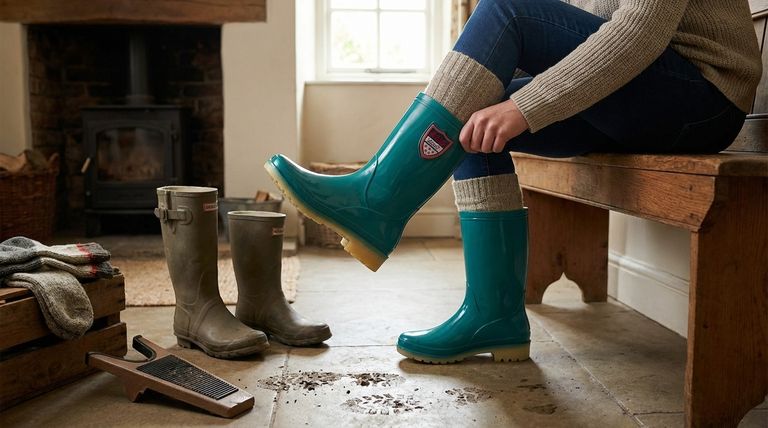
First Steps: Addressing the Immediate Problem
If you've just realized your new boots don't fit, time is of the essence. Your goal is to secure an exchange for the correct size, and that requires prompt and correct action.
Review the Return Policy Immediately
Do not wear the boots outside. Most policies state that returns or exchanges are only valid for items in new, unworn condition.
Check the retailer's website or the receipt for their specific timeframe and rules. Acting quickly shows the boots have not been used.
Prepare for the Exchange
Locate your proof of purchase and the original packaging. Having everything ready will make the exchange process smooth and successful, whether you do it in-store or by mail.
When a Return Isn't Possible
If you've already worn the boots or are outside the return window, your options are limited. You could try to sell them on a secondhand market to recoup some of the cost, but attempting to "fix" a poor fit with insoles is rarely a good long-term solution.
The Core Principle of Wellington Fit
Unlike shoes with laces or straps, Wellingtons have a fixed volume. This fundamental difference is why standard shoe sizing can be misleading and why a different approach is necessary.
Why 'Sizing Up' Is Common Advice
It is almost always better for a Wellington boot to be slightly too large than too small. A boot that is too tight can cause blisters and restrict circulation.
A slightly larger boot provides room for your foot to move naturally and, most importantly, allows for layering.
The Critical Role of Socks
The thickness of your socks is the single most important variable. If you plan to wear thick, thermal socks for cold weather or work, you should strongly consider going up a full size from your standard shoe size.
For general use with everyday socks, you may only need to size up if you fall between two sizes.
Understanding the Trade-offs of a Poor Fit
Wearing incorrectly sized boots is not just a matter of temporary discomfort; it can lead to more significant issues. Understanding the risks reinforces the need to get the fit right from the start.
The Danger of Boots That Are Too Tight
A boot that is too snug can lead to painful blisters, chafing, and numbness from compressed nerves or restricted blood flow. Over time, this constant pressure can contribute to foot pain.
The Problem with Boots That Are Too Loose
Excessively large boots present their own challenges. Your foot will slide, causing your heel to lift with every step. This heel slip creates friction, leading to blisters on your heel and Achilles tendon, and can make walking on uneven ground unstable.
When to Consult a Professional
If you have already endured a foot or ankle injury from wearing poorly fitting footwear, it is wise to consult a podiatrist. A specialist can treat any existing conditions and provide expert guidance on the type of footwear best suited for your foot shape and activity level.
Making the Right Choice Next Time
To avoid this problem in the future, select your size based on how you intend to use the boots.
- If your primary focus is everyday use with standard socks: Start with your true shoe size, but choose the next size up if your measurement falls between sizes.
- If your primary focus is cold weather or work with thick socks: It is almost always best to go one full size up from your regular shoe size to ensure adequate room.
- If you have wider calves or feet: Prioritize brands that offer wide-fit or adjustable-calf models, as foot length is only one part of a proper fit.
A well-fitting Wellington boot is an essential tool, and taking the time to get the size right is a worthwhile investment in your comfort and safety.
Summary Table:
| Situation | Recommended Action | Key Consideration |
|---|---|---|
| Boots are unworn | Check & act on retailer's return/exchange policy immediately. | Keep boots in new condition with original packaging. |
| Boots are worn/outside return window | Consider selling secondhand; avoid ineffective fixes like insoles. | A poor fit can cause blisters, pain, and instability. |
| Buying for the future | Size up from your regular shoe size, especially for thick socks. | A boot slightly too large is better than one too small. |
Need perfectly sized Wellington boots for your customers or brand?
As a large-scale manufacturer, 3515 produces a comprehensive range of durable and comfortable Wellington boots for distributors, brand owners, and bulk clients. We ensure the right fit from the start, saving you from returns and building customer satisfaction.
Contact our experts today to discuss your bulk Wellington boot needs and benefit from our extensive production capabilities.
Visual Guide
Related Products
- Durable Waterproof Rain Boots | Custom Manufacturer for Wholesale & Brands
- Durable Goodyear Welt Leather Work Boots for Wholesale & Private Label
- Wholesale Durable Leather Work Boots | 8-Inch Goodyear Welt Manufacturer
- Premium Wholesale Tactical Style Safety Shoes Boots with Quick Lacing
- Durable Leather Tactical Boots Wholesale & Custom Manufacturing for Brands
People Also Ask
- What are the main materials for waterproof rain boots? Choose the Right Material for Durability & Comfort
- What is the overall recommendation for choosing rain boot materials? A Guide to Rubber vs. PVC
- How does boot height affect waterproofing? Choose the Right Height for Ultimate Protection
- Why are rain boots more flexible and comfortable than snow boots? The Key Differences Explained
- What are the best types of shoes for different gardening conditions? Find Your Perfect Match.



















