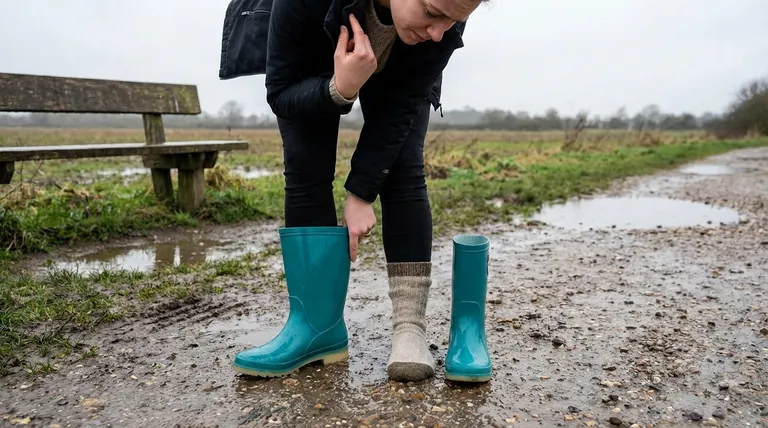
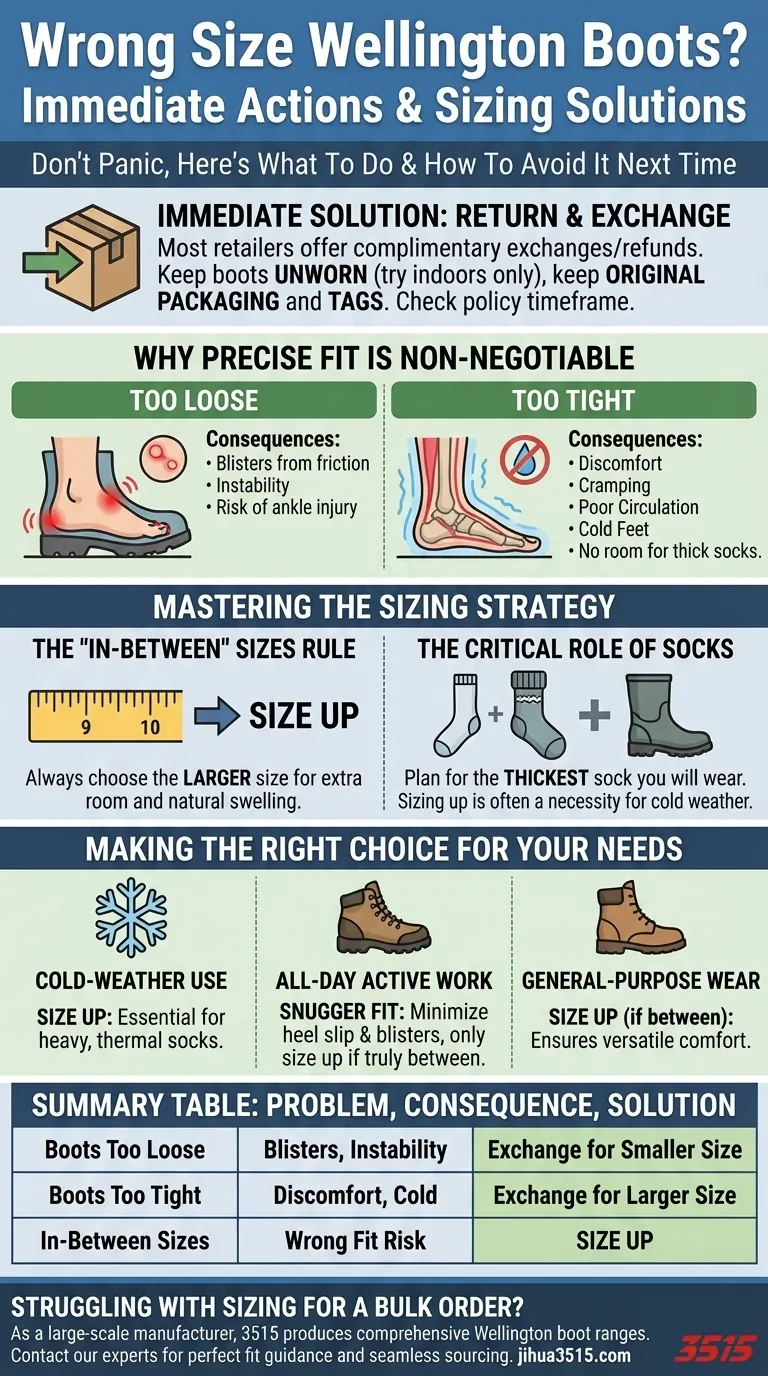
If you have chosen the wrong size of Wellington boots, your immediate and most effective solution is to take advantage of the retailer’s return and exchange policy. Most reputable brands and stores offer complimentary exchanges or refunds for boots that are in an unworn condition, allowing you to secure the correct size without financial loss.
While an exchange is the immediate fix for a poor fit, the fundamental solution is to understand the principles of proper boot sizing. This ensures your next choice provides the necessary comfort, support, and performance for your intended use.
Your Immediate Course of Action
Review the Return and Exchange Policy
The first step is to locate the retailer’s policy. This is typically found on their website or your purchase receipt.
Look for key details such as the timeframe for returns (e.g., 30 days), the condition the boots must be in (almost always unworn and in original packaging), and the process for initiating the exchange.
Prepare the Boots for Return
To ensure your exchange is accepted, do not wear the boots outdoors. Try them on indoors on a clean, carpeted surface to assess the fit without causing any scuffs or signs of wear.
Keep all original packaging, including the box and any tags, as these are usually required for a successful return.
Why a Precise Wellington Fit is Non-Negotiable
A common mistake is treating wellington sizing casually. Unlike a sneaker, the unstructured nature of a rubber boot means an incorrect fit has significant consequences for comfort and safety.
The Problem with a Fit That's Too Loose
Boots that are too large allow your foot to slide internally. This constant friction, especially at the heel, is a primary cause of painful blisters.
A loose fit also compromises stability. Your foot isn't secure, which can lead to a feeling of instability and increase the risk of a twisted ankle on uneven or muddy ground.
The Problem with a Fit That's Too Tight
Boots that are too tight will restrict circulation. This not only causes discomfort and cramping but also makes your feet feel colder in cool conditions, defeating one of the purposes of wearing them.
There will also be no room for air to circulate or for wearing thicker, warmer socks, severely limiting the boots' versatility in different seasons.
Understanding the Sizing Strategy
To avoid this issue in the future, a proactive approach to selecting your size is essential. It goes beyond simply picking your usual shoe number.
The "In-Between" Size Rule
A common point of confusion is landing between two sizes. Based on manufacturer recommendations, the correct strategy is almost always to size up.
Choosing the larger size provides crucial extra room. This prevents the boot from being too restrictive and accommodates natural foot swelling throughout the day.
The Critical Role of Socks
The type of socks you plan to wear has a major impact on fit. If you intend to wear thick, cushioned, or thermal socks for warmth, sizing up is not just a recommendation—it's a necessity.
A boot that fits perfectly with a thin sock will be uncomfortably tight with a heavy winter sock. Always consider the thickest sock you might wear when making your sizing decision.
Making the Right Choice for Your Needs
Use your goal to determine the ideal sizing approach for your next pair.
- If your primary focus is cold-weather use: Sizing up is the best strategy to guarantee enough room for heavy, thermal socks.
- If your primary focus is all-day walking or active work: A snugger fit is better, so only size up if you are truly between sizes to minimize heel slip and blisters.
- If your primary focus is occasional, general-purpose wear: Follow the standard advice of sizing up if you fall between sizes to ensure versatile comfort.
By focusing on how you will use the boots, you can make a deliberate sizing choice that ensures both comfort and function from the very first day.
Summary Table:
| Problem | Consequence | Solution |
|---|---|---|
| Boots Too Loose | Blisters, instability, risk of injury | Exchange for a smaller size; ensure a snug heel fit |
| Boots Too Tight | Discomfort, poor circulation, cold feet | Exchange for a larger size; account for sock thickness |
| In-Between Sizes | Risk of choosing the wrong fit | Size up to accommodate swelling and thicker socks |
Struggling with sizing for a bulk order? As a large-scale manufacturer, 3515 produces a comprehensive range of Wellington boots for distributors, brand owners, and bulk clients. Our experts can guide you on the perfect fit for your target market, ensuring customer satisfaction and reducing returns. Let's discuss your specific needs—contact our team today for a seamless sourcing experience.
Visual Guide
Related Products
- Durable Waterproof Rain Boots | Custom Manufacturer for Wholesale & Brands
- Durable Goodyear Welt Leather Work Boots for Wholesale & Private Label
- Wholesale Durable Leather Work Boots | 8-Inch Goodyear Welt Manufacturer
- High-Traction Suede Tactical Boots Wholesale & Custom Manufacturing
- Premium Wholesale Tactical Style Safety Shoes Boots with Quick Lacing
People Also Ask
- What are the main materials for waterproof rain boots? Choose the Right Material for Durability & Comfort
- What is the overall recommendation for choosing rain boot materials? A Guide to Rubber vs. PVC
- How does boot height affect waterproofing? Choose the Right Height for Ultimate Protection
- Why are rain boots more flexible and comfortable than snow boots? The Key Differences Explained
- What are the best types of shoes for different gardening conditions? Find Your Perfect Match.