
A properly fitted motorcycle boot should be snug around your heel and ankle while providing enough room to wiggle your toes freely. The goal is a secure fit that doesn't restrict circulation or create pressure points, as your feet can swell slightly during a long ride. Never settle for a boot that feels overly tight from the start.
Your choice of motorcycle boot is a critical decision that balances three factors: validated safety, all-day comfort, and features tailored to your specific type of riding. The right fit isn't just about your shoe size; it's about finding a boot that feels like a secure extension of your body.
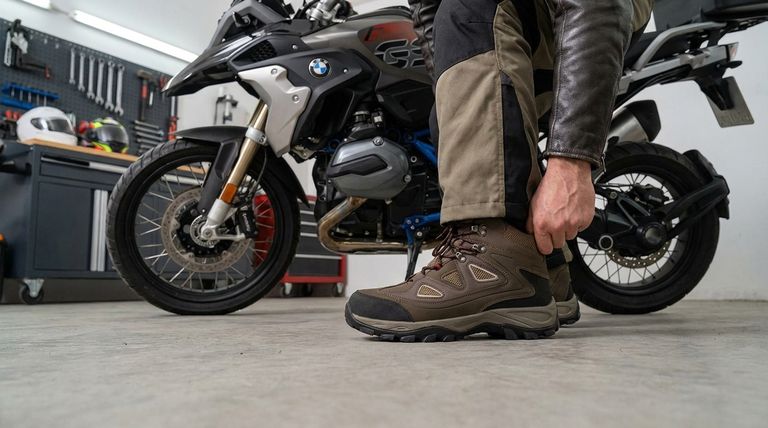
Beyond Shoe Size: The Core Elements of Fit
A great motorcycle boot fit goes far beyond the number on the box. You need to assess how it interacts with the unique shape of your foot and leg to ensure both safety and comfort on the road.
Length and Toe Room
The most common starting point is length. You should have about a half-inch of space between your longest toe and the end of the boot. This prevents your toes from pressing against the front during shifts or when walking.
Heel and Ankle Security
This is where motorcycle boots differ from casual shoes. Your heel should feel "locked in" with minimal to no lift when you walk. This secure fit is critical for maintaining ankle support and preventing the boot from twisting or coming off in a crash.
Shaft Height and Circumference
The boot's shaft protects your shin from impacts with road debris and the bike itself. Ensure the height is appropriate for your riding style, with taller boots offering more protection. The calf opening should be snug enough to prevent gaping but not so tight that it restricts blood flow.
Core Safety Features are Non-Negotiable
Motorcycle boots are fundamental safety equipment. Their primary purpose is to protect you from impact, abrasion, and twisting forces. Look for features that have been tested to meet established safety standards.
Understanding Protection Ratings
Always look for a CE (Conformité Européenne) rating. This certification indicates the boot has been independently tested to meet specific standards for abrasion resistance, impact protection, and structural rigidity.
Reinforced Toe and Heel Boxes
The boot should have a reinforced toe box and heel counter. This armor protects your feet from being crushed by the weight of the bike or from impacts. Materials can range from steel for durability to lighter composite or alloy materials that offer better performance in cold weather.
Torsional Stiffness and Ankle Bracing
A key function of a quality boot is to prevent your ankle from twisting unnaturally. Good boots will have built-in ankle bracing and will be very stiff, resisting side-to-side bending forces. This rigidity is a feature, not a flaw.
Abrasion-Resistant Materials
The boot's outer shell must withstand sliding on pavement. Full-grain leather remains an excellent choice for its durability, but advanced textiles reinforced with materials like Kevlar also provide superb abrasion resistance.
Matching the Boot to Your Riding Style
The ideal boot for a cross-country tour is very different from one designed for a racetrack. Considering your primary use case is essential for making the right choice.
For Maximum Track or Sport Riding Protection
These boots prioritize rigidity, impact absorption, and armor above all else. They often feature external plastic bracing, replaceable toe sliders, and a very secure closure system. Off-bike comfort and walkability are secondary concerns.
For Long-Distance Touring and All-Weather Riding
Touring boots focus on a blend of protection and long-haul comfort. Key features include a waterproof and breathable membrane, a slightly more flexible sole for occasional walking, and a taller shaft for complete weather protection.
For Daily Commuting and Urban Riding
Commuter boots offer a compromise between on-bike protection and off-bike style and comfort. They often look like casual sneakers or work boots but include discreet armor in the ankles, heel, and toe box, along with a stiffer, reinforced sole.
Making the Right Choice for Your Goal
- If your primary focus is maximum track-day protection: Prioritize rigid ankle bracing, a high CE rating, and replaceable sliders over flexibility or off-bike comfort.
- If your primary focus is all-weather touring comfort: Look for a certified waterproof membrane, a taller shaft for coverage, and a fit that remains comfortable after hours in the saddle.
- If your primary focus is daily commuting and walkability: Choose a shorter, more flexible boot that still has certified ankle, heel, and toe protection.
Ultimately, a well-fitted motorcycle boot is the most important piece of gear connecting you to your machine and ensuring your safety on every ride.
Summary Table:
| Fit & Safety Consideration | Key Feature | Why It Matters |
|---|---|---|
| Length & Toe Room | ~0.5 inch of space | Prevents toe impact during riding/walking |
| Heel & Ankle Security | Locked-in heel with minimal lift | Critical for ankle support and crash protection |
| Safety Certification | CE Rating | Independently tested for abrasion & impact resistance |
| Material & Armor | Reinforced toe/heel, abrasion-resistant shell (e.g., leather, Kevlar) | Protects from crushing, impacts, and road rash |
| Riding Style Match | Touring, Commuting, or Sport/Track features | Ensures the boot's purpose aligns with your needs |
Ready to Equip Your Riders with Superior Motorcycle Boots?
As a large-scale manufacturer, 3515 produces a comprehensive range of CE-certified motorcycle boots for distributors, brand owners, and bulk clients. Our production capabilities encompass all types of riding boots—from rigid sport models to comfortable touring and stylish commuter designs—ensuring your customers get the perfect blend of safety, comfort, and style.
Contact 3515 today to discuss your specific requirements and discover how our manufacturing expertise can enhance your product line.
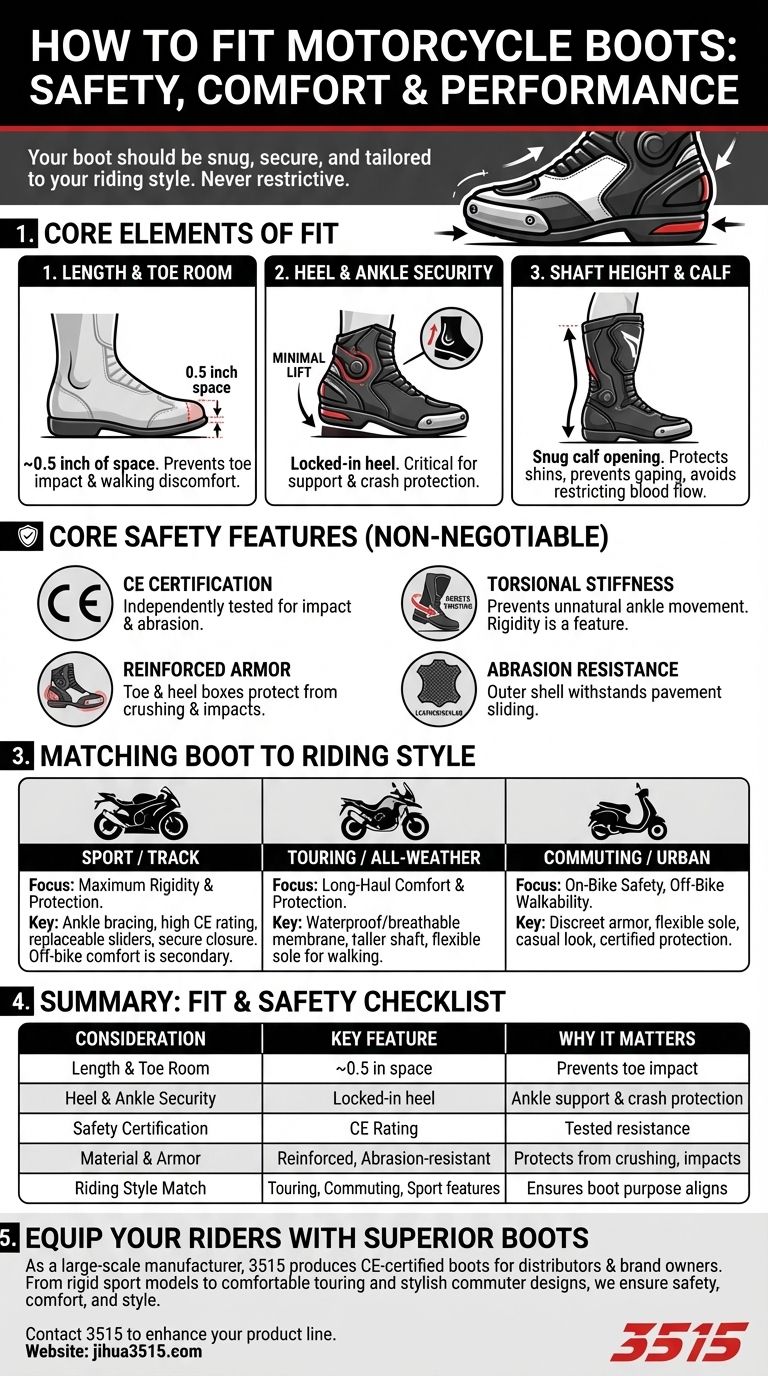
Visual Guide
Related Products
- Wholesale Tactical Boots High-Traction & Reflective for Bulk & Brand Orders
- High Performance Fire-Retardant Waterproof Safety Boots
- Durable Goodyear Welt Leather Work Boots for Wholesale & Private Label
- Wholesale High-Traction Camo Boots - Custom Manufacturer for Brands
- Heavy-Duty Waterproof Nubuck Safety Boots Safety Shoes for Bulk Supply
People Also Ask
- How do tactical boots protect against injuries? Discover the Integrated Safety System
- What features should law enforcement officers look for in tactical boots? Essential Guide for Safety & Performance
- How is the compatibility of polymer materials demonstrated in smart footwear? Enhancing Tactical & Training Performance
- What role does repairable design play in tactical boots? Extend Lifespan & Cut Total Ownership Costs
- How do social media interactivity features enhance procurement engagement for tactical and work boots?



















