
First and foremost, when choosing Wellington boots, you must consider the clothing you will wear inside them. This includes the thickness of your socks and the bulk of your trousers, as both directly impact the required size for your feet and the necessary width around your calves for a comfortable and functional fit.
Choosing the right Wellington boot is not about finding your shoe size; it’s about selecting a boot that integrates with your entire outfit—from socks to trousers—to meet the functional demands of your environment and activity.
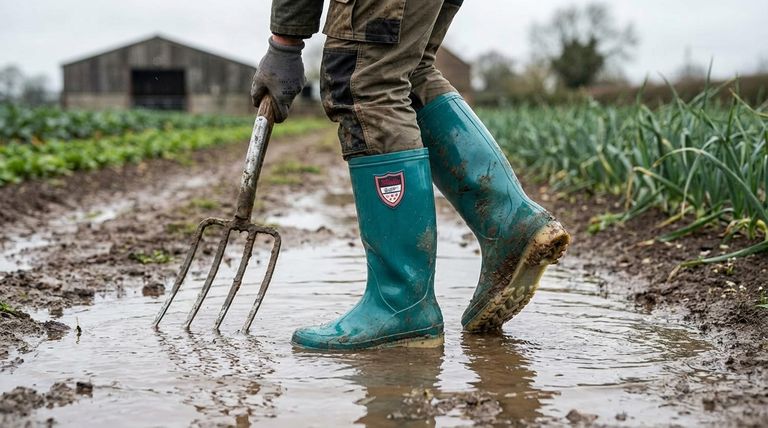
The Core Factors: Fit, Clothing, and Use
The primary mistake many make is buying Wellies based on their standard shoe size alone. The real goal is to find a boot that works as part of a system with your clothing.
Accommodating Your Layers
What you wear inside the boot is the most critical factor. Thick wool or thermal socks, essential for warmth in cold weather, can easily require you to go up a full shoe size.
Similarly, consider your trousers. Tucking in heavy-duty work pants, waterproofs, or even thick denim consumes significant space around the calf, making a standard-width boot too tight and restrictive.
Matching Boot to Activity
The type of activity dictates the clothing you'll wear, which in turn dictates the boot you need. For casual dog walking, your everyday trousers and socks might be fine.
However, for demanding physical work, you'll be wearing durable work trousers. For hiking or long-distance trekking, you'll need technical socks. Each scenario requires a different consideration for boot fit and features.
Aligning Boot Features with Your Wardrobe
Different boots are designed for different purposes, and these designs assume you'll be wearing certain types of clothing.
For General & Casual Use
If your boots are for light gardening or rainy-day errands, your clothing is less of a concern. A standard-fit boot will likely work well with everyday socks and trousers.
For Demanding Work Environments
Safety-rated Wellies are built for durability and protection. They are often stiffer and heavier, designed to be worn with rugged work trousers and protective socks. Look for adjustable calf straps or gussets to accommodate this bulky attire.
For Outdoor Recreation & Hiking
Wellington boots designed for trekking prioritize flexibility, support, and breathability. These are best paired with technical hiking socks and trousers that won't bunch up or cause chafing. A snugger fit is often preferred here for better foot stability, making the sock choice paramount.
Understanding the Trade-offs
Choosing the perfect boot often involves balancing competing priorities. Understanding these compromises is key to making an informed decision.
Comfort vs. Stability
A wider calf and larger foot size to accommodate thick layers provide comfort and warmth. However, this looser fit can reduce ankle support and stability, making the boot feel clumsy for fast-paced movement or walking on uneven terrain.
Insulation vs. Versatility
An insulated boot is excellent for stationary work in the cold with thermal layers. However, it lacks versatility and will be far too warm for summer use, regardless of what socks or trousers you wear. An uninsulated boot can be adapted for all seasons with the right sock choice.
Durability vs. Flexibility
Heavy-duty, rugged boots that can handle thick workwear are often less flexible. This can make them tiring to wear for long periods of walking, where a more pliable boot designed for thinner walking trousers would be more appropriate.
Making the Right Choice for Your Goal
To select the best Wellington boots, start by defining their primary purpose.
- If your primary focus is warmth and cold-weather work: Choose a boot at least one size larger than your normal shoe size to fit thermal socks and look for a wide or adjustable calf.
- If your primary focus is safety and professional use: Bring your typical work trousers and socks with you when trying on boots to guarantee a fit that is comfortable and doesn't compromise on safety.
- If your primary focus is all-season walking and recreation: Opt for a high-quality, uninsulated boot with a good footbed, and invest in different weights of socks to adapt it to the season.
Ultimately, the best Wellington boot is one that functions seamlessly with the clothes you need to wear for your specific task.
Summary Table:
| Primary Use | Key Clothing Considerations | Recommended Boot Features |
|---|---|---|
| General & Casual Use | Everyday socks and trousers | Standard fit, basic comfort |
| Demanding Work | Thick work trousers, protective socks | Wide/adjustable calf, safety-rated, durable |
| Outdoor Recreation | Technical hiking socks, thin trousers | Snug fit, flexible, supportive, breathable |
| Cold-Weather Focus | Thermal socks, bulky layers | Insulated, larger size, wide calf |
Need Wellington Boots That Fit Your Workwear and Workflow?
As a large-scale manufacturer, 3515 produces a comprehensive range of footwear for distributors, brand owners, and bulk clients. Our production capabilities encompass all types of safety, recreational, and professional Wellington boots designed to integrate perfectly with your specific clothing and activity requirements.
Contact us today for durable, comfortable boots tailored to your needs!
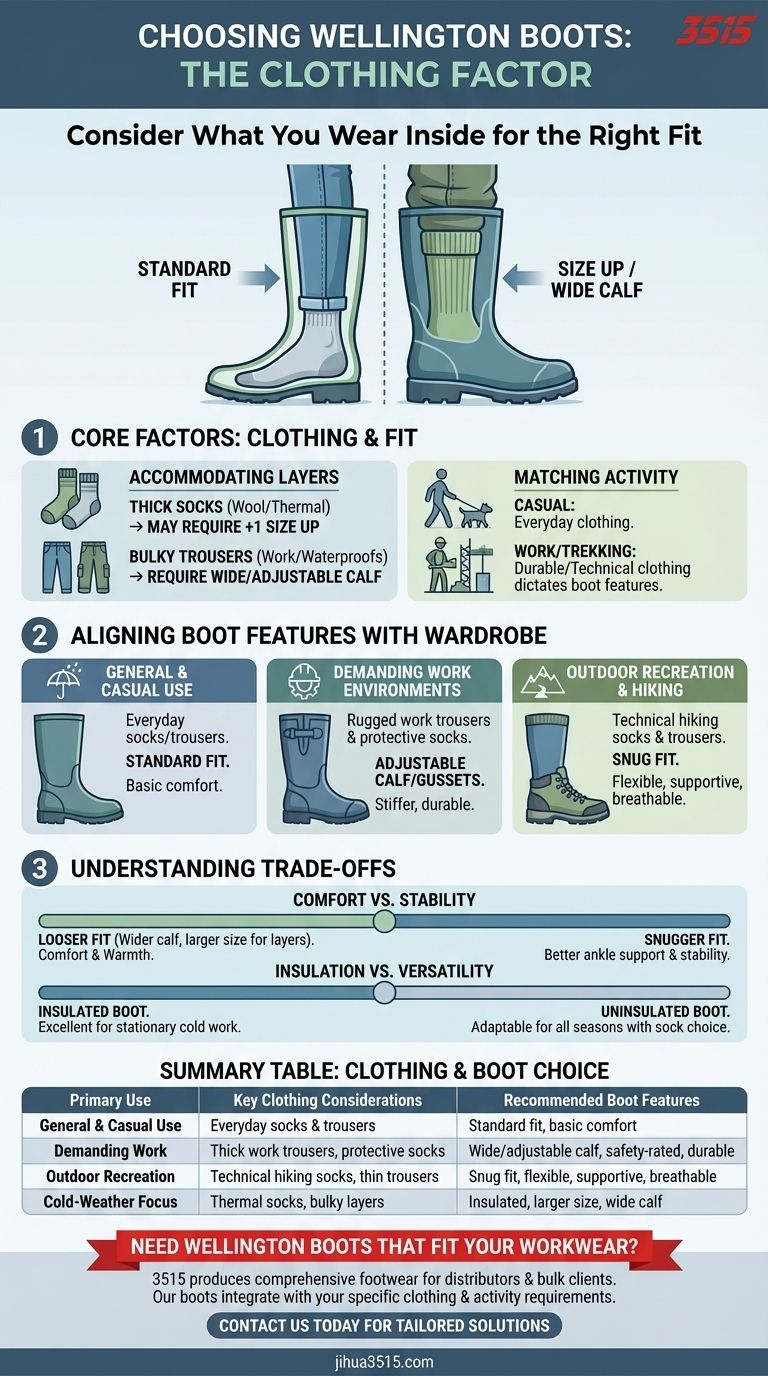
Visual Guide
Related Products
- Durable Waterproof Rain Boots | Custom Manufacturer for Wholesale & Brands
- Durable Goodyear Welt Leather Work Boots for Wholesale & Private Label
- Wholesale Durable Leather Work Boots | 8-Inch Goodyear Welt Manufacturer
- High-Traction Suede Tactical Boots Wholesale & Custom Manufacturing
- Premium Wholesale Tactical Style Safety Shoes Boots with Quick Lacing
People Also Ask
- What are the main materials for waterproof rain boots? Choose the Right Material for Durability & Comfort
- What is the overall recommendation for choosing rain boot materials? A Guide to Rubber vs. PVC
- How does boot height affect waterproofing? Choose the Right Height for Ultimate Protection
- Why are rain boots more flexible and comfortable than snow boots? The Key Differences Explained
- What are the best types of shoes for different gardening conditions? Find Your Perfect Match.



















