
For skating gaps and stairs, the best shoes are those engineered for maximum impact protection. This almost always means choosing a shoe with a cupsole construction or a modern vulcanized model that features a thick, high-quality insole. These designs are specifically built to absorb the force from harsh landings, significantly reducing your risk of heel bruises.
The core challenge is not simply finding a protective shoe, but finding one that balances high-impact cushioning with the essential board feel required for control. Your goal is to protect your feet without disconnecting you from your board.
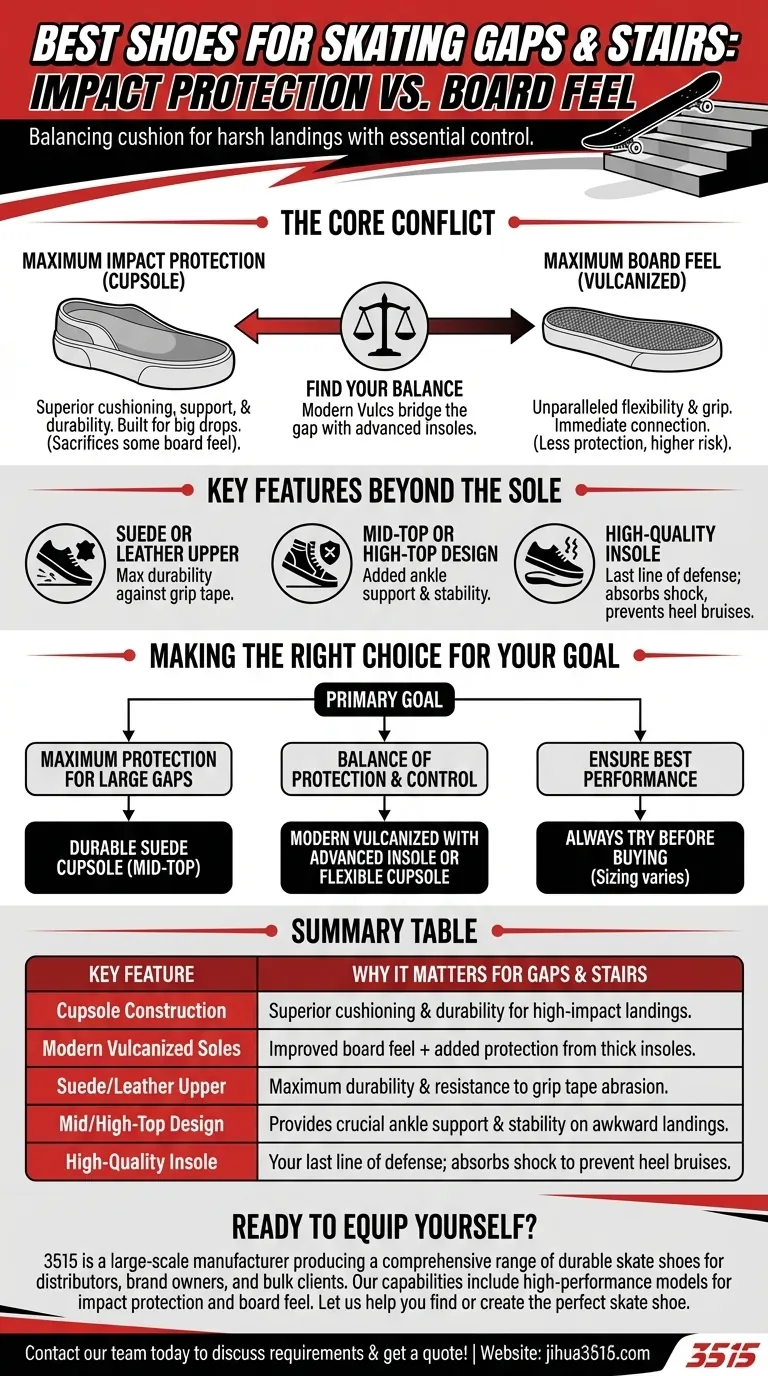
The Core Conflict: Impact Protection vs. Board Feel
Every skate shoe exists on a spectrum between durability and board feel. For high-impact skating, you need to lean heavily towards protection, which is primarily determined by the shoe's sole construction.
Understanding Cupsole Construction
A cupsole features a durable, molded rubber outsole that is stitched to the upper part of the shoe. Think of it as a single, thick rubber "cup" that your foot sits inside.
This construction method provides superior cushioning, support, and durability compared to traditional designs. It is the go-to choice for skaters who consistently jump down large obstacles.
The Role of Vulcanized Soles (Vulcs)
A vulcanized shoe is constructed by heat-treating and bonding the sole to the upper. This creates a much more flexible shoe that is "broken-in" right out of the box.
Traditionally, vulcs offer unparalleled board feel and grip but provide minimal impact protection. However, many modern vulcanized shoes now include advanced, thicker insoles to help bridge this protection gap.
Key Features Beyond the Sole
While sole construction is paramount, other features contribute significantly to a shoe's performance and longevity when skating gaps.
Upper Materials for Durability
Always prioritize shoes with uppers made from suede or leather. These materials are far more resistant to the abrasion from grip tape than canvas or synthetic textiles, ensuring your shoe lasts longer.
Ankle Support and Stability
Consider mid-top or high-top models. The extra material around the ankle provides added support, which can help prevent twists on awkward landings, and offers a layer of protection from the board itself.
The Power of Insoles
The insole is your last line of defense against impact. A high-quality stock insole can make a huge difference, and investing in aftermarket insoles can transform a good shoe into a great one for absorbing shock.
Understanding the Trade-offs
Choosing the right shoe means understanding the compromises you are making. There is no single "perfect" shoe, only the best shoe for a specific purpose.
The Cost of Maximum Protection
Extremely durable, padded, and stiff cupsole shoes offer the best protection. However, this often comes at the cost of board feel, making it harder to feel the concave and position your feet for technical tricks.
The Risk of Maximum Board Feel
A thin, minimalist vulcanized shoe gives you an immediate and precise connection to your board. The trade-off is a near-total lack of impact absorption, making a single bad landing a high risk for a debilitating heel bruise.
Finding Your Personal Balance
The ideal shoe for you depends on your personal preference and the size of the obstacles you skate. Some skaters prefer a slightly less protective shoe to maintain control, while others will sacrifice all board feel for maximum cushioning.
Making the Right Choice for Your Goal
Use your primary objective to guide your decision, focusing on the construction and features that serve your needs.
- If your primary focus is maximum protection for large gaps and stairs: Choose a durable suede cupsole shoe, preferably a mid-top for added ankle support.
- If your primary focus is a balance of impact absorption and technical control: Look for a modern vulcanized shoe with a high-quality stock insole or a more flexible cupsole model.
- If your primary focus is ensuring the best performance: Always try shoes on before buying, as sizing varies between brands, and remember they will stretch slightly with wear.
Ultimately, choosing the right shoe is about arming your feet for impact without sacrificing the control you need to land.
Summary Table:
| Key Feature | Why It Matters for Gaps & Stairs |
|---|---|
| Cupsole Construction | Superior cushioning and durability to absorb high-impact landings. |
| Modern Vulcanized Soles | Improved board feel with added protection from advanced, thick insoles. |
| Suede/Leather Upper | Maximum durability and resistance to grip tape abrasion. |
| Mid/High-Top Design | Provides crucial ankle support and stability on awkward landings. |
| High-Quality Insole | Your last line of defense; absorbs shock to prevent heel bruises. |
Ready to equip yourself with the right footwear?
As a large-scale manufacturer, 3515 produces a comprehensive range of durable skate shoes for distributors, brand owners, and bulk clients. Our production capabilities encompass all types of shoes and boots, including high-performance models engineered for maximum impact protection and board feel.
Let us help you find or create the perfect skate shoe for your needs. Contact our team today to discuss your requirements and get a quote!
Visual Guide
Related Products
- Advanced KPU Athletic Safety Shoe with Steel Toe Cap Anti-Slip Rotary Lacing System
- Wholesale Durable Camouflage Canvas Shoes with High-Traction Cleated Rubber Sole
- Premium Suede Sport Safety Shoes for Wholesale & Bulk Orders
- Wholesale Durable & Breathable Training Shoes for Custom Brands
- Wholesale Breathable Training Shoes Custom Athletic Footwear Manufacturer
People Also Ask
- What are the key differences between steel toe and composite toe caps? Choose the Right Safety for Your Job
- What impact do steel toe caps have on toe skin health? Prevent Friction and Pressure in Your Safety Shoes
- What are the primary protective functions of safety shoes with steel toes in the automotive repair industry?
- What type of safety shoe is recommended for workers exposed to heavy machinery? Steel Toe Boots for Ultimate Protection
- How does defining specific friction interface models in FEA assist in predicting safety shoe toe cap failure modes?



















