
The primary safety standard to look for in motorcycle boots is EN 13634. This European standard is the global benchmark specifically designed and tested for the unique risks of motorcycling, such as high-speed abrasion, impact, and crushing forces. While other general certifications exist, EN 13634 is the definitive mark of purpose-built, protective footwear for riders.
A boot's safety rating is not a single checkmark; it's a detailed report card. Understanding the codes within the EN 13634 standard allows you to choose footwear precisely matched to the level of protection you need for your specific riding style.
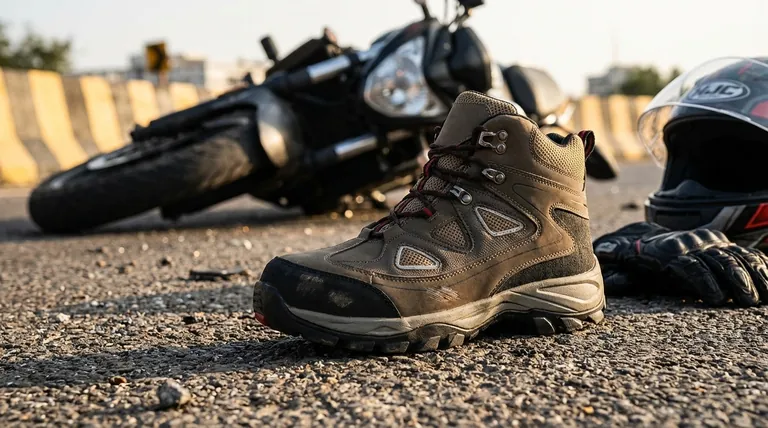
Why a Specific Standard for Motorcycles Matters
The Unique Risks of Riding
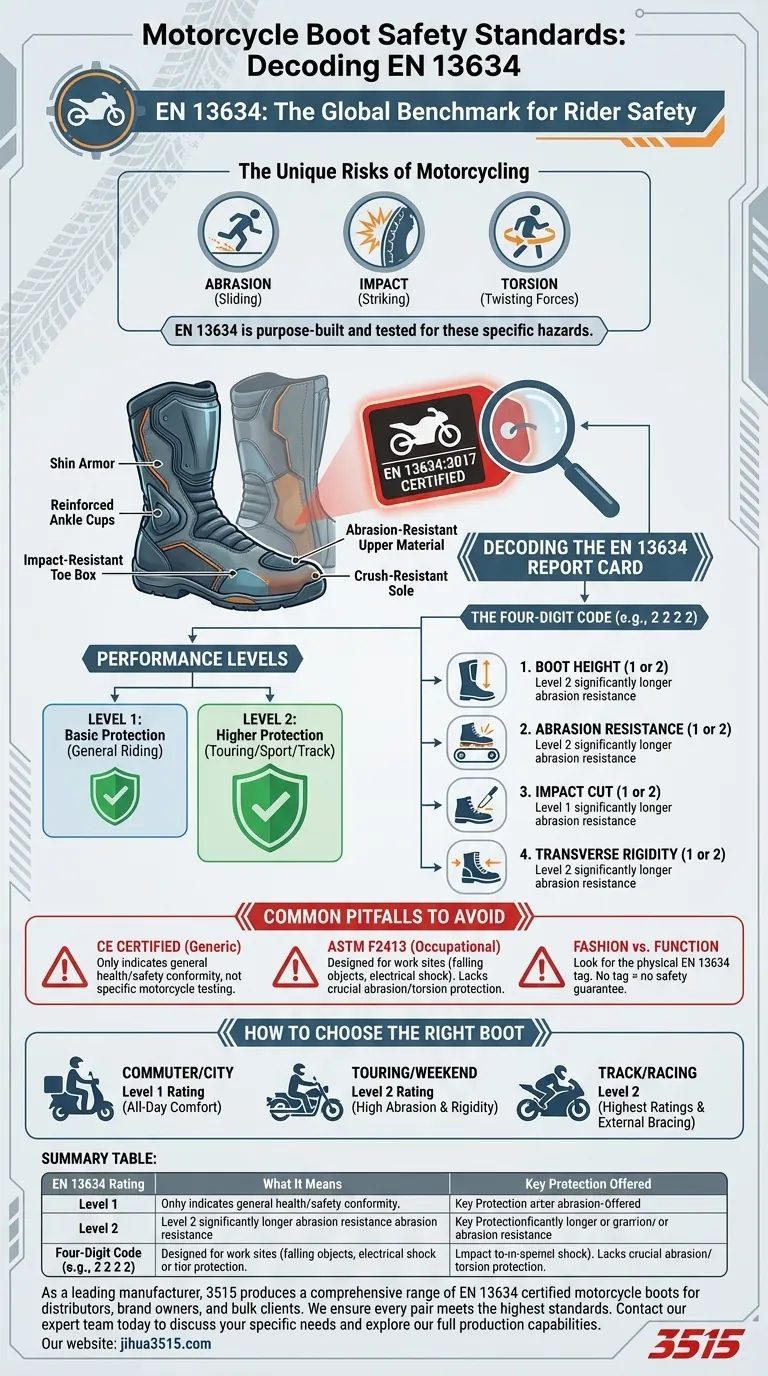
Motorcycle accidents present a set of dangers entirely different from those in a workshop or on a construction site. The primary threats are abrasion from sliding on pavement, impact from contact with the ground or other objects, and severe twisting forces (torsion) on the ankle.
Beyond Simple "Sturdiness"
A common mistake is assuming any thick leather boot offers adequate protection. While a sturdy work boot is better than a sneaker, it is not an engineered piece of safety equipment. True motorcycle boots incorporate specific features like reinforced ankle cups, shin armor, and specialized materials tested to withstand the forces of a crash.
The Role of Certification
Certification provides independent, objective verification that a boot performs to a known standard. It replaces marketing claims with empirical data from controlled laboratory tests, ensuring the product delivers the protection it promises when you need it most.
Decoding the EN 13634 Standard
The Core of the Standard
When you inspect a pair of certified motorcycle boots, look for a tag inside with a pictogram of a motorcycle and the code EN 13634:2017 (or a similar year). This indicates the boot meets the specific European Norm for protective motorcycle footwear.
Performance Levels: 1 vs. 2
The standard defines two levels of protection. Level 1 provides a basic, acceptable level of safety suitable for general riding. Level 2 signifies a higher level of performance, offering significantly more resistance to damage and is the preferred choice for those seeking maximum protection.
The Four-Digit Report Card
Next to the standard number, you will see a sequence of four digits (e.g., 2 2 2 2). Each number represents the boot's performance level (either 1 or 2) in a specific test.
- Boot Height: The first digit is almost always 1 or 2, indicating if it's an ankle-height boot or a taller boot.
- Abrasion Resistance: The second digit is critical. It measures how long the boot material survives being held against a grinding belt. Level 2 lasts significantly longer than Level 1.
- Impact Cut: The third digit tests the boot's resistance to being cut by a blade dropped from a height. This simulates an impact with sharp road debris or bike parts.
- Transverse Rigidity: The final digit measures the boot’s resistance to being crushed side-to-side. A high rating (Level 2) helps prevent your foot from being mangled under the weight of the bike.
Common Pitfalls to Avoid
Confusing "CE Certified" with "EN 13634 Rated"
"CE" is a general mark that a product conforms to European health and safety standards. However, it doesn't tell you what it was tested for. You must look for the specific EN 13634 standard to ensure it was tested as motorcycle equipment.
The Misapplication of ASTM Standards
You may see boots marketed with ASTM F2413. It is crucial to understand that this is an American occupational safety standard for work boots. It tests for hazards like falling objects (impact to the toe) and electrical shock. It does not test for abrasion resistance or torsional rigidity, making it an inadequate and unsafe substitute for a proper riding boot.
The "Fashion vs. Function" Trap
Many brands produce "riding shoes" or "moto-inspired" footwear that look the part but lack any protective certification. Always ignore marketing and look for the physical EN 13634 tag sewn inside the boot. Without it, you are buying a fashion item, not a piece of safety equipment.
How to Choose the Right Boot for Your Ride
Your ideal level of protection depends directly on how and where you ride. Use the certification tag as your guide.
- If your primary focus is daily commuting or casual city riding: A boot with a basic Level 1 rating across the board offers a good balance of protection and all-day comfort.
- If your primary focus is touring or spirited weekend rides: Seek out boots with a Level 2 rating, paying special attention to high ratings for abrasion resistance and transverse rigidity.
- If your primary focus is track days or racing: Only boots with the highest Level 2 ratings in all categories, along with features like external ankle bracing, should be considered.
- If you are considering a work-style boot (with an ASTM rating): Recognize that it lacks the specific abrasion and torsional protection required for motorcycling and is not a safe substitute for certified gear.
By looking past marketing and directly at the certification label, you empower yourself to make an informed decision based on proven performance.
Summary Table:
| EN 13634 Rating | What It Means | Key Protection Offered |
|---|---|---|
| Level 1 | Basic, acceptable protection | Suitable for general/city riding |
| Level 2 | Higher performance protection | Superior abrasion & impact resistance for touring/sport riding |
| Four-Digit Code (e.g., 2 2 2 2) | Performance in specific tests | Height, Abrasion, Impact Cut, Transverse Rigidity |
As a leading manufacturer, 3515 produces a comprehensive range of EN 13634 certified motorcycle boots for distributors, brand owners, and bulk clients. We ensure every pair meets the highest standards of abrasion resistance, impact protection, and torsional rigidity that riders demand. Let us help you equip your customers with the right protection. Contact our expert team today to discuss your specific needs and explore our full production capabilities.
Visual Guide
Related Products
- Wholesale Tactical Boots High-Traction & Reflective for Bulk & Brand Orders
- High Performance Fire-Retardant Waterproof Safety Boots
- Durable Goodyear Welt Leather Work Boots for Wholesale & Private Label
- Wholesale High-Traction Camo Boots - Custom Manufacturer for Brands
- Heavy-Duty Waterproof Nubuck Safety Boots Safety Shoes for Bulk Supply
People Also Ask
- How do tactical boots protect against injuries? Discover the Integrated Safety System
- How does the comparative gait analysis between grass and asphalt guide safety shoe R&D? Optimize Tactical Performance
- What types of boots are used by Bravo in SEAL Team? Salomon & Merrell for Elite Performance
- What are the different types of tactical boots available? Find the Right Boot for Your Mission
- What are the primary benefits of wearing tactical boots for everyday use? Get All-Day Comfort & Durability



















