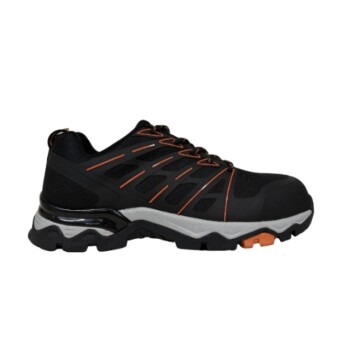
Industrial high-precision force plates act as the primary instrument for objectively quantifying the stability and balance characteristics of safety footwear. They function by detecting minute, real-time movements of the Center of Pressure (COP) to determine exactly how a specific shoe design affects a wearer's postural control.
Core Takeaway: Force plates convert the subjective "feel" of stability into actionable data by measuring the velocity and path length of body sway. This objective evidence is critical for optimizing ergonomic designs and verifying how features like lace tightening directly impact a worker's balance.
Quantifying Postural Stability
Monitoring Center of Pressure (COP)
The fundamental role of the force plate is to track the Center of Pressure (COP) in real-time. This metric represents the weighted average of all pressures the foot exerts on the ground.
By isolating these minute movements, the device reveals how well the safety shoe supports the foot's natural adjustments.
Measuring Body Sway Metrics
To translate raw pressure data into performance insights, force plates calculate specific metrics: average velocity and total path length of body sway.
A shorter path length and lower velocity generally indicate better stability. This proves that the shoe effectively minimizes unnecessary muscular effort required to maintain balance.
Evaluating Design and Interaction
The Impact of Lace Tightness
A critical application of this technology is assessing how different lace tightening states influence stability.
The force plate provides hard data on whether a looser or tighter fit compromises or enhances the wearer's ability to remain steady. This allows manufacturers to prescribe optimal usage guidelines or redesign lacing systems for better containment.
Assessing Dynamic Balance Recovery
Beyond static standing, high-precision plates capture ground reaction forces to identify the exact moment of foot touchdown.
This timing is essential for calculating advanced safety metrics like the Margin of Stability (MoS) and the Base of Support (BoS). Researchers use this data to evaluate how well a shoe assists a wearer in regaining balance through single-step adjustments after a disturbance.
Understanding the Trade-offs
Laboratory Precision vs. Real-World Chaos
While force plates offer unmatched precision, they typically operate in controlled, clean laboratory environments.
Data regarding COP and sway velocity is highly accurate for standardized testing but may not fully replicate the unpredictable variables of an industrial floor, such as oil slicks or debris.
The Focus on Biomechanics Over Durability
It is important to note that force plates measure biomechanical interaction, not structural durability.
They will confirm if a shoe keeps a worker stable, but they do not assess the longevity of the materials or the protective capacity of the toe cap against impact. Those attributes require separate mechanical testing protocols.
Making the Right Choice for Your Goal
When integrating force plate data into your safety shoe evaluation process, focus on the specific metric that aligns with your end-user's environment.
- If your primary focus is Stationary Ergonomics: Prioritize the total path length of body sway to ensure the shoe reduces fatigue for workers standing in one place.
- If your primary focus is Fall Prevention: Look at the Margin of Stability (MoS) and recovery step analysis to verify the shoe supports rapid balance correction.
- If your primary focus is Usage Guidelines: Use lace tightening comparisons to define precise wear instructions that maximize the shoe's designed stability.
The true value of a high-precision force plate lies in its ability to prove that a safety shoe does not just protect the foot, but actively stabilizes the entire body.
Summary Table:
| Metric Category | Key Measurement | Impact on Safety Shoe Evaluation |
|---|---|---|
| Postural Stability | Center of Pressure (COP) | Determines how footwear supports natural postural adjustments. |
| Fatigue Analysis | Sway Velocity & Path Length | Lower values indicate better stability and reduced muscular effort. |
| Design Optimization | Lace Tightness Impact | Quantifies how different fit configurations affect wearer balance. |
| Fall Prevention | Margin of Stability (MoS) | Evaluates the shoe's effectiveness in aiding balance recovery. |
Elevate Your Footwear Standards with 3515
At 3515, we understand that high-performance safety footwear requires more than just durability—it demands scientific precision. As a large-scale manufacturer serving distributors and brand owners, we leverage data-driven insights to ensure our products offer maximum stability and ergonomic support.
Our comprehensive production capabilities cover:
- Flagship Safety Shoes & Tactical Boots (Optimized for balance and protection)
- Outdoor & Training Shoes (Engineered for dynamic recovery and comfort)
- Dress & Formal Shoes (Professional aesthetics with industrial-grade support)
Partner with a manufacturer that transforms biomechanical data into superior footwear solutions. Contact us today to discuss your bulk requirements and custom production needs.
References
- S.-P. Cho, Won-Seob Shin. Effect of Shoelace Tightness in Safety Shoes on Static and Dynamic Balance and Gait Ability in Industrial Workers. DOI: 10.14474/ptrs.2024.13.4.416
This article is also based on technical information from 3515 Knowledge Base .
Related Products
- Premium Suede Sport Safety Shoes for Wholesale & Bulk Orders
- Premium Lightweight Safety Shoes for Wholesale & Bulk Orders
- Wholesale Anti-Smash & Puncture-Proof Safety Shoes Custom Manufacturing for Brands
- Premium KPU Injection Athletic Style Safety Shoes
- Premium Safety Shoes with Rotating Buckle Safety Sneakers
People Also Ask
- What industries have specific OSHA footwear requirements? Ensure Compliance & Protect Your Workforce
- What are the primary functions of professional safety shoes? Maximize Safety in Water Supply Confined Spaces
- What role do specialized safety shoes play in preventing falls? Engineering Stability in Industrial Environments
- What are the main components of safety shoes? A Guide to Protective Footwear Design
- Why should ergonomics and comfort be prioritized when selecting safety shoes? Boost Compliance & Worker Health