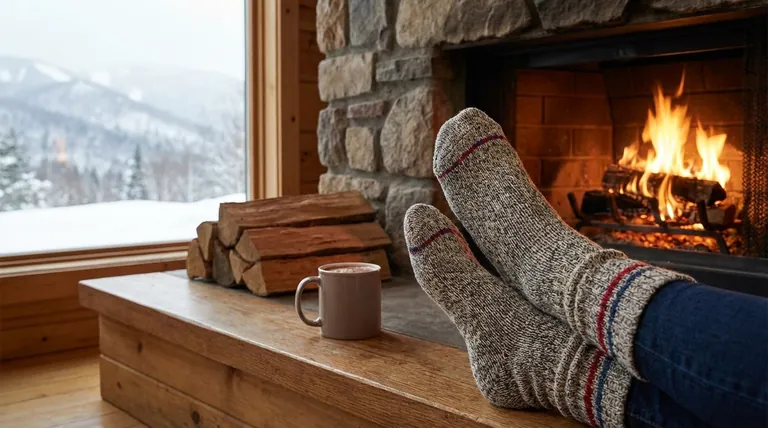
At its core, a sock’s ability to keep your feet warm depends on two critical functions: trapping insulating air and, more importantly, managing moisture. While thickness provides insulation, a sock's material and its ability to pull sweat away from your skin is the true determining factor in preventing cold feet.
The most common failure point in keeping feet warm isn't poor insulation—it's poor moisture management. A wet foot will become a cold foot, regardless of how thick your sock is.
The Dual Role of a High-Performance Sock
To effectively regulate temperature, a sock must perform two distinct jobs simultaneously. Excelling at one without the other will ultimately lead to cold, uncomfortable feet.
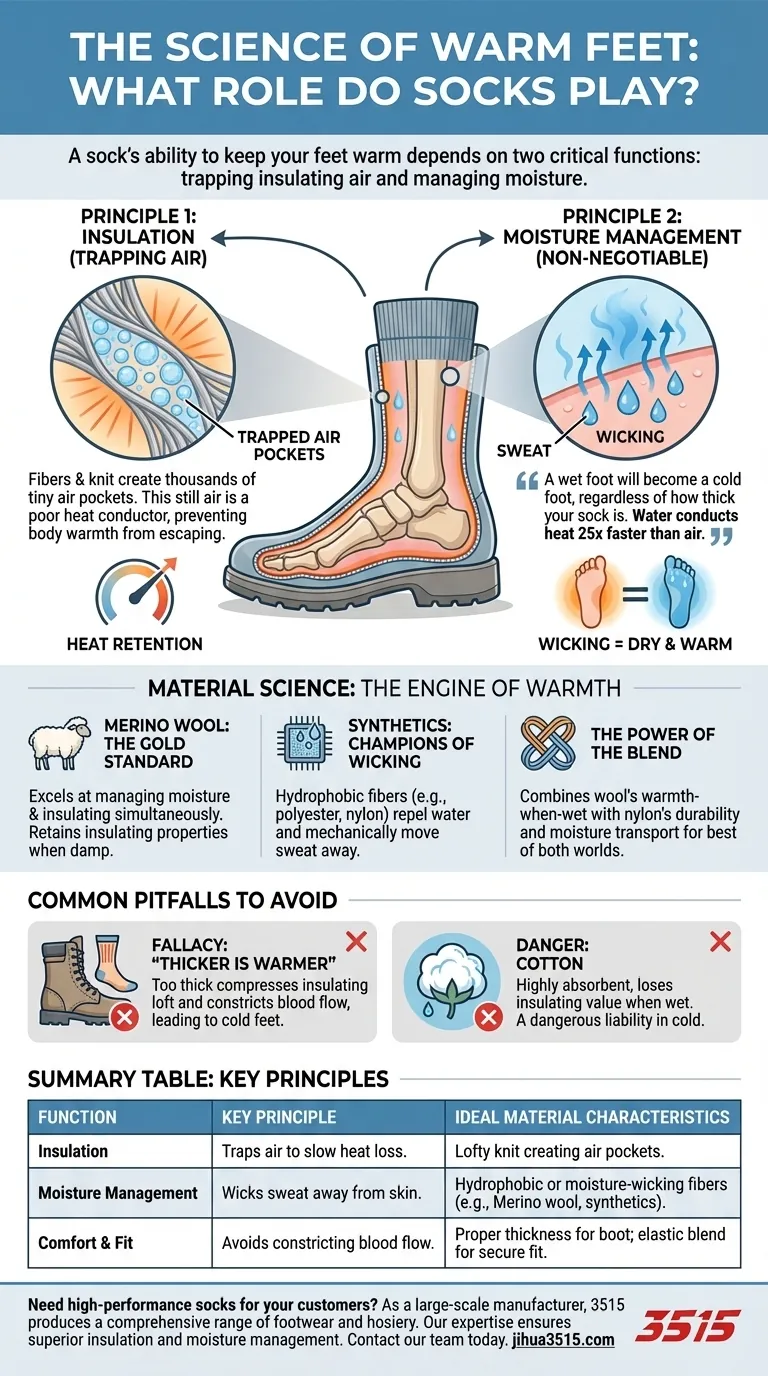
Principle 1: Insulation by Trapping Air
The primary purpose of any insulation is to slow the transfer of heat.
A sock's fibers and knit create thousands of tiny air pockets. This trapped, still air is a poor conductor of heat, which keeps the warmth generated by your body from escaping into the colder environment of your boot and the outside world.
Principle 2: Moisture Management is Non-Negotiable
This is the function that separates effective winter socks from all others. Your feet can produce a surprising amount of sweat, even in the cold.
Water conducts heat away from your body about 25 times faster than air. If your sock absorbs that sweat and holds it against your skin, it will actively and rapidly pull heat from your foot, chilling you far faster than the cold air alone.
Effective socks wick moisture. They pull liquid sweat from the surface of your skin to the outer layer of the sock, where it can evaporate. This keeps your skin dry and warm.
Material Science: The Engine of Warmth
The material of your sock dictates its performance in both insulation and moisture management. The right fibers are essential.
Merino Wool: The Gold Standard
Merino wool is the benchmark for cold-weather socks for a simple reason: it excels at managing moisture and insulating simultaneously.
It can absorb a significant amount of moisture vapor before it even feels wet, and critically, it retains its insulating properties when damp. This provides a crucial buffer that other materials lack.
Synthetics: The Champions of Wicking
Synthetic fibers like polyester and nylon are hydrophobic, meaning they repel water. They absorb almost no moisture at all.
This property makes them exceptional at wicking. They mechanically move liquid sweat away from the skin to the outside of the sock with incredible efficiency, making them ideal for high-exertion activities.
The Power of the Blend
The best winter socks often aren't 100% one material. They are strategic blends.
Combining merino wool for its warmth-when-wet properties with nylon for durability and moisture transport creates a sock that offers the best of both worlds: comfort, insulation, and superior drying performance.
Common Pitfalls to Avoid
Choosing the wrong sock or wearing it improperly can make your feet colder, not warmer.
The Fallacy of "Thicker is Warmer"
A sock that is too thick for your boot is a critical mistake.
It can compress the insulating loft of the sock itself and, more dangerously, constrict blood flow to your feet. Reduced circulation is a direct path to feeling cold, no matter what you are wearing.
The Danger of Cotton
Cotton is the worst possible material for a cold-weather sock.
It is highly absorbent and loses all of its insulating value the moment it gets wet. A damp cotton sock is a cold, dangerous liability that will actively chill your feet.
Making the Right Choice for Your Goal
Select your sock based on your activity level and the conditions you face.
- If your primary focus is all-day comfort in moderate cold: Choose a mid-weight merino wool blend that balances insulation with moisture-wicking capabilities.
- If your primary focus is high-exertion activity (winter hiking, skiing): Opt for a sock with a higher synthetic content or a two-sock system (a thin synthetic liner under a wool sock) for maximum moisture management.
- If your primary focus is extreme cold with low activity (ice fishing, stationary work): A heavy-weight, high-loft wool sock is your best choice, as maximum insulation becomes the priority over wicking performance.
Understanding these principles allows you to choose a sock not just for thickness, but for a complete thermal regulation system.
Summary Table:
| Function | Key Principle | Ideal Material Characteristics |
|---|---|---|
| Insulation | Traps air to slow heat loss. | Lofty knit creating air pockets. |
| Moisture Management | Wicks sweat away from skin to prevent chilling. | Hydrophobic or moisture-wicking fibers (e.g., Merino wool, synthetics). |
| Comfort & Fit | Avoids constricting blood flow. | Proper thickness for your boot; elastic blend for secure fit. |
Need high-performance socks for your customers? As a large-scale manufacturer, 3515 produces a comprehensive range of footwear and hosiery for distributors, brand owners, and bulk clients. Our expertise in material science and production ensures your customers get socks that excel in both insulation and moisture management. Contact our team today to discuss your manufacturing needs.
Visual Guide
Related Products
- Wholesale Durable Camouflage Canvas Shoes with High-Traction Cleated Rubber Sole
- Lightweight Breathable Training Shoes for Wholesale & Custom OEM Manufacturing
- Durable Canvas Work Shoes with Rubber Lug Sole | Wholesale Manufacturer
- Wholesale Durable & Breathable Training Shoes for Custom Brands
- Premium Wholesale Tactical Style Safety Shoes Boots with Quick Lacing
People Also Ask
- Why is the selection of high-strength fabric materials necessary in the production of canvas shoes and training shoes?
- What are the properties of canvas as a shoe material? A Guide to Lightweight Comfort & Style
- Can canvas shoes be worn in rainy conditions? The Truth About Water Resistance
- What are some examples of vulcanized shoes? Discover the Flexibility and Board Feel of Classic Sneakers
- What are the characteristics of canvas as a shoe material? A Guide to Lightweight, Breathable Footwear