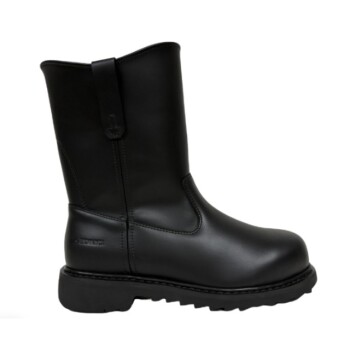
High-temperature and chemical-resistant outsoles serve as the primary defensive barrier for workers in extreme production environments. Manufactured from specialized rubber formulas, these components are engineered to maintain physical structural integrity, effectively preventing chemical penetration and thermal damage where standard materials would fail.
Core Takeaway: The fundamental value of these outsoles lies in their ability to resist degradation. By maintaining their structure against corrosives and heat, they ensure the footwear remains a protective shield rather than becoming a safety liability.
The Mechanics of Protection
Preventing Chemical Penetration
In environments involving corrosive substances, standard footwear materials can degrade or dissolve. Specialized outsoles are formulated to resist this breakdown.
By maintaining their physical structure, these outsoles prevent dangerous chemicals from penetrating the shoe. This protects the wearer's foot from direct burns or absorption of toxic substances.
Withstanding Thermal Damage
High-temperature surfaces pose a significant risk to the structural integrity of standard safety shoes. Ordinary rubber or plastic can melt, warp, or crack upon contact.
Heat-resistant outsoles utilize specific rubber compounds designed to withstand extreme heat. This ensures the sole does not deform, preserving the stability and safety of the footing.
Durability Through Structural Integrity
Specialized Rubber Formulas
The key to this performance is the use of distinct rubber formulas. These are not generic materials; they are chemically engineered for resilience.
These formulas allow the outsole to retain its shape and strength despite harsh external factors.
Ensuring Long-Term Durability
Safety footwear is an investment in worker protection. If an outsole cracks or erodes due to environmental stress, the entire boot is compromised.
By resisting thermal and chemical damage, these outsoles extend the usable life of the footwear. This ensures consistent protection over time, rather than just immediate safety.
Understanding the Trade-offs
While specialized outsoles provide superior protection against specific hazards, they often come with functional considerations.
Specificity vs. Versatility Rubber formulas are often tuned for specific threats. A compound optimized for extreme heat may differ from one optimized for specific acids. It is crucial to match the "specialized formula" to the actual hazard present in your facility.
Weight and Flexibility To achieve high resistance to heat and chemicals, these outsoles often rely on denser, more robust rubber compounds. This can sometimes result in a heavier boot compared to light-duty general safety footwear.
Making the Right Choice for Your Environment
Selecting the correct safety footwear requires analyzing your specific environmental risks.
- If your primary focus is Chemical Exposure: Ensure the rubber formula is rated specifically to resist the types of corrosive agents present in your production line.
- If your primary focus is High Heat: Verify that the outsole is rated for contact heat to prevent melting or structural deformation.
- If your primary focus is General Longevity: Prioritize these specialized outsoles to prevent premature wear-and-tear from harsh environmental factors.
True safety relies on the structural integrity of the barrier between the worker and the hazard.
Summary Table:
| Feature | Protection Mechanism | Key Industrial Benefit |
|---|---|---|
| Chemical Resistance | Specialized rubber prevents degradation/dissolving | Blocks corrosive penetration and toxic absorption |
| Heat Resistance | Engineered compounds withstand extreme temperatures | Prevents melting, warping, and structural deformation |
| Structural Integrity | High-density resilient formulas | Maintains foot stability and barrier durability |
| Long-term Durability | Resistance to environmental erosion | Extends footwear lifespan and reduces replacement costs |
Secure Your Industrial Workforce with Specialized Protection
As a leading large-scale manufacturer serving global distributors and brand owners, 3515 specializes in high-performance safety footwear designed for the world's most demanding environments. Our flagship Safety Shoes series features advanced heat and chemical-resistant outsole technology, ensuring your team stays protected against thermal hazards and corrosive substances.
Beyond specialized industrial boots, our comprehensive production capabilities include tactical boots, outdoor shoes, training sneakers, and formal dress shoes to meet all your bulk requirements. Partner with a manufacturer that prioritizes structural integrity and worker safety.
Ready to upgrade your inventory with professional-grade safety solutions?
Contact our expert team today to discuss your bulk requirements.
References
- Shruti A. Dumbhare, Parag Sancheti. Prevalence of foot problems associated with wearing safety footwear in factory employees. DOI: 10.18203/2394-6040.ijcmph20222013
This article is also based on technical information from 3515 Knowledge Base .
Related Products
- High Performance Fire-Retardant Waterproof Safety Boots
- Wholesale Waterproof Tactical Boots Custom Suede & High-Traction Soles
- Wholesale Durable Camouflage Canvas Shoes with High-Traction Cleated Rubber Sole
- Durable Rubber Sole Outdoor Shoes Wholesale & Custom Manufacturing
- High-Traction Suede Tactical Boots Wholesale & Custom Manufacturing
People Also Ask
- Why are waterproof safety boots recommended for certain work environments? Essential Protection for Wet & Hazardous Jobs
- What roles do 3D vision systems and industrial robots play in the manufacturing of fire safety boots? Smart Automation
- What is the difference between waterproof and water-resistant boots? Choose the Right Footwear for Any Condition
- What materials make waterproof boots durable? The Ultimate Guide to Long-Lasting Footwear
- How does boot construction affect waterproofing? The Science Behind Truly Dry Feet