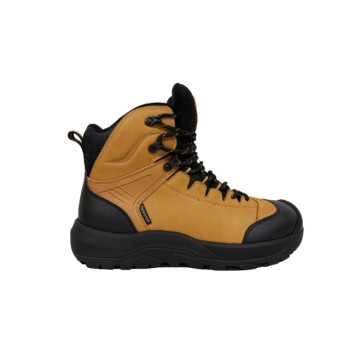
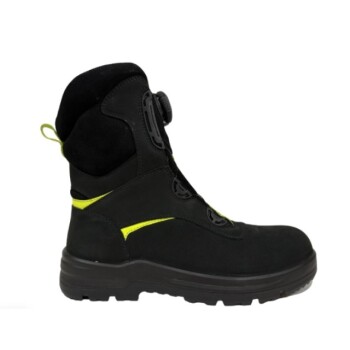
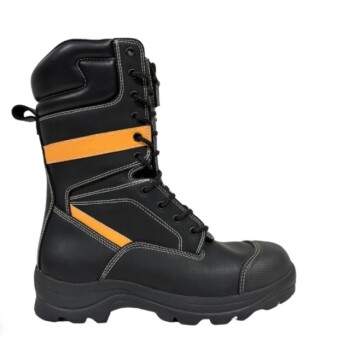
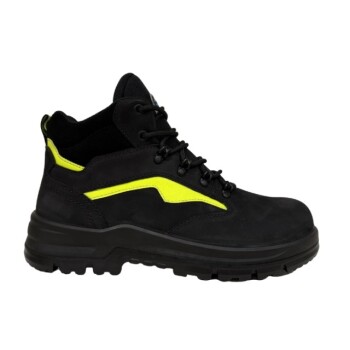
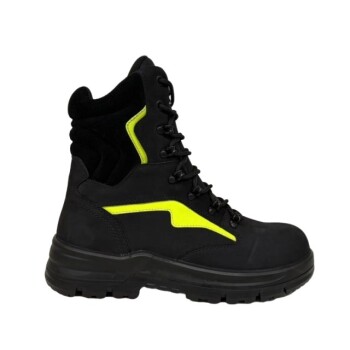
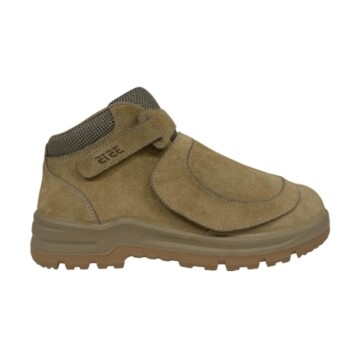
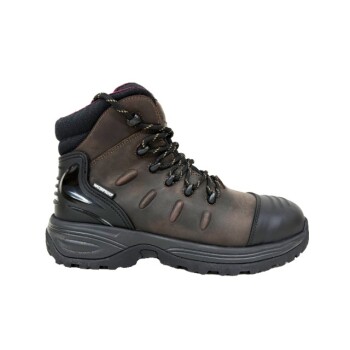
Insulating and anti-static safety boots function as a critical biophysical barrier for railway workers, specifically designed to mitigate electrical risks in high-voltage environments. They utilize high-resistivity insulation to block dangerous induced currents while simultaneously employing conductive fibers to balance electrostatic charges, protecting against both electric shocks and static accumulation near power rail systems.
These boots provide a dual-layer of protection: they isolate the worker from live electrical currents in the ground or rails while actively managing electrostatic buildup to prevent sudden discharges, ensuring safety in environments with low-frequency electromagnetic fields.
Electrical Hazard Mitigation
Blocking Induced Currents
The primary function of these boots in a high-voltage setting is to prevent electric shock.
They incorporate high-resistivity insulation materials within the outsoles.
This insulation acts as a shield, effectively blocking induced currents generated by power rail systems and low-frequency electromagnetic fields from passing through the worker's body.
Balancing Electrostatic Charges
Beyond simple insulation, these boots address the risk of static electricity, which can be dangerous in volatile railway environments.
The outsoles contain specialized conductive fibers designed to balance electrostatic charges.
This mechanism allows for the controlled dissipation of static buildup, preventing sudden sparks or discharges that could trigger secondary accidents.
Physical Durability in Harsh Environments
Structural Support for Physical Tasks
Railway maintenance involves more than just electrical risks; it requires intense physical labor.
These boots provide optimized structural support specifically engineered for heavy handling and climbing tasks.
This support protects the foot and ankle during the navigation of complex, uneven terrain often found along railway tracks.
Resistance to Environmental Stress
The protective properties of the boot must survive the environment to remain effective.
High-performance models feature wear-resistant outsoles and reinforced materials capable of withstanding extreme operational conditions.
By resisting physical degradation, the boots maintain their ability to serve as a biophysical barrier over time.
Understanding the Trade-offs
Integrity is Critical for Safety
The electrical protection provided by these boots is entirely dependent on their physical condition.
If the wear-resistant outsole is punctured or severely abraded by the rough railway terrain, the high-resistivity insulation may be compromised.
Workers must understand that a physically damaged boot no longer guarantees immunity from induced currents or shocks.
Balancing Protection Types
There is often a technical balance between maximizing insulation (blocking flow) and managing static (allowing controlled dissipation).
Boots must be carefully selected to ensure the conductive fibers do not negate the necessary high-voltage insulation properties required for working near live power rails.
Making the Right Choice for Your Goal
Selecting the correct safety footwear requires matching the specific protective feature to the primary hazard of the daily task.
- If your primary focus is preventing electric shock: Prioritize boots with certified high-resistivity insulation to effectively block induced currents from power rail systems.
- If your primary focus is reducing static discharge: Ensure the footwear incorporates conductive fibers to balance electrostatic charges in volatile environments.
- If your primary focus is physical endurance: Look for reinforced, wear-resistant outsoles that offer structural support for climbing and heavy handling to lower injury exposure.
Ultimately, the most effective safety boot serves as a comprehensive shield, seamlessly integrating electrical isolation with the physical ruggedness required for railway maintenance.
Summary Table:
| Feature | Protection Function | Benefit for Railway Workers |
|---|---|---|
| High-Resistivity Insulation | Blocks induced currents | Prevents electric shocks from high-voltage rail systems |
| Conductive Fibers | Balances electrostatic charges | Dissipates static buildup to prevent sudden sparks/discharges |
| Structural Support | Enhanced foot & ankle stability | Safely navigate uneven track terrain and perform heavy labor |
| Wear-Resistant Outsole | Maintains physical integrity | Ensures long-term electrical protection in abrasive environments |
Secure Your Workforce with Certified Railway Safety Footwear
Protecting your team in high-voltage environments requires precision-engineered gear that doesn't compromise on durability. As a leading large-scale manufacturer serving global distributors and brand owners, 3515 specializes in high-performance Safety Shoes designed for the most demanding sectors.
Our comprehensive production capabilities allow us to deliver bulk solutions tailored to your needs—from specialized insulating and tactical boots to training shoes and formal footwear. By partnering with 3515, you gain access to factory-direct quality, advanced electrical hazard protection, and the structural integrity required for heavy-duty railway maintenance.
Enhance your safety portfolio today. Contact us now to discuss your bulk requirements and see how our flagship series can safeguard your operations.
References
- Stefania Massari, Alessandro Marinaccio. Occupational Mortality Matrix: A Tool for Epidemiological Assessment of Work-Related Risk Based on Current Data Sources. DOI: 10.3390/ijerph19095652
This article is also based on technical information from 3515 Knowledge Base .
Related Products
- Premium Insulated Safety Boots and Shoes for Wholesale & Bulk Orders
- Wholesale Durable Safety Boots | Custom Steel Toe & Puncture-Resistant Manufacturing
- Puncture-Resistant Velcro Safety Boots for Wholesale & Custom Manufacturing
- High Performance Fire-Retardant Waterproof Safety Boots
- Premium High-Cut Waterproof Safety Boots Manufacturing & Wholesale Solutions
People Also Ask
- What are the recommended insulation ratings for mild winter conditions? A Guide for Active & Stationary Workers
- How does insulation thickness correlate with temperature ranges? A Guide to Choosing the Right Warmth
- What insulation level is needed for severe cold and stationary work? 1200g or Higher is Essential
- What safety advantages do insulated boots offer beyond warmth? Dielectric Protection & Superior Grip
- How does fleece lining contribute to the warmth of insulated boots? Trapping Air for Superior Cold Protection