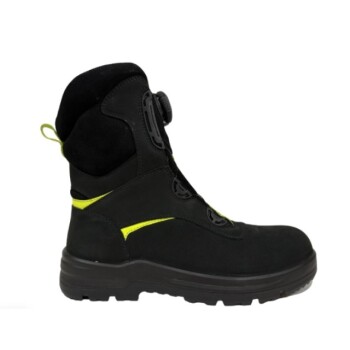
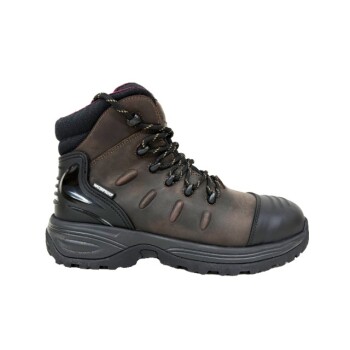
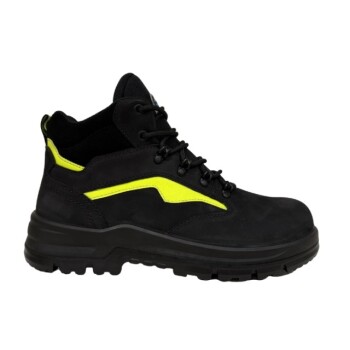
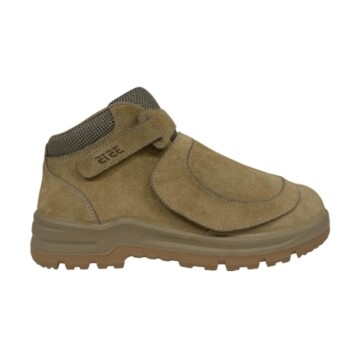
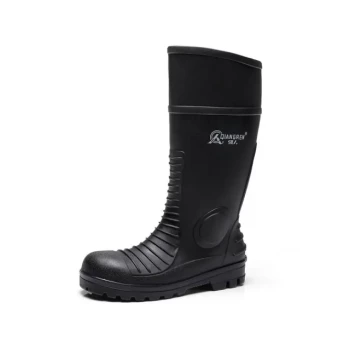
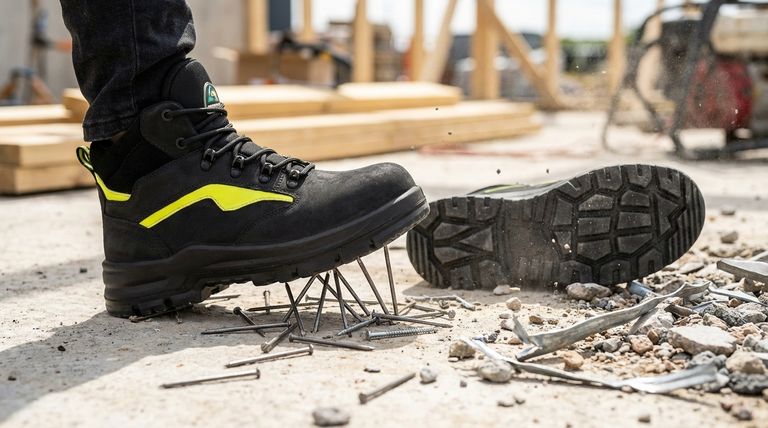
To be clear, work boots protect against sharp objects primarily through specially designed puncture-resistant midsoles and thick, durable outsoles. These components create a formidable barrier between your foot and ground-level hazards like nails, screws, or other debris commonly found on a job site.
The most effective work boots provide a comprehensive safety system, where puncture resistance is a critical layer of defense that works in concert with impact protection, slip resistance, and environmental shielding to ensure total foot safety.
The Core Components of Puncture Protection
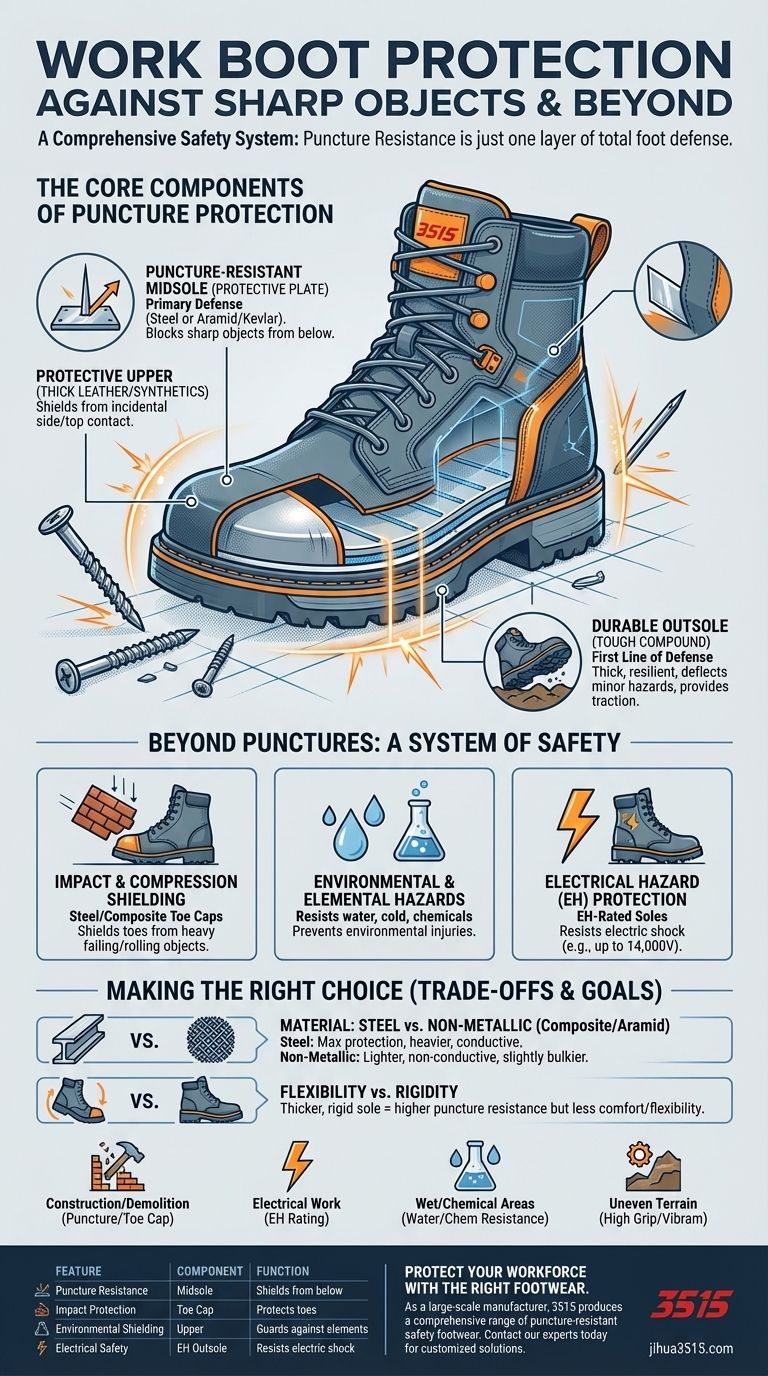
True protection from sharp objects is not about a single feature but a combination of materials engineered to work together. The sole of the boot is where this defense is most concentrated.
The Puncture-Resistant Midsole
The primary defense against sharp objects from below is the puncture-resistant midsole. This is a protective plate positioned between the insole and the outsole.
Historically, this plate was made of steel, offering maximum protection. Modern boots may also use non-metallic materials like woven aramid fibers (e.g., Kevlar), which provide excellent resistance while being more flexible and lightweight.
The Durable Outsole
The outsole is the part of the boot that makes direct contact with the ground. It serves as the first line of defense.
Made from tough compounds like Vibram, these outsoles are thick and resilient, capable of deflecting many minor hazards. They are also designed to provide essential traction and grip on uneven or slick surfaces, preventing slips and falls.
The Protective Upper
While the sole guards against threats from below, the boot's upper—typically made of thick leather or synthetic materials—shields the rest of the foot. It offers crucial protection from incidental contact with sharp objects from the sides or top.
Beyond Punctures: A System of Safety
A high-quality work boot protects you from more than just nails. Understanding the full range of safety features helps you appreciate how they function as an integrated system.
Impact and Compression Shielding
Many work boots feature steel or composite toe caps. These are essential for shielding your toes from the force of heavy falling or rolling objects, a common hazard in construction and industrial environments.
Environmental and Elemental Hazards
Proper work boots are built to withstand extreme conditions. Materials are chosen for their ability to resist water, extreme cold, and chemicals, protecting you from frostbite, burns, and other environmental injuries.
Electrical Hazard (EH) Protection
For those working near live electrical currents, specialized boots with an Electrical Hazard (EH) rating are critical. The soles and heels are designed to resist electric shock, with some capable of withstanding up to 14,000 volts in dry conditions.
Understanding the Trade-offs
Choosing the right boot involves balancing different features. No single boot is perfect for every job, and every choice comes with trade-offs.
Material Choices: Steel vs. Non-Metallic
Steel midsoles and toe caps offer maximum protection but add weight and conduct temperature. Composite or non-metallic alternatives are lighter, don't conduct electricity or temperature, but can be slightly bulkier to achieve the same safety rating.
Flexibility vs. Rigidity
A thicker, more rigid sole often provides higher puncture resistance. However, this rigidity can reduce comfort and flexibility, which may be a concern for workers who need to be highly mobile or spend long hours on their feet.
The Necessity of Maintenance
The protective qualities of your boots degrade over time. Using protective creams on leather uppers prevents cracking, while waterproofing sprays maintain a barrier against moisture and dirt, extending the boot's effective lifespan.
Making the Right Choice for Your Goal
Select your footwear based on the most significant risks you face in your specific work environment.
- If your primary focus is construction or demolition: Prioritize a boot with a certified puncture-resistant midsole and a safety toe cap to protect against nails and falling debris.
- If your primary focus is electrical work: Ensure your boots have a clear Electrical Hazard (EH) rating to protect against shock.
- If your primary focus is working in wet or chemical-heavy areas: Select boots made with water-resistant or waterproof materials and specific chemical resistance for your environment.
- If your primary focus is traction on uneven terrain: Look for boots with deep lugs and a high-grip outsole compound like Vibram.
Ultimately, choosing the right work boot is a critical investment in your personal safety on the job.
Summary Table:
| Protection Feature | Key Component | Primary Function |
|---|---|---|
| Puncture Resistance | Puncture-Resistant Midsole (Steel/Aramid) | Shields foot from sharp objects penetrating from below |
| Impact Protection | Steel/Composite Toe Cap | Protects toes from heavy falling or rolling objects |
| Environmental Shielding | Durable Upper (Leather/Synthetics) | Guards against water, chemicals, and incidental contact |
| Electrical Safety | EH-Rated Outsole | Resists electric shock in hazardous environments |
Protect your workforce with the right footwear.
As a large-scale manufacturer, 3515 produces a comprehensive range of safety footwear for distributors, brand owners, and bulk clients. Our production capabilities encompass all types of puncture-resistant shoes and boots, engineered with the precise balance of protection, comfort, and durability your teams need.
Let us help you equip your workers with reliable safety gear. Contact our experts today to discuss your specific requirements and receive a customized solution.
Visual Guide
Related Products
- Wholesale Durable Safety Boots | Custom Steel Toe & Puncture-Resistant Manufacturing
- Wholesale Durable Breathable Safety Boots Custom OEM Manufacturer
- Wholesale Customizable Suede Safety Boots - Puncture-Proof with Velcro Closure
- Premium High-Cut Waterproof Safety Boots Manufacturing & Wholesale Solutions
- Wholesale Durable 6-Inch Work Boots | Custom & Private Label Manufacturer
People Also Ask
- What materials are commonly used for outsoles in safety boots? A Guide to Durability, Grip, and Comfort
- How should safety boots be cleaned to avoid damage? A Gentle Guide to Preserve Your Boots
- Why is proper storage important for safety boots? Preserve Protection and Extend Lifespan
- What are the consequences of not wearing safety boots? Protect Your Finances and Career
- What makes durable safety boots? The Ultimate Guide to Long-Lasting Work Footwear