The key to long-lasting leather shoes is not intensive repair, but consistent, proactive maintenance. The most effective preventative measures are cleaning your shoes after each wear, using cedar shoe trees to absorb moisture and maintain shape, storing them in breathable dust bags, and regularly applying a quality leather conditioner to keep the material hydrated and supple.
True preventative care isn't about complex, time-consuming restoration; it's about treating leather like skin. A simple, consistent routine of cleaning, hydrating, and allowing the shoes to rest properly is the most effective way to protect your investment.
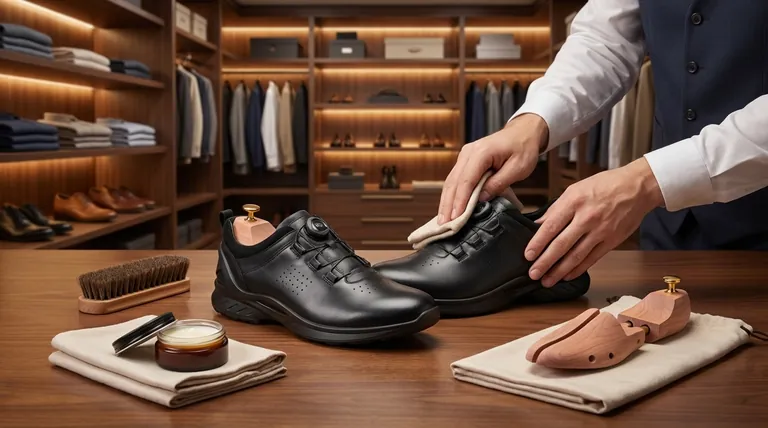
The Daily Ritual: Post-Wear Care
This is the most critical phase of preventative maintenance. What you do in the five minutes after taking your shoes off has more impact than hours of work once a year.
The Immediate Wipe-Down
Before storing your shoes, give them a quick wipe with a soft cloth or a dry horsehair brush.
This simple step removes surface-level dust, dirt, and grime before it has a chance to settle into the leather's pores, which can cause abrasion and staining over time.
The Critical Role of Shoe Trees
If you do only one thing, make it this. Shoe trees are the single most important tool for preserving the life and shape of your shoes.
Insert unfinished cedar shoe trees immediately after taking your shoes off. The porous cedar absorbs the moisture and salt from sweat, preventing the leather lining from rotting and developing odors.
Equally important, the trees hold the shoe's intended shape as it cools and dries, dramatically reducing the formation of deep creases across the vamp.
The Foundation of Protection: Conditioning
While daily care is about defense, periodic conditioning is about nourishment. This process restores the essential oils that keep leather from becoming dry, brittle, and cracked.
Why Leather Needs Conditioning
Leather is a natural skin. During cleaning and regular wear, its natural oils are slowly depleted. Leather conditioner acts as a moisturizer, replenishing these oils.
Think of it like applying lotion to dry skin. Conditioning keeps the leather fibers flexible and resilient, preventing cracking and extending the shoe's lifespan. This should typically be done every 1-2 months, depending on wear.
Protecting the Soles
Leather soles are often overlooked but are highly susceptible to water damage and abrasion.
Applying a vegetable oil-based sole guard creates a water-resistant barrier. Rub it into the soles with a cotton cloth and let it absorb for at least 30 minutes to nourish the leather and increase its durability.
Smart Storage for Long-Term Health
How you store your shoes when they aren't being worn directly impacts their condition.
Avoid Open Air and Humidity
Never store leather shoes in a damp basement or plastic box. Excessive humidity can promote mold, while airtight containers prevent the leather from breathing.
Leaving shoes out in the open allows dust to accumulate, which can dry out the leather and cause microscopic scratches.
The Purpose of Dust Bags
When storing shoes for an extended period, place them in the breathable cloth dust bags they often come with.
These bags prevent dust accumulation while allowing air to circulate, creating the ideal environment to keep the leather stable and healthy.
Common Pitfalls to Avoid
Preventative care is as much about what you don't do as what you do.
Wearing Shoes in Harsh Conditions
Leather is porous and highly susceptible to damage from excessive water. Avoid wearing your leather shoes in heavy rain or snow.
Water saturation can warp the leather as it dries and strip it of its essential oils, leading to stiffness and cracking.
Using Harsh Cleaning Chemicals
Never use household cleaners, alcohol, or other harsh chemicals on your leather shoes.
These products are too aggressive and will strip the leather's finish and natural oils, causing irreparable damage. Always use a dedicated leather shoe cleaner or a mild saddle soap.
Over-Conditioning or Over-Polishing
More is not always better. Applying too much conditioner or polish can clog the leather's pores, preventing it from breathing.
Apply a small, thin layer of product and ensure you wipe away any excess with a clean cloth. The leather should absorb the conditioner, not be coated in it.
How to Apply This to Your Routine
Your specific maintenance plan depends on how you use your shoes.
- If your shoes are for daily or frequent wear: Your priority is the post-wear ritual of wiping them down and inserting cedar shoe trees every single time.
- If you have a collection you wear occasionally: Focus on proper long-term storage in dust bags and conditioning them every few months, even if unworn, to prevent them from drying out.
- If you're trying to save a neglected pair: Start with a deep cleaning using saddle soap before moving on to a thorough conditioning to restore lost moisture.
A consistent care routine transforms an expense into a lasting investment.
Summary Table:
| Preventative Measure | Key Benefit |
|---|---|
| Daily Wipe-Down & Brushing | Removes surface dirt before it causes damage. |
| Using Cedar Shoe Trees | Absorbs moisture, prevents odor, and maintains shape. |
| Regular Conditioning (1-2 months) | Replenishes oils to prevent drying and cracking. |
| Proper Storage in Dust Bags | Protects from dust while allowing the leather to breathe. |
| Avoiding Harsh Conditions & Chemicals | Prevents water damage and stripping of natural oils. |
Ready to build a durable footwear collection? As a large-scale manufacturer, 3515 produces a comprehensive range of high-quality leather shoes and boots for distributors, brand owners, and bulk clients. Our expertise ensures your products are built to last, making preventative care even more effective. Let's discuss how we can support your business with reliable, well-crafted footwear. Contact our team today to explore our production capabilities.
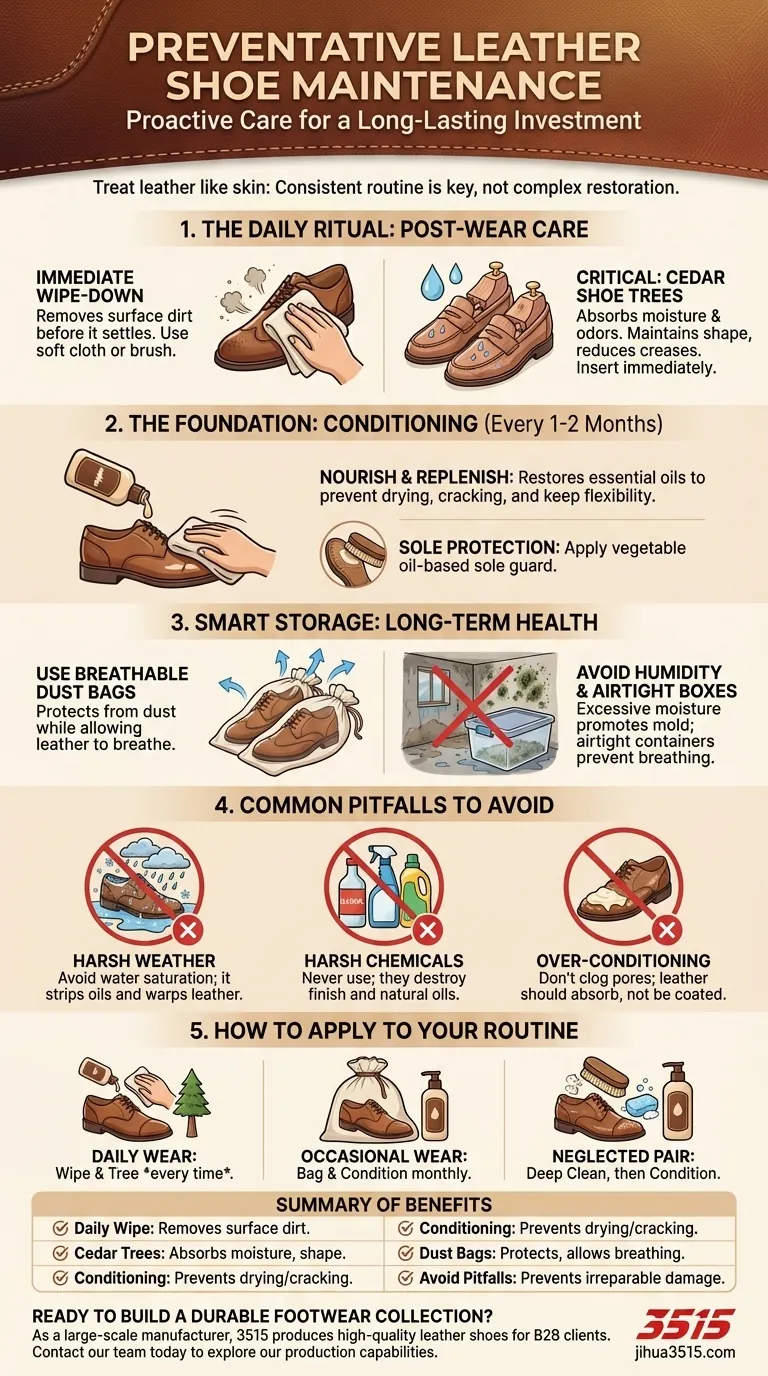
Visual Guide
Related Products
- Classic Leather Derby Dress Shoes Wholesale & Custom Manufacturing
- Factory Direct Wholesale Leather Comfort Shoes with Dial Closure
- Custom Manufactured Air Cushion Leather Business Shoes for Wholesale
- Wholesale Comfort Leather Business Shoes with Dial Lacing System
- Wholesale Breathable Perforated Leather Derby Shoes with Modern Comfort Sole
People Also Ask
- How often should leather dress shoes be cleaned and polished? A 3-Tier Care Guide for Longevity
- How can you remove salt stains from leather dress shoes? Save Your Shoes with a Simple Vinegar Solution
- What are the basic steps to clean leather dress shoes? A Guide to Preserving Your Investment
- How should you dry wet leather dress shoes? A Step-by-Step Guide to Save Your Investment
- What historical figure is associated with the Derby shoe? The Earl of Derby's Comfort Revolution