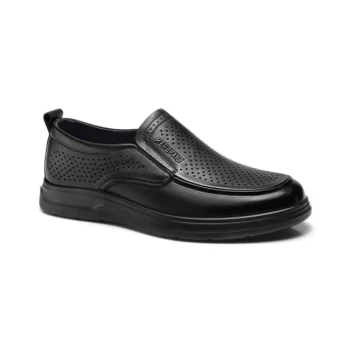
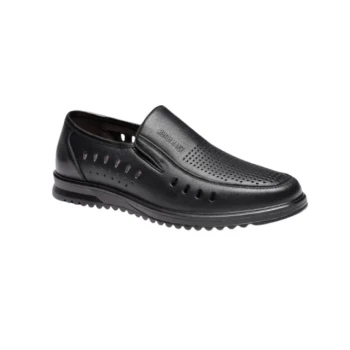
Beyond the restaurant kitchen, the need for slip-resistant shoes extends across any profession where workers encounter unpredictable surfaces. Key industries include healthcare, construction, manufacturing, and logistics, encompassing roles from postal workers and delivery drivers to factory staff, janitors, and veterinary technicians who all face daily slip-and-fall risks.
The necessity for slip-resistant footwear is not defined by an industry, but by the environment itself. Any role that involves exposure to liquids, oils, uneven terrain, or fast-paced movement on smooth floors presents a clear case for enhanced grip and stability.
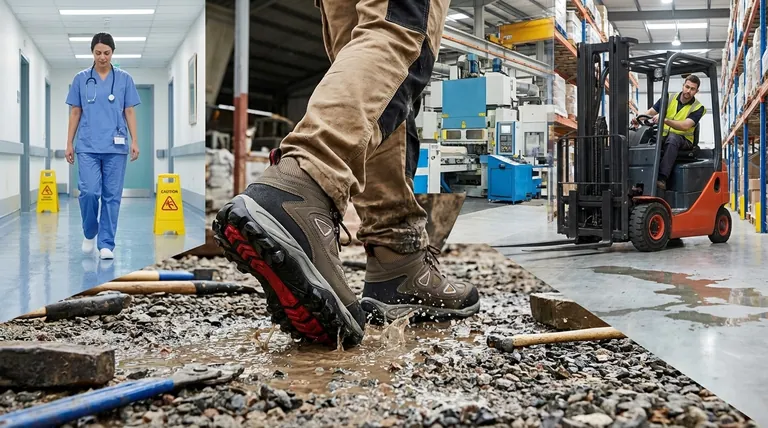
The Common Denominator: Hazardous Surfaces
Understanding why a job requires slip-resistant shoes is more important than memorizing a list of titles. The core issue is always the nature of the walking surface and the substances that may cover it.
Exposure to Liquids and Oils
Many professions operate in environments where spills are a constant. This includes the obvious, like food service, but also extends to healthcare workers navigating freshly cleaned hospital floors and manufacturing staff working around machinery lubricants and coolants.
Unpredictable Outdoor and Transitional Conditions
Jobs that take place outdoors or involve moving between indoors and outdoors face a different set of challenges. Construction workers, roofers, delivery drivers, and postal service employees must contend with rain, mud, ice, and uneven ground, where secure footing is critical for safety.
High-Traffic and Constantly Changing Floors
Warehouse and factory workers move across vast concrete floors that can become slick from spills, dust, or cleaning. Janitorial and maintenance staff are at particularly high risk, as they are the ones applying cleaning solutions to floors, creating temporarily hazardous conditions for themselves.
Understanding the Trade-offs and Core Features
Slip-resistant shoes are purpose-built tools, fundamentally different from standard footwear. This specialized design involves specific trade-offs for the sake of safety.
It's All in the Outsole
The primary feature is a softer rubber outsole with a specific tread pattern designed to channel water and liquids away from the shoe's point of contact with the floor. This design maximizes the surface area gripping the floor, providing stability on wet or oily surfaces.
Durability Over Style
These shoes are built to withstand demanding work conditions. They often feature reinforced materials, sturdy construction, and protected toes to endure heavy-duty tasks. This focus on durability and protection means they are often heavier and less flexible than casual sneakers.
Not a Universal Solution
While highly effective on wet and oily flat surfaces, the soft rubber that makes these shoes grip so well can wear down faster on abrasive surfaces like rough concrete or asphalt. The specific tread pattern may also be less effective on loose materials like gravel or mud compared to a dedicated hiking boot.
Making the Right Choice for Your Goal
Selecting the correct footwear requires an honest assessment of your primary work environment.
- If your primary focus is an indoor environment with frequent spills (healthcare, food service): You need shoes specifically rated for oily and wet conditions, such as clogs or kitchen shoes with dense tread patterns.
- If your primary focus is outdoor work with variable terrain (construction, delivery): Your priority should be durable work boots with deep, aggressive treads that can handle water, mud, and uneven ground.
- If your primary focus is general stability in a dynamic environment (warehousing, personal safety): Versatile athletic or casual-style non-slip shoes offer a balance of comfort and reliable grip for a variety of surfaces.
Ultimately, evaluating your environment for potential slip hazards is the most reliable way to determine your need for this critical safety feature.
Summary Table:
| Industry/Role | Primary Slip Hazard | Key Shoe Feature |
|---|---|---|
| Healthcare | Wet, sanitized floors | Dense tread pattern for wet conditions |
| Construction | Mud, rain, uneven ground | Deep, aggressive tread for outdoor terrain |
| Manufacturing | Oils, coolants, spills | Soft rubber outsole for oily surfaces |
| Logistics/Warehousing | Dust, spills, high-traffic floors | Versatile athletic style for dynamic movement |
| Janitorial/Maintenance | Freshly cleaned, wet floors | Durable, protective design for hazardous conditions |
Equip your team with the right protection for any environment.
As a large-scale manufacturer, 3515 produces a comprehensive range of high-quality, slip-resistant footwear for distributors, brand owners, and bulk clients. Our production capabilities encompass all types of safety shoes and boots, designed to meet the specific demands of healthcare, construction, manufacturing, and logistics.
We help you enhance workplace safety, reduce slip-and-fall incidents, and provide durable, reliable footwear tailored to your unique operational hazards.
Ready to find the perfect safety solution for your workforce? Contact our experts today for a customized consultation!
Visual Guide

Related Products
- Premium Suede Sport Safety Shoes for Wholesale & Bulk Orders
- Heavy-Duty Waterproof Nubuck Safety Boots Safety Shoes for Bulk Supply
- Advanced KPU Athletic Safety Shoe with Steel Toe Cap Anti-Slip Rotary Lacing System
- Durable High-Traction Canvas Sneakers Wholesale & Custom Manufacturing
- Durable Leather Moc Toe Work Boots for Wholesale & Custom Manufacturing
People Also Ask
- What are the primary functions of professional safety shoes? Maximize Safety in Water Supply Confined Spaces
- What industries have specific OSHA footwear requirements? Ensure Compliance & Protect Your Workforce
- What role do specialized safety shoes play in preventing falls? Engineering Stability in Industrial Environments
- How do I choose the best safety shoes? Match Certified Features to Your Hazards
- What are the main safety features of S1-S5 shoes? The 3 Essential Protections Explained