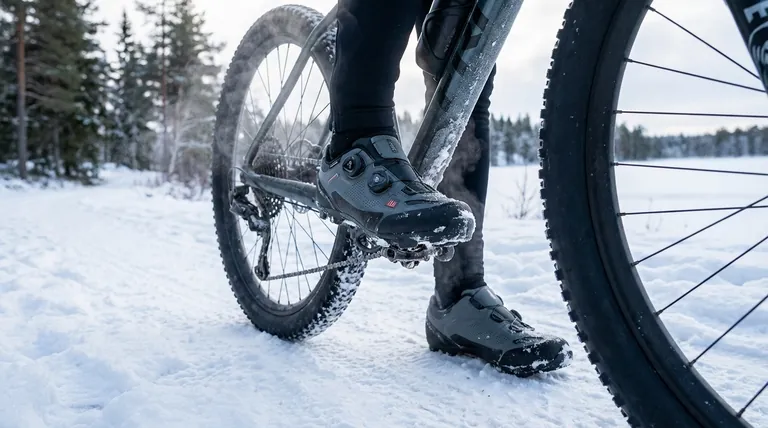
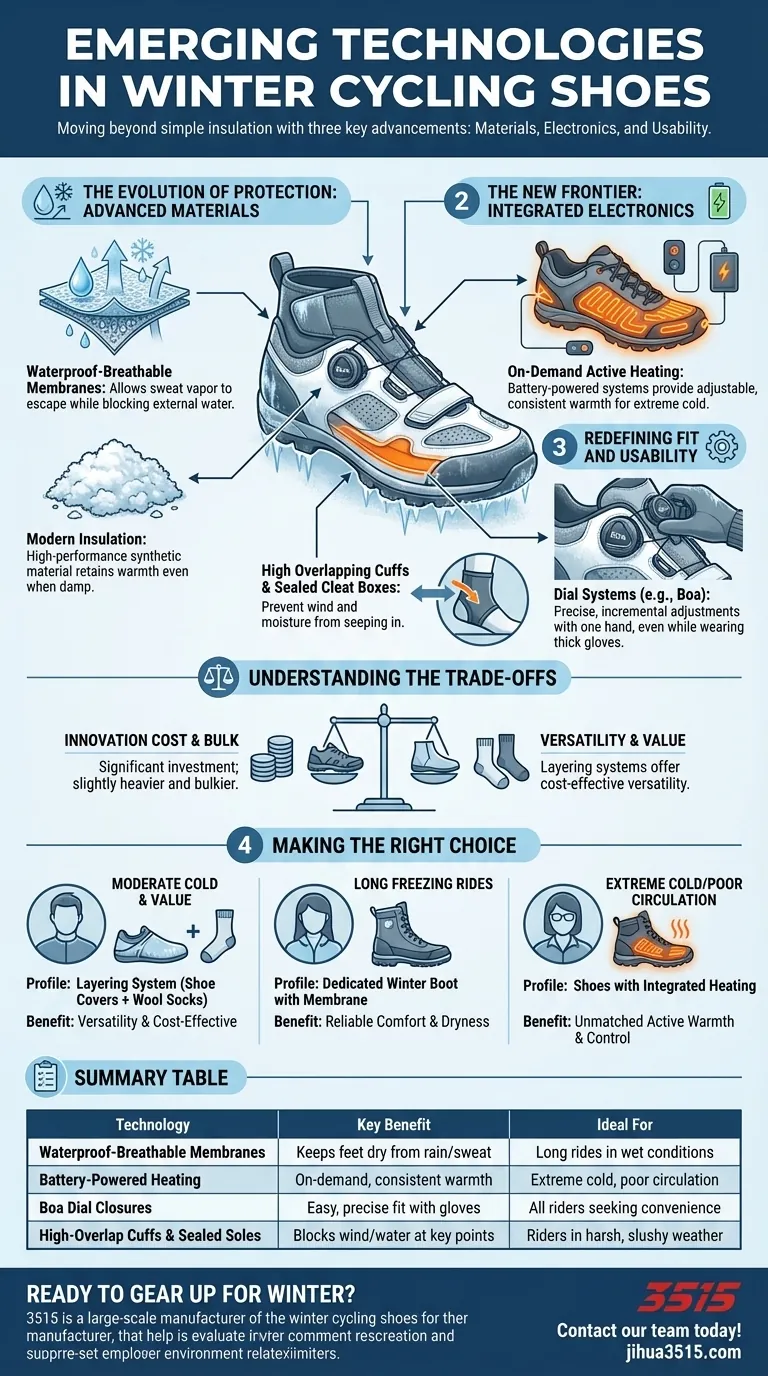
The latest winter cycling shoes are moving beyond simple insulation, incorporating three key technological advancements. These include more efficient waterproof yet breathable materials, the integration of active electronic heating systems, and the widespread adoption of micro-adjustable dial closures like Boa for easier use with gloves.
The core innovation in modern winter cycling footwear is not a single feature, but the integration of a complete system. The goal is to solve the fundamental challenges of warmth, dryness, and usability without compromising pedaling efficiency.
The Evolution of Protection: Advanced Materials
Winter cycling comfort is a battle fought on two fronts: keeping external moisture out while letting internal moisture (sweat) escape. Modern materials are designed to win both.
Beyond Simple Waterproofing
The most significant material advancement is the use of waterproof-breathable membranes. Unlike a simple rubber barrier, these membranes contain microscopic pores large enough to allow water vapor from sweat to escape, but too small for liquid water droplets to penetrate. This prevents the "clammy" feeling that leads to cold feet, even if you aren't riding in rain or snow.
The Role of Modern Insulation
High-performance synthetic insulation is now standard. This material is crucial because it retains its insulating properties even when damp, a common scenario when sweat builds up. It provides exceptional warmth for its low weight and bulk, preserving a more efficient connection to the pedal.
The New Frontier: Integrated Electronics
For cyclists facing extreme cold or those who suffer from poor circulation, passive insulation sometimes isn't enough. Active heating represents a new tier of cold-weather capability.
On-Demand Active Heating
A growing category of high-end winter shoes now includes battery-powered heating elements. These systems allow the rider to select a desired heat level, providing consistent and reliable warmth that adapts to changing conditions. This transforms winter shoes from a passive barrier into an active climate control system.
Redefining Fit and Usability
A winter cycling shoe is useless if you cannot adjust it properly with frozen fingers or thick gloves. Modern closure systems directly address this usability challenge.
The Dominance of Dial Systems
Boa dials and similar systems have become nearly ubiquitous on premium winter shoes. Their primary advantage is the ability to make precise, incremental adjustments to fit by simply turning a dial. This can be done easily with one hand while wearing bulky winter gloves, ensuring a secure fit without having to stop and expose your hands to the cold.
Designing for the Cold
Beyond the closure, the entire structure is being rethought. Features like high, overlapping cuffs create a better seal against wind and water at the ankle. Similarly, sealed cleat boxes prevent cold and moisture from seeping in through the sole, a common weak point in older designs or makeshift solutions.
Understanding the Trade-offs
While technology offers significant benefits, it's critical to weigh them against cost and practical needs. The most advanced shoe is not always the best solution for every rider.
The Cost of Innovation
Dedicated winter cycling shoes, especially those with electronic heating and premium materials, represent a significant financial investment. Their specialized nature means they are only usable for a few months of the year.
The Alternative: A Layering System
For many cyclists in milder winter climates, a more cost-effective solution exists. Combining your standard cycling shoes with high-quality shoe covers (booties) and thick wool socks can provide sufficient protection. This approach offers greater versatility at a fraction of the cost.
The Inevitable Bulk
Even the most advanced winter shoes are inherently bulkier and heavier than their summer counterparts. This can lead to a slightly less direct feel for the pedal. While manufacturers work to minimize this, it is a trade-off for the necessary insulation and protection.
Making the Right Choice for Your Goal
Selecting the right system depends entirely on your specific riding conditions and priorities.
- If your primary focus is versatility and value for moderate cold: A layering system using quality wool socks and weatherproof shoe covers is the most practical choice.
- If your primary focus is consistent comfort on long, freezing rides: A dedicated winter boot with a waterproof-breathable membrane is the most reliable investment.
- If your primary focus is conquering extreme cold or managing poor circulation: Shoes with integrated electronic heating provide a level of warmth and control that passive insulation cannot match.
By understanding these technologies and their practical trade-offs, you can select the precise system to keep you riding comfortably and effectively all winter long.
Summary Table:
| Technology | Key Benefit | Ideal For |
|---|---|---|
| Waterproof-Breathable Membranes | Keeps feet dry from rain/sweat | Long rides in wet conditions |
| Battery-Powered Heating | On-demand, consistent warmth | Extreme cold, poor circulation |
| Boa Dial Closures | Easy, precise fit with gloves | All riders seeking convenience |
| High-Overlap Cuffs & Sealed Soles | Blocks wind/water at key points | Riders in harsh, slushy weather |
Ready to gear up for winter? As a large-scale manufacturer, 3515 produces a comprehensive range of high-performance cycling footwear for distributors, brand owners, and bulk clients. Our production capabilities encompass all types of shoes and boots, including advanced winter models. Let us help you bring the latest in warmth and technology to your customers. Contact our team today to discuss your production needs!
Visual Guide
Related Products
- Premium Insulated Safety Boots and Shoes for Wholesale & Bulk Orders
- Wholesale Durable Camouflage Canvas Shoes with High-Traction Cleated Rubber Sole
- Premium Suede Sport Safety Shoes for Wholesale & Bulk Orders
- Advanced KPU Athletic Safety Shoe with Steel Toe Cap Anti-Slip Rotary Lacing System
- Lightweight Breathable Sneakers with Wet-Traction Grip for Wholesale & Private Label
People Also Ask
- What are the recommended insulation ratings for mild winter conditions? A Guide for Active & Stationary Workers
- How does insulation thickness correlate with temperature ranges? A Guide to Choosing the Right Warmth
- What insulation level is needed for severe cold and stationary work? 1200g or Higher is Essential
- What safety advantages do insulated boots offer beyond warmth? Dielectric Protection & Superior Grip
- How does fleece lining contribute to the warmth of insulated boots? Trapping Air for Superior Cold Protection