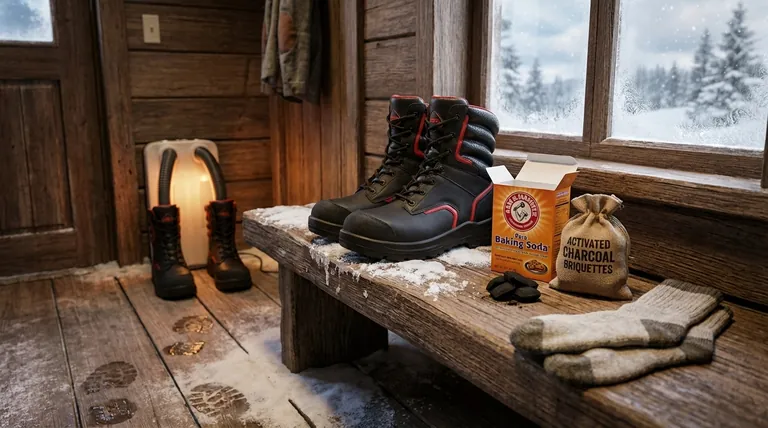
To effectively control odors in winter boots, the most common and immediate method is to use a desiccant powder. Sprinkle a generous amount of baking soda or activated charcoal inside the boots, allow it to sit overnight to absorb moisture and odors, and then shake out the excess powder before wearing them again.
The core challenge of boot odor is not the smell itself, but its root cause: trapped moisture. An effective strategy, therefore, must focus on consistently managing moisture to prevent the bacterial growth that creates odors in the first place.
Understanding the Root Cause: Moisture and Bacteria
To permanently solve the problem, you must first understand why it happens. Odor is not a failing of the boot, but a predictable outcome of its environment.
The Inevitable Moisture Trap
Winter boots are engineered with insulation and waterproofing to keep external moisture and cold out. This essential design, however, also makes them highly effective at trapping internal moisture from foot perspiration.
Bacteria's Ideal Environment
This trapped moisture, combined with the warmth from your body, creates the perfect breeding ground for bacteria. The unpleasant odor is a byproduct of these bacteria consuming sweat and dead skin cells.
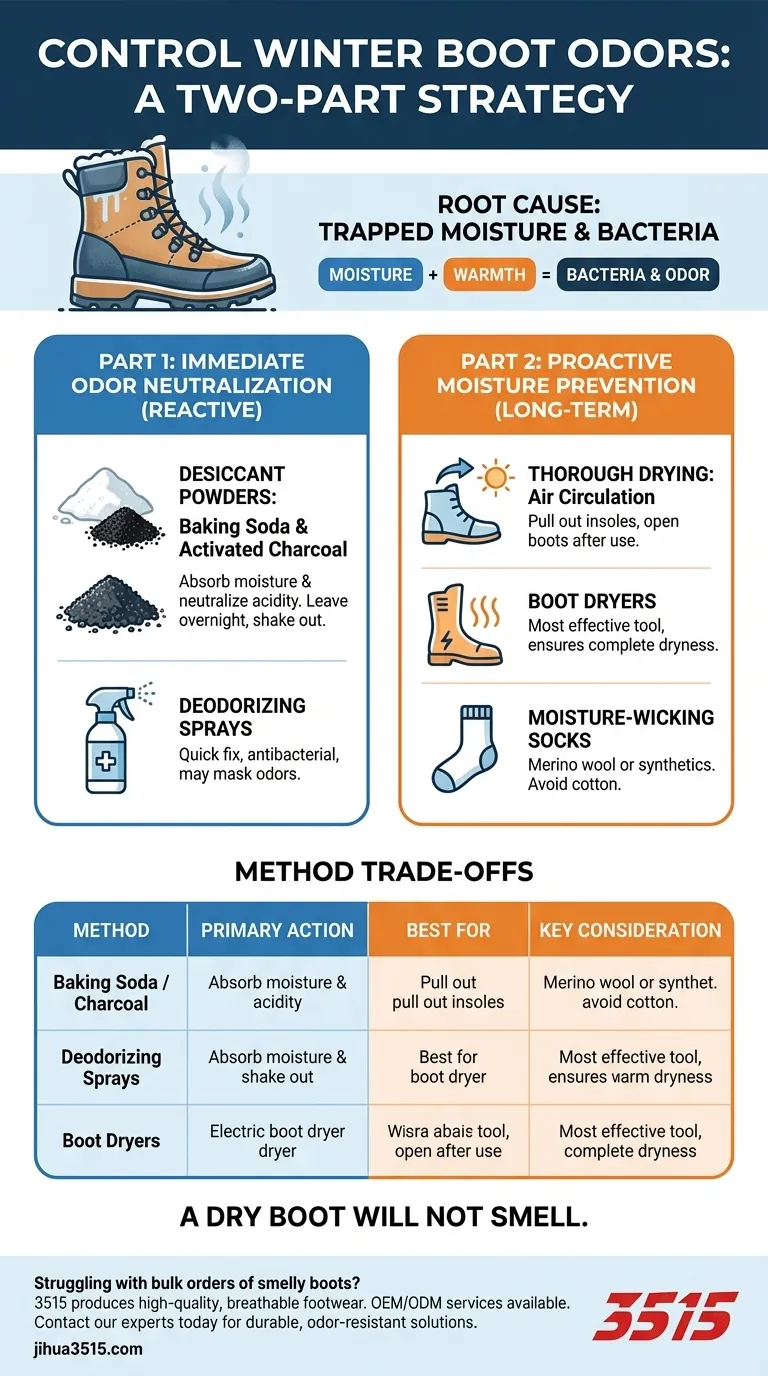
A Two-Part Strategy for Odor Control
A truly effective approach involves both immediate treatment and long-term prevention. Relying on one without the other leads to a frustrating cycle of recurring smells.
Part 1: Immediate Odor Neutralization
This is the reactive step for when your boots already have a noticeable odor. The goal here is to absorb the moisture and neutralize the existing smell.
Baking soda is a classic choice because it is alkaline, which helps neutralize acidic odor molecules. It is also a mild desiccant, meaning it absorbs moisture.
Activated charcoal is even more effective at absorption. Its porous structure provides a massive surface area, allowing it to trap a significant amount of moisture and odor-causing compounds.
Part 2: Proactive Moisture Prevention
This is the most critical step for long-term success. Preventing moisture from lingering is the only way to stop odor-causing bacteria from thriving.
Always dry your boots thoroughly after each use. Never leave them damp overnight. Pull out the insoles and open the boots up to allow for maximum air circulation.
Invest in a boot dryer. An electric boot dryer that uses gentle, warm air is the single most effective tool for ensuring your boots are completely dry and inhospitable to bacteria before their next use.
Wear the right socks. Choose socks made from moisture-wicking materials like merino wool or specific synthetics. Avoid cotton, which absorbs sweat and holds it against your skin.
Understanding the Trade-offs
Different methods have distinct advantages and disadvantages. Choosing the right one depends on your specific situation and commitment.
Absorbent Powders (Baking Soda & Charcoal)
These are excellent for their low cost and effectiveness at absorbing existing moisture and odor. However, they can be messy to clean out and do not kill the bacteria; they only manage the environment.
Deodorizing Sprays
Commercial sprays can offer a quick fix and often contain antibacterial agents. The main drawbacks are that they can simply mask odors temporarily and may introduce chemical scents you find unpleasant.
Boot Dryers
A dedicated dryer is the gold standard for prevention. Its primary downside is the upfront cost and the need for an electrical outlet. However, it is an investment that addresses the root cause directly and extends the life of your footwear.
Making the Right Choice for Your Situation
Your approach should match the severity of your problem and your daily habits.
- If you need a quick, low-cost fix for a mild odor: Use baking soda or activated charcoal overnight as needed.
- If you wear your boots daily and want to prevent odors from starting: Your primary focus should be on thoroughly drying your boots after every single use, ideally with a boot dryer.
- If you have a persistent, strong odor problem: Combine tactics by first deep cleaning the liners, then using an absorbent powder, and finally committing to a daily drying routine.
A dry boot is a boot that will not smell.
Summary Table:
| Method | Primary Action | Best For | Key Consideration |
|---|---|---|---|
| Baking Soda / Charcoal | Absorbs moisture & neutralizes odor | Quick, low-cost treatment of existing smells | Messy to clean; doesn't kill bacteria |
| Boot Dryer | Actively dries boots completely | Daily prevention and long-term odor control | Requires upfront investment and electricity |
| Moisture-Wicking Socks | Reduces sweat entering the boot | Preventing moisture buildup from the start | Must be worn consistently with boots |
Struggling with bulk orders of smelly boots? As a large-scale manufacturer, 3515 produces high-quality, breathable footwear designed to minimize odor from the start. We offer comprehensive OEM/ODM services for distributors, brand owners, and bulk clients. Let us help you source boots that are easier to keep fresh.
Contact our experts today to discuss your manufacturing needs and find a durable, odor-resistant solution.
Visual Guide
Related Products
- Premium Insulated Safety Boots and Shoes for Wholesale & Bulk Orders
- Factory Direct Wholesale Rain Boots Durable Waterproof & Fully Customizable
- Durable Waterproof Rain Boots | Custom Manufacturer for Wholesale & Brands
- Wholesale Waterproof Tactical Boots Custom Suede & High-Traction Soles
- High Performance Fire-Retardant Waterproof Safety Boots
People Also Ask
- What are the recommended insulation ratings for mild winter conditions? A Guide for Active & Stationary Workers
- How does insulation thickness correlate with temperature ranges? A Guide to Choosing the Right Warmth
- What insulation level is needed for severe cold and stationary work? 1200g or Higher is Essential
- What safety advantages do insulated boots offer beyond warmth? Dielectric Protection & Superior Grip
- How does fleece lining contribute to the warmth of insulated boots? Trapping Air for Superior Cold Protection