
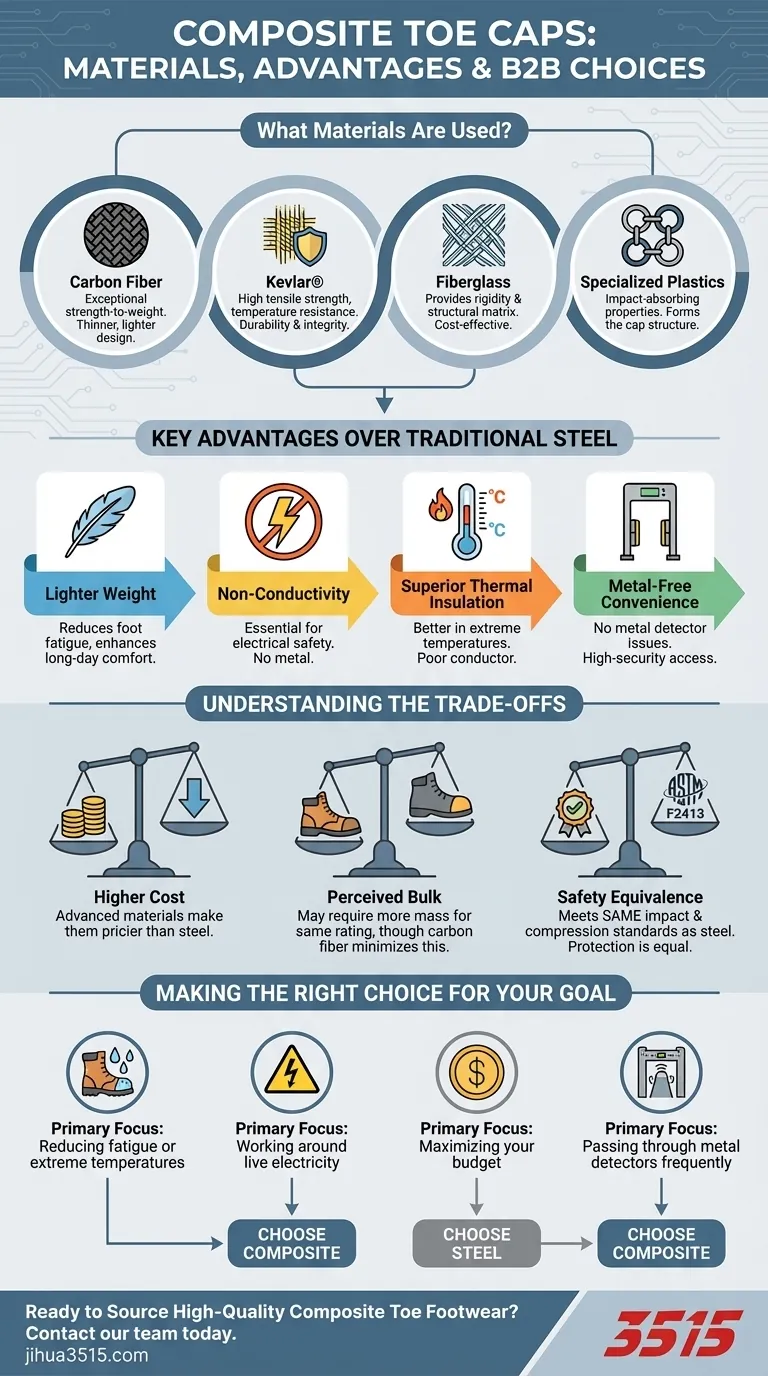
Composite toe caps are engineered from a range of strong, non-metallic materials. The most common components are Kevlar®, carbon fiber, fiberglass, and specialized plastics. These materials are specifically chosen to create a protective cap that meets stringent safety standards while being significantly lighter than its traditional steel counterpart.
While both steel and composite toe caps are rated to provide the exact same level of impact and compression protection, the choice is not about which is "safer." The decision hinges on balancing secondary factors like weight, electrical conductivity, and cost against the specific demands of your work environment.
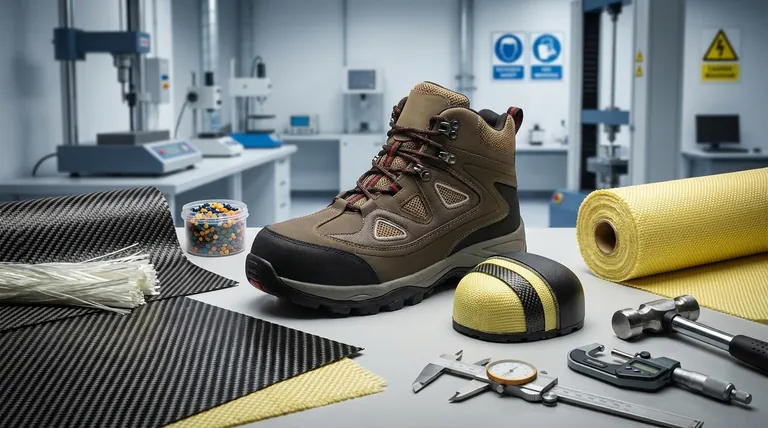
The Core Materials and Their Roles
Each material in a composite toe cap serves a distinct purpose, and manufacturers often use a blend to achieve the desired balance of strength, weight, and cost.
Carbon Fiber
Carbon fiber is prized for its exceptional strength-to-weight ratio. Its inclusion allows for a thinner, less bulky toe cap design without sacrificing impact resistance, contributing to a more comfortable and lightweight boot.
Kevlar®
Kevlar® is a brand name for a type of aramid fiber renowned for its incredible tensile strength and temperature resistance. It adds a layer of durability and resilience, helping the cap maintain its structural integrity under stress.
Fiberglass and Plastics
Fiberglass and other high-density plastics often form the structural matrix of the toe cap. These materials provide the necessary rigidity and impact-absorbing properties in a cost-effective manner.
Key Advantages Over Traditional Steel
The shift from steel to composite materials was driven by the need for specific performance benefits that metal cannot offer.
Lighter Weight
The most immediate benefit of a composite toe is reduced weight. This translates directly to less foot fatigue over the course of a long workday, enhancing overall comfort and reducing strain.
Non-Conductivity
Because they contain no metal, composite toe caps do not conduct electricity. This is a critical safety feature for electricians, utility workers, and anyone working in environments with a risk of electrical shock.
Superior Thermal Insulation
Composite materials are poor conductors of heat and cold. This means they provide significantly better insulation, keeping your feet more comfortable in both extremely hot and freezing conditions compared to steel.
Metal-Free Convenience
The absence of metal means composite toe boots will not set off metal detectors. This is a major advantage for individuals working in high-security facilities, such as airports, government buildings, or certain manufacturing plants.
Understanding the Trade-offs
Choosing composite is not without its considerations. Objectively weighing the downsides is crucial for making an informed decision.
Higher Cost
The advanced materials and manufacturing processes required for composite toe caps make them more expensive than their steel counterparts. Steel remains the most budget-friendly option for basic protection.
Perceived Bulk
While lighter, some composite designs may appear slightly bulkier than steel caps. This is because they may require more mass to achieve the same impact and compression ratings as steel, though premium materials like carbon fiber help minimize this.
The Safety Equivalence
It is a common misconception that one material is inherently "safer" than the other. Both composite and steel toe footwear sold in the U.S. must meet the same ASTM F2413 safety standards for impact and compression. The protection level is equivalent; the material differences affect comfort and environmental suitability.
Making the Right Choice for Your Goal
Your ideal safety toe depends entirely on your daily tasks, environment, and priorities.
- If your primary focus is reducing fatigue or working in extreme temperatures: Choose composite for its lighter weight and superior thermal insulation.
- If your primary focus is working around live electricity: Composite is the essential choice due to its non-conductive properties.
- If your primary focus is maximizing your budget: Steel remains a highly reliable and cost-effective option that meets all core safety standards.
- If your primary focus is passing through metal detectors frequently: Composite provides significant convenience and eliminates a daily hassle.
By understanding these material differences, you can confidently select the footwear that provides not just compliance, but true functional safety for your specific role.
Summary Table:
| Material | Key Properties | Primary Benefit |
|---|---|---|
| Carbon Fiber | Exceptional strength-to-weight ratio | Thinner, lighter cap design |
| Kevlar® | High tensile strength, temperature resistance | Durability and structural integrity |
| Fiberglass/Plastics | Rigidity, impact absorption | Cost-effective structural matrix |
Ready to Source High-Quality Composite Toe Footwear?
As a large-scale manufacturer, 3515 produces a comprehensive range of safety footwear for distributors, brand owners, and bulk clients. Our production capabilities encompass all types of composite toe shoes and boots, ensuring you get the perfect blend of safety, comfort, and value for your customers.
Let us help you equip your workforce with the right protection.
Contact our team today to discuss your specific needs and request a quote.
Visual Guide
Related Products
- Safety Footwear Wholesale Manufacturer for Custom OEM/ODM Production
- Wholesale Durable Safety Boots Manufacturer Customizable Steel Toe Work Boots
- Advanced KPU Athletic Safety Shoe with Steel Toe Cap Anti-Slip Rotary Lacing System
- Wholesale Safety Footwear Manufacturer for Bulk & Custom OEM Orders
- Wholesale Mesh Steel Toe Safety Shoes with Dial Closure Factory Production
People Also Ask
- What are the key OSHA regulations for safety footwear? Ensure Compliance & Protect Your Workforce
- Why is high-load mechanical testing equipment necessary for safety footwear? Ensure Life-Saving Compression Resistance
- What does a red rectangle with a white C letter on safety footwear mean? Essential Guide to Conductive Footwear
- What is the difference between oil resistance and slip resistance in footwear? Protect Your Boots and Your Safety
- What are the basic requirements of the ASTM F2413-05 standard? Mandatory Impact & Compression Protection





