
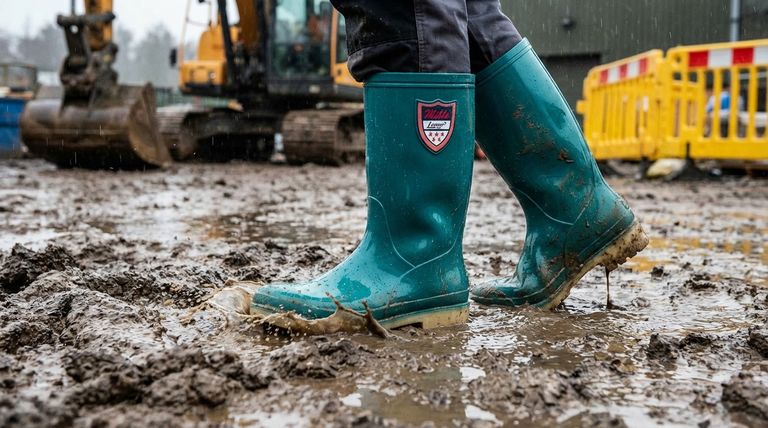
At their core, Wellington boots are a practical choice because they offer a simple, robust barrier against the elements and workplace hazards. Their waterproof construction from materials like rubber ensures feet stay dry, while features like non-slip soles and steel toes provide essential protection in demanding outdoor and industrial environments.
The true practicality of a Wellington boot lies not in complex technology, but in its fundamental design as an impermeable shield. It is a tool built for one primary purpose: to keep the outside out, whether that's water, mud, or chemicals.
The Core Principles of Wellington Design
Wellington boots have remained a staple for centuries because their design is focused on solving a few critical problems exceptionally well. Their practicality stems from three foundational characteristics.
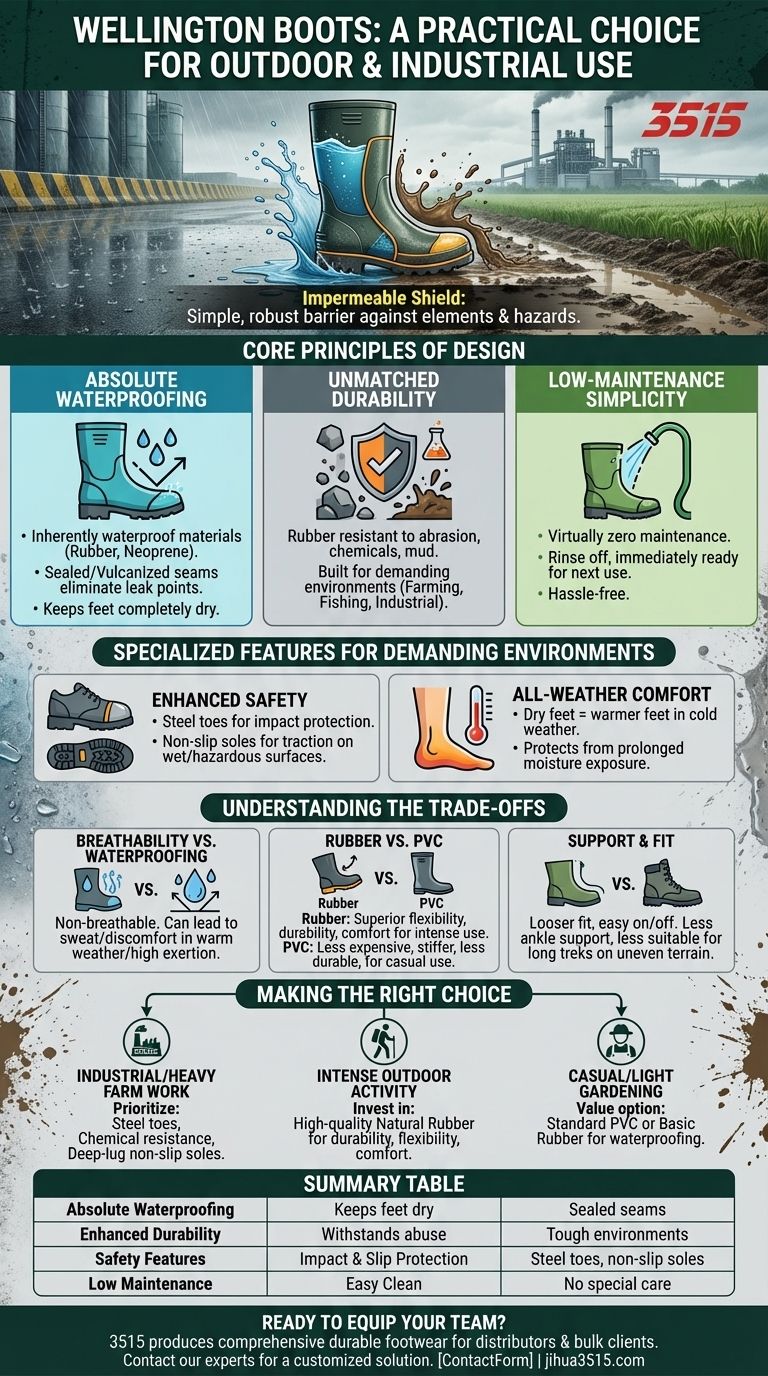
Absolute Waterproofing
The primary function of a Wellington boot is to keep your feet dry. This is achieved through the use of inherently waterproof materials like natural rubber and neoprene.
Furthermore, their construction with sealed or vulcanized seams eliminates the weak points where water could seep in, creating a truly impermeable shell from top to bottom.
Unmatched Durability
These boots are designed to withstand harsh conditions. The rubber construction is naturally resistant to abrasion, mud, and many common chemicals found in agricultural or industrial settings.
This inherent toughness means they are built for demanding environments, from the deck of a fishing boat to a muddy farm field.
Low-Maintenance Simplicity
Wellington boots require virtually zero maintenance. Unlike leather boots that need conditioning and care, Wellingtons can be rinsed off and are immediately ready for their next use.
This "grab-and-go" readiness makes them a reliable and hassle-free choice for any wet-weather adventure or task.
Specialized Features for Demanding Environments
Beyond their basic construction, specific features are often added to enhance their utility for professional and industrial applications, turning a simple boot into a piece of essential safety equipment.
Enhanced Safety for Industrial Use
For workers, safety is paramount. Many Wellingtons are equipped with steel toes to protect against impact and compression injuries.
Additionally, specialized non-slip soles provide critical traction on wet, slippery surfaces, significantly reducing the risk of falls in hazardous workplaces.
All-Weather Comfort
Keeping feet dry is also a matter of comfort and health, especially in cold weather. By preventing moisture from getting in, Wellington boots help keep feet warm and protected from the discomfort of prolonged exposure to wet conditions.
Understanding the Trade-offs
While incredibly practical, the design of Wellington boots comes with inherent limitations. Understanding these trade-offs is key to choosing the right footwear.
Breathability vs. Waterproofing
The same feature that makes them 100% waterproof also makes them non-breathable. In warm weather or during high-exertion activities, this can lead to sweat and discomfort over extended periods.
Material Choice: Rubber vs. PVC
Not all Wellingtons are created equal. High-quality natural rubber offers superior flexibility, durability, and comfort, making it ideal for intense activities like long walks or demanding physical labor.
Conversely, PVC (polyvinyl chloride) options are often less expensive but can be stiffer and less durable. They are perfectly suitable for casual use, like gardening or light tasks, but may not hold up to heavy wear.
Support and Fit
Wellingtons typically offer a looser fit than lace-up boots. While easy to slip on and off, they generally provide less ankle support, making them less suitable for long treks over very uneven or challenging terrain.
Making the Right Choice for Your Goal
Selecting the right Wellington boot depends entirely on your intended use.
- If your primary focus is industrial safety or heavy farm work: Prioritize boots with certified steel toes, chemical resistance, and deep-lug, non-slip soles.
- If your primary focus is intense outdoor activity: Invest in a high-quality natural rubber boot for better durability, flexibility, and long-term comfort.
- If your primary focus is casual wear or light gardening: A standard PVC or basic rubber Wellington offers excellent value and all the waterproofing you need.
Ultimately, the Wellington boot's enduring practicality lies in its simple, unwavering promise to protect you from the elements.
Summary Table:
| Key Feature | Benefit for You |
|---|---|
| Absolute Waterproofing | Keeps feet dry in wet conditions with sealed seams. |
| Enhanced Durability | Withstands mud, chemicals, and abrasion in tough environments. |
| Safety Features | Includes steel toes and non-slip soles for industrial use. |
| Low Maintenance | Easy to clean and ready for use with no special care needed. |
Ready to equip your team with high-performance Wellington boots?
As a large-scale manufacturer, 3515 produces a comprehensive range of durable footwear for distributors, brand owners, and bulk clients. Our production capabilities encompass all types of safety and industrial boots, ensuring you get the right combination of protection, comfort, and value.
Contact our experts today to discuss your specific needs and receive a customized solution.
Visual Guide
Related Products
- Durable Waterproof Rain Boots | Custom Manufacturer for Wholesale & Brands
- Durable Goodyear Welt Leather Work Boots for Wholesale & Private Label
- Wholesale Durable Leather Work Boots | 8-Inch Goodyear Welt Manufacturer
- High-Traction Suede Tactical Boots Wholesale & Custom Manufacturing
- Premium Wholesale Tactical Style Safety Shoes Boots with Quick Lacing
People Also Ask
- What are the main materials for waterproof rain boots? Choose the Right Material for Durability & Comfort
- What is the overall recommendation for choosing rain boot materials? A Guide to Rubber vs. PVC
- How does boot height affect waterproofing? Choose the Right Height for Ultimate Protection
- Why are rain boots more flexible and comfortable than snow boots? The Key Differences Explained
- What are the best types of shoes for different gardening conditions? Find Your Perfect Match.



















