
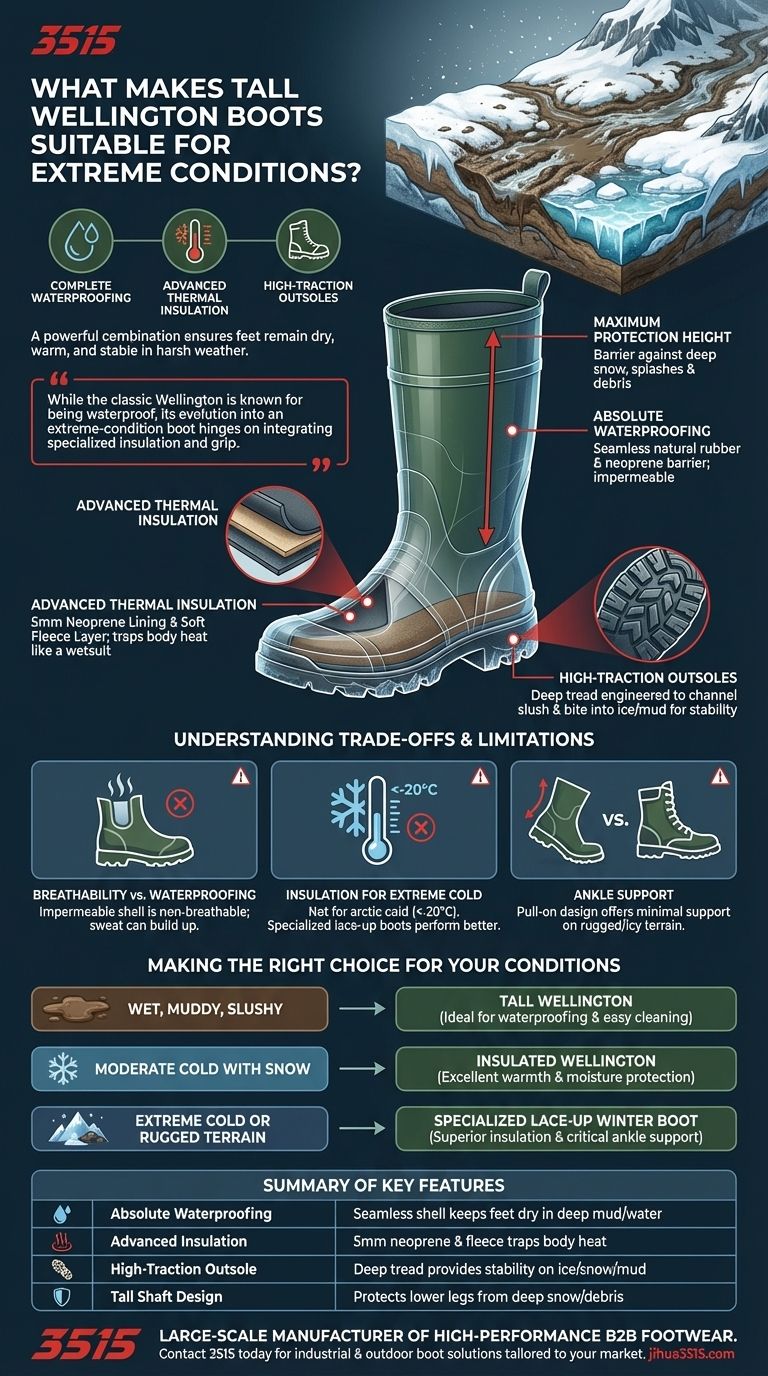
At their core, tall Wellington boots are made suitable for extreme conditions through a powerful combination of three key features: a completely waterproof construction, advanced thermal insulation like neoprene and fleece, and high-traction outsoles designed for unstable surfaces. This trio ensures your feet remain dry, warm, and stable in harsh weather.
While the classic Wellington is known for being waterproof, its evolution into an extreme-condition boot hinges on integrating specialized insulation and grip. The defining factor is no longer just keeping water out, but actively keeping warmth in and preventing slips.
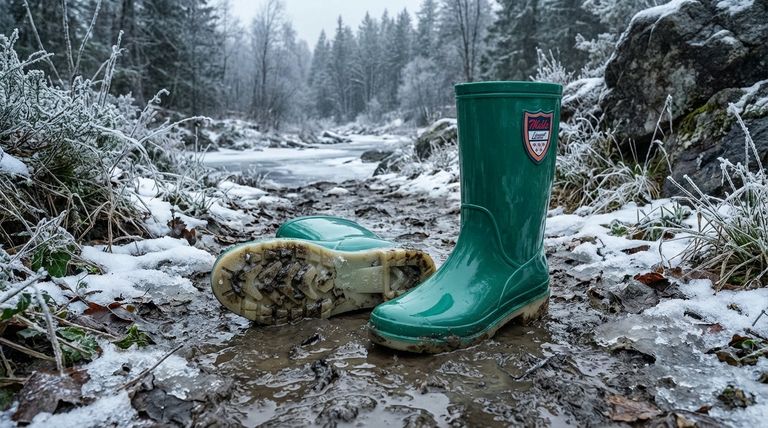
The Anatomy of an Extreme-Condition Wellington
A standard rain boot and a boot designed for extreme weather may look similar, but their internal construction and materials are worlds apart. The effectiveness of a tall Wellington in harsh environments comes down to specific, purpose-built components.
Absolute Waterproofing
The primary advantage of a Wellington boot is its seamless, impermeable design. Unlike stitched boots that can have points of failure, Wellingtons offer total protection from moisture.
Materials like natural rubber and neoprene are used to create a single, unified barrier. This makes them ideal for standing in slush, deep mud, or crossing streams without any risk of leaks.
Advanced Thermal Insulation
Keeping feet dry is only half the battle; keeping them warm is critical. Modern extreme-condition Wellingtons have moved far beyond simple rubber shells.
They incorporate layers of insulation directly into the boot's structure. A 5mm neoprene lining is common, acting like a wetsuit to trap body heat effectively. This is often paired with a soft fleece lining for added warmth and comfort against the skin.
High-Traction Outsoles
Standard boots can become dangerously slick on ice, snow, or thick mud. Wellingtons built for tough conditions feature deep, aggressive tread patterns on their outsoles.
These designs are engineered to channel away water and slush while biting into the ground. This provides a stable footing, significantly reducing the risk of slips and falls in challenging terrain.
Maximum Protection Height
The tall, below-the-knee shaft is a simple but crucial feature. It provides a physical barrier against deep snow, splashes from puddles, and debris encountered in farming or outdoor work, ensuring a greater area of your lower leg stays protected.
Understanding the Trade-offs and Limitations
While highly effective, Wellington boots are a specialized tool. Understanding their inherent limitations is key to choosing the right footwear and avoiding potential issues.
Breathability vs. Waterproofing
The same feature that makes Wellingtons 100% waterproof—their impermeable rubber or neoprene shell—also makes them non-breathable.
In periods of high activity, sweat can build up inside the boot. This is a contrast to tactical or hiking boots, which often use water-resistant yet breathable membranes to manage moisture from both inside and out.
Insulation for Extreme Cold
Insulated Wellingtons are excellent for cold and wet conditions, but they may not be sufficient for severe, arctic-level cold (below -20°C).
For these temperatures, specialized lace-up winter boots often perform better. They are typically designed with much thicker insulation, sometimes including removable inner boot linings made of felt or shearling that offer a higher thermal rating.
Ankle Support and Adjustability
The pull-on design of Wellington boots offers convenience but provides minimal ankle support.
On highly uneven or icy terrain, a lace-up boot provides a much more secure and adjustable fit. This ability to tighten the boot around your foot and ankle offers superior stability, which is essential for preventing injuries during long treks or demanding work.
Making the Right Choice for Your Conditions
Selecting the proper boot requires matching its strengths to your specific environment and activity level.
- If your primary focus is wet, muddy, or slushy conditions: The unparalleled waterproofing and easy-to-clean design of a tall Wellington make it the ideal choice.
- If your primary focus is moderate cold with snow: An insulated Wellington with a neoprene and fleece lining provides an excellent combination of warmth and moisture protection.
- If your primary focus is extreme cold or rugged terrain: Consider specialized lace-up winter boots for their superior insulation ratings and critical ankle support.
Ultimately, the right boot is the one that directly addresses the challenges of your specific environment.
Summary Table:
| Feature | Key Benefit |
|---|---|
| Absolute Waterproofing | Seamless rubber/neoprene shell keeps feet dry in deep mud and water. |
| Advanced Insulation | 5mm neoprene & fleece lining traps body heat to keep feet warm. |
| High-Traction Outsole | Deep, aggressive tread provides stability on ice, snow, and mud. |
| Tall Shaft Design | Protects lower legs from deep snow, debris, and splashes. |
Need reliable Wellington boots for extreme conditions? As a large-scale manufacturer, 3515 produces a comprehensive range of high-performance waterproof and insulated footwear for distributors, brand owners, and bulk clients. Our production capabilities encompass all types of industrial and outdoor boots, ensuring durability and protection tailored to your market's needs. Contact 3515 today to discuss your requirements and discover how we can be your trusted manufacturing partner.
Visual Guide
Related Products
- Durable Waterproof Rain Boots | Custom Manufacturer for Wholesale & Brands
- Durable High-Ankle Tactical Boots Wholesale Manufacturer for Custom & Bulk Orders
- Durable High-Ankle Tactical Boots for Wholesale & Custom Manufacturing
- Durable Leather High-Ankle Tactical Boots for Wholesale & Custom Manufacturing
- Durable Goodyear Welt Leather Work Boots for Wholesale & Private Label
People Also Ask
- What are the main materials for waterproof rain boots? Choose the Right Material for Durability & Comfort
- What is the overall recommendation for choosing rain boot materials? A Guide to Rubber vs. PVC
- How does boot height affect waterproofing? Choose the Right Height for Ultimate Protection
- Why are rain boots more flexible and comfortable than snow boots? The Key Differences Explained
- What are the best types of shoes for different gardening conditions? Find Your Perfect Match.


















