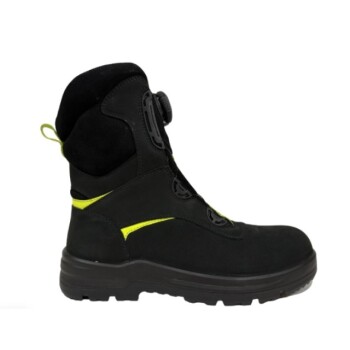
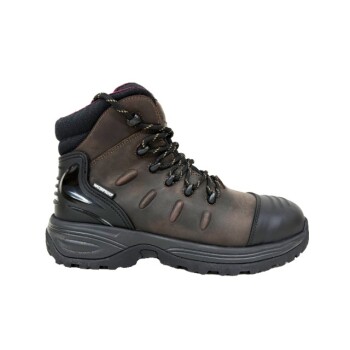
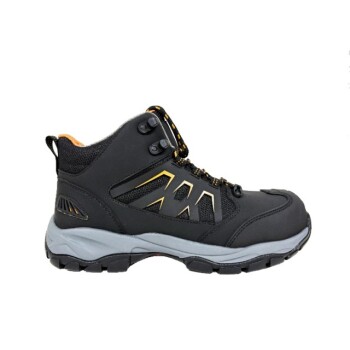
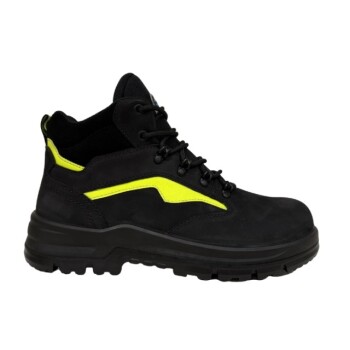
In short, safety Wellington boots are essential because they provide a unique combination of robust protection against common industrial hazards like impact, slips, and liquids, while also meeting critical operational needs for hygiene and ease of use that other safety footwear cannot match.
The true value of a safety Wellington isn't just in one feature, but in its ability to deliver comprehensive, multi-hazard protection in a simple, highly practical, and waterproof design.
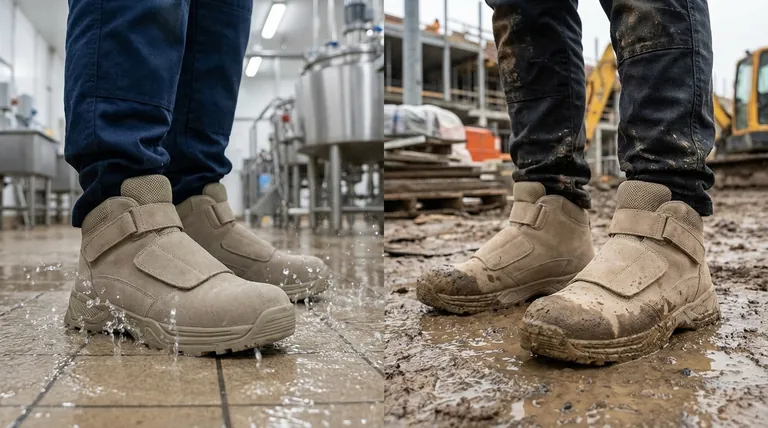
The Core Protective Features
The primary function of any safety footwear is to protect the wearer from immediate physical harm. Safety Wellingtons are engineered to shield against the most prevalent and high-risk hazards found in wet or messy work environments.
Protection from Impact and Compression
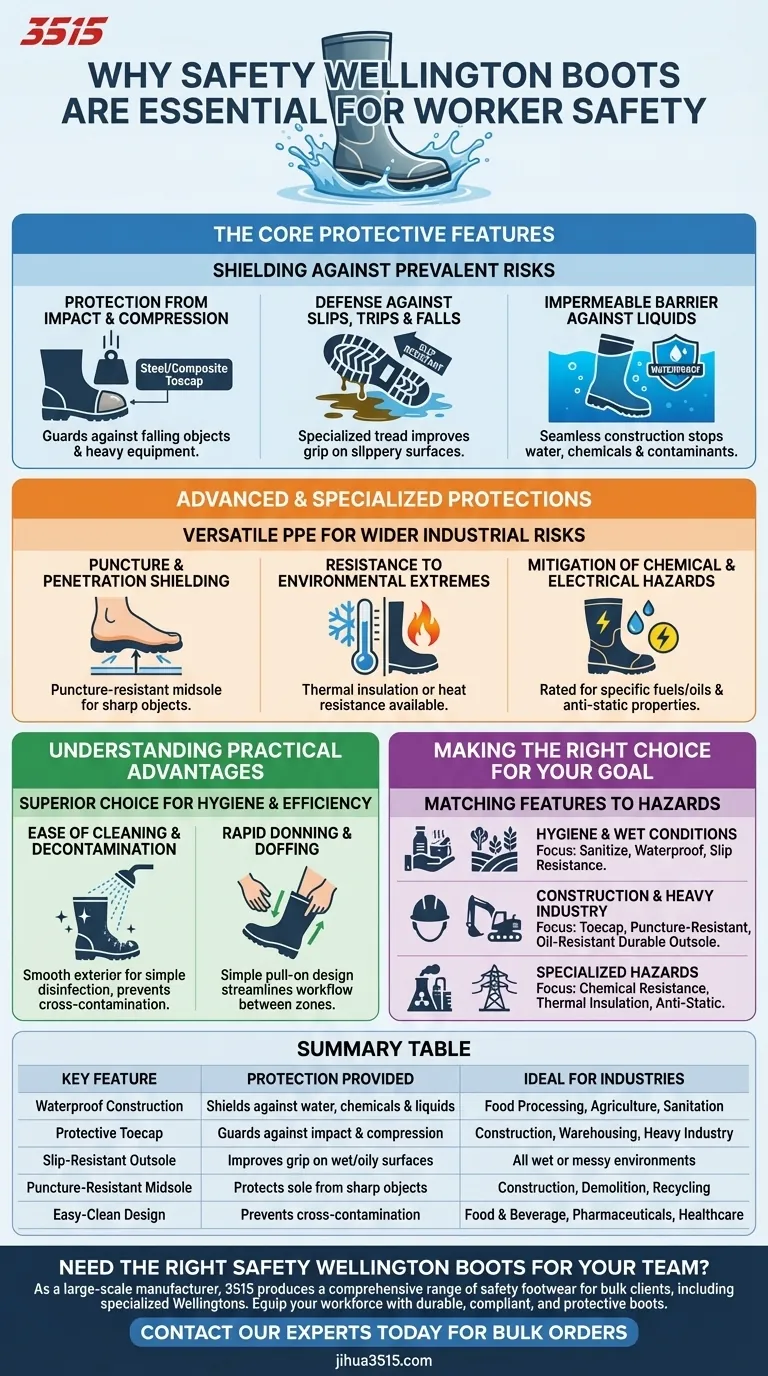
The most recognizable feature is the protective toecap, typically made of steel or composite materials. This element is critical for shielding feet from falling objects and compression from heavy equipment or materials.
Defense Against Slips, Trips, and Falls
Safety Wellingtons feature specialized outsoles with tread patterns designed to channel away water, oil, and other contaminants. This significantly improves grip on slippery surfaces, making them a first line of defense against one of the most common causes of workplace injury.
Impermeable Barrier Against Liquids
Their seamless, waterproof construction, often using natural rubber or neoprene, is their defining characteristic. This makes them indispensable in wet conditions, protecting feet not only from water but also from chemicals, acids, and other dangerous contaminants that could cause burns or skin damage.
Advanced and Specialized Protections
Modern safety Wellingtons have evolved beyond basic requirements to address a wider range of specific industrial risks, making them highly versatile pieces of Personal Protective Equipment (PPE).
Shielding from Punctures and Penetration
Many models include a puncture-resistant midsole, often made of steel or flexible composite fabric. This protects the sole of the foot from sharp objects common on worksites, such as nails, screws, or metal shards.
Resistance to Environmental Extremes
Specialized Wellingtons offer thermal insulation to protect against extreme cold, a vital feature for those working in refrigeration or harsh winter conditions. Conversely, some are designed with heat-resistant materials for environments with hot surfaces.
Mitigation of Chemical and Electrical Hazards
Beyond basic waterproofing, certain boots are rated for resistance to specific fuels, oils, and corrosive substances. Additionally, anti-static properties are available to dissipate static electricity, a critical feature for preventing sparks in flammable or explosive atmospheres.
Understanding the Practical Advantages
Beyond direct protection, the design of a Wellington boot offers practical benefits that make it the superior choice for certain industries, particularly food processing, agriculture, and sanitation.
Ease of Cleaning and Decontamination
The smooth, non-porous exterior of a Wellington boot is incredibly easy to wash down and disinfect. This is a non-negotiable requirement in hygiene-critical environments to prevent cross-contamination.
Rapid Donning and Doffing
Their simple, pull-on design allows workers to put them on and take them off quickly. This is particularly useful when moving between clean and contaminated zones, streamlining workflow and maintaining cleanliness protocols.
Making the Right Choice for Your Goal
Selecting the correct boot requires matching its specific features to the hazards of your environment.
- If your primary focus is hygiene and wet conditions (e.g., food processing, agriculture): Prioritize a boot that is easy to sanitize and fully waterproof, with excellent slip resistance.
- If your primary focus is construction or heavy industry: You must have a boot with a protective toecap, a puncture-resistant midsole, and a durable, oil-resistant outsole.
- If your primary focus is specialized hazards (e.g., chemical plants, utilities): Look for specific ratings for chemical resistance, thermal insulation, or anti-static properties that match your site's risk assessment.
Ultimately, choosing the right safety Wellington is a critical step in building a comprehensive workplace safety system.
Summary Table:
| Key Feature | Protection Provided | Ideal For Industries |
|---|---|---|
| Waterproof Construction | Shields against water, chemicals, and liquids | Food Processing, Agriculture, Sanitation |
| Protective Toecap | Guards against impact and compression from heavy objects | Construction, Warehousing, Heavy Industry |
| Slip-Resistant Outsole | Improves grip on wet, oily, and slippery surfaces | All wet or messy environments |
| Puncture-Resistant Midsole | Protects sole from sharp objects like nails or metal shards | Construction, Demolition, Recycling |
| Easy-Clean Design | Prevents cross-contamination; simple to disinfect | Food & Beverage, Pharmaceuticals, Healthcare |
Need the right safety Wellington boots for your team?
As a large-scale manufacturer, 3515 produces a comprehensive range of safety footwear for distributors, brand owners, and bulk clients. Our production capabilities encompass all types of safety shoes and boots, including specialized Wellingtons tailored to your industry's specific hazards.
We can help you equip your workforce with durable, compliant, and highly protective boots that enhance safety and operational efficiency.
Contact our experts today for a consultation and to discuss your bulk order requirements.
Visual Guide
Related Products
- Durable Waterproof Rain Boots | Custom Manufacturer for Wholesale & Brands
- Premium Wholesale Tactical Style Safety Shoes Boots with Quick Lacing
- Wholesale Durable Safety Boots | Custom Steel Toe & Puncture-Resistant Manufacturing
- Premium Grain Leather Safety Boots for Bulk Supply
- Puncture-Resistant Velcro Safety Boots for Wholesale & Custom Manufacturing
People Also Ask
- What are the main materials for waterproof rain boots? Choose the Right Material for Durability & Comfort
- What is the overall recommendation for choosing rain boot materials? A Guide to Rubber vs. PVC
- How does boot height affect waterproofing? Choose the Right Height for Ultimate Protection
- Why are rain boots more flexible and comfortable than snow boots? The Key Differences Explained
- What are the best types of shoes for different gardening conditions? Find Your Perfect Match.