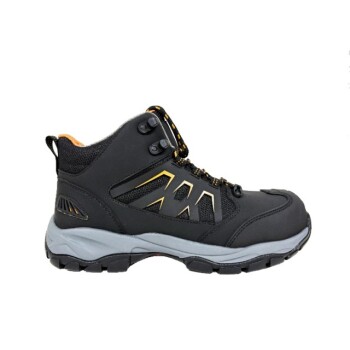
At their core, moc toe boots are suitable for work because their unique construction prioritizes all-day comfort, flexibility, and durability for professionals who spend long hours on their feet. The signature U-shaped stitching on the toe box creates a roomier fit, while the thick rubber soles absorb the constant impact of hard surfaces found in factories, workshops, and construction sites.
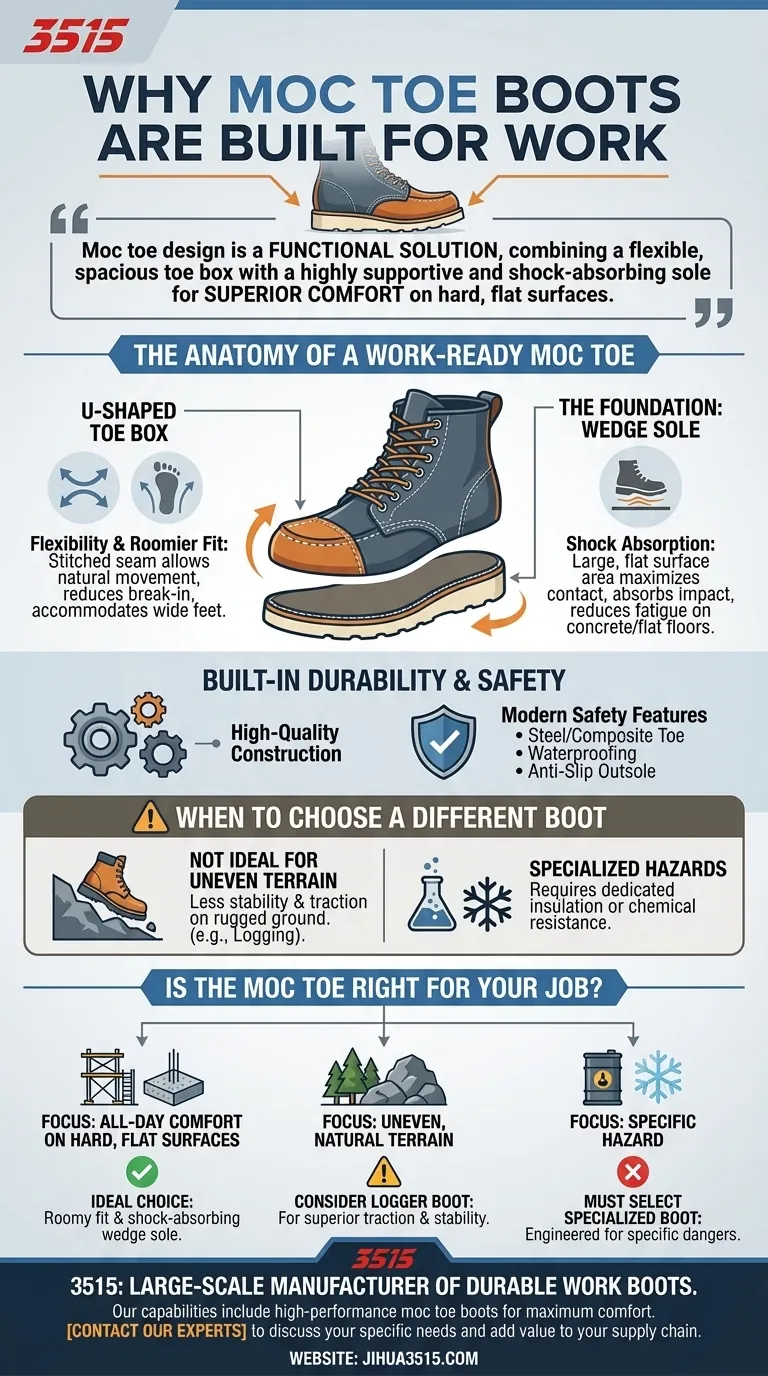
The moc toe design is not just an aesthetic choice; it is a functional solution that combines a flexible, spacious toe box with a highly supportive and shock-absorbing sole, making it the superior option for comfort on hard, flat surfaces.

The Anatomy of a Work-Ready Moc Toe
To understand why moc toe boots are so effective, it's essential to look at the specific design elements that contribute to their performance in demanding work environments.
The U-Shaped Toe Box: More Than Just Looks
The most defining feature of the moc toe boot is the U-shaped seam stitched across the top of the toe box. This design, inspired by traditional moccasins, provides significant functional benefits.
This stitching allows for more flexibility in the forefoot, reducing break-in time and allowing the boot to move more naturally with your foot. It also creates a roomier toe box with higher side walls, which is a major advantage for individuals with wider feet and prevents pinching during long shifts.
The Foundation of Comfort: The Sole
Moc toe work boots are almost always built with thick rubber soles designed to handle the stress of standing and walking on unforgiving surfaces.
Many feature a wedge outsole, which provides a large, flat surface area that maximizes contact with the ground. This design is excellent for absorbing impact and distributing weight evenly, reducing fatigue for carpenters, concrete workers, electricians, and plumbers.
Built-In Durability and Safety
Beyond comfort, moc toe boots are engineered for durability. They are a staple in labor-intensive fields because their high-quality construction can withstand the daily abuse of the job.
Modern versions frequently incorporate critical safety features to meet job site requirements. These can include steel or composite safety toes for impact protection, waterproofing, insulation, and certified anti-slip outsoles.
Understanding the Limitations: When to Choose a Different Boot
While the moc toe is an excellent all-around work boot, its design has specific trade-offs. Being aware of its limitations is crucial for making the right choice.
Not Ideal for Uneven Terrain
The very feature that makes the wedge sole great for flat surfaces—its large, flat contact area—makes it less suitable for rugged, uneven ground.
For jobs like logging or working on steep inclines, a logger boot with a defined, elevated heel and an aggressive lug pattern will provide far superior stability and traction.
Maintenance and Specialized Hazards
The stitching on the toe box can trap dirt and debris, making it more difficult to clean than a simple plain-toe boot. This can be a consideration for those working in extremely muddy or dirty environments.
Furthermore, while versatile, the moc toe is not a specialist. For environments with extreme cold or chemical exposure, a dedicated insulated or chemical-resistant boot is the only appropriate and safe choice.
Is the Moc Toe the Right Boot for Your Job?
Choosing the right footwear is about matching the tool to the task. The moc toe excels in specific conditions but is not a universal solution.
- If your primary focus is all-day comfort on hard, flat surfaces (like concrete floors or scaffolding): The moc toe's roomy fit and shock-absorbing wedge sole make it an ideal choice.
- If your primary focus is working on uneven, natural terrain (like forestry or heavy outdoor construction): Consider a boot with a more aggressive tread and a defined heel for superior traction and stability.
- If your primary focus is a specific hazard (like extreme cold or chemical exposure): You must select a specialized boot with features engineered to protect you from those specific dangers.
Ultimately, understanding your work environment is the key to selecting a boot that will keep you safe, comfortable, and productive.
Summary Table:
| Feature | Benefit for Work |
|---|---|
| U-Shaped Toe Stitching | Provides flexibility and a roomier fit, reducing foot fatigue. |
| Wedge Outsole | Excellent shock absorption on hard, flat surfaces like concrete. |
| Durable Construction | Withstands daily wear and tear in workshops and on construction sites. |
| Safety Features | Available with steel/composite toes and anti-slip soles for protection. |
As a large-scale manufacturer, 3515 produces a comprehensive range of durable work boots for distributors, brand owners, and bulk clients.
Our production capabilities encompass all types of safety footwear, including high-performance moc toe boots designed for maximum comfort and long-lasting wear. Let us help you equip your workforce with the right tools for the job.
Contact our experts today to discuss your specific needs and discover how we can add value to your supply chain.
Visual Guide
Related Products
- Durable Leather Moc Toe Work Boots for Wholesale & Custom Manufacturing
- Durable Moc Toe Wedge Sole Work Boots for Wholesale and Private Label
- Durable Moc-Toe Wedge Work Boots | Wholesale Manufacturing for Brands
- Wholesale Durable Safety Boots Manufacturer Customizable Steel Toe Work Boots
- Wholesale Customizable Safety Boots Durable & Protective Footwear Manufacturing
People Also Ask
- What are moc toe work boots designed for? Superior Comfort and Mobility for Tradespeople
- What are the key features to look for when purchasing moc toe boots? A Guide to Durability & Fit
- How did moc toe boots originate? A Legacy of Workwear Durability and Style
- What clothing items complement the Outdoorsman/Heritage Look with moc toe boots? Build a Timeless, Rugged Wardrobe
- What types of outfits can moc toe boots be worn with? Versatile Style Guide