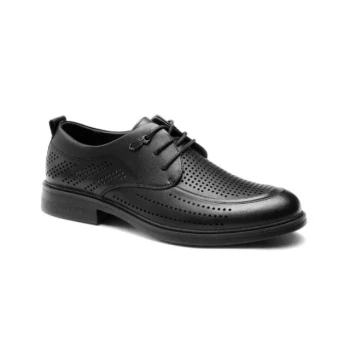
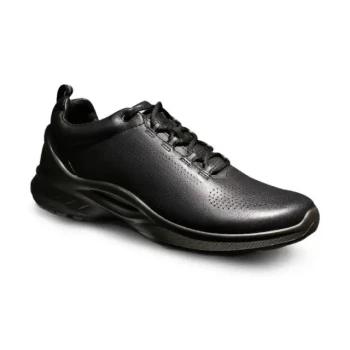
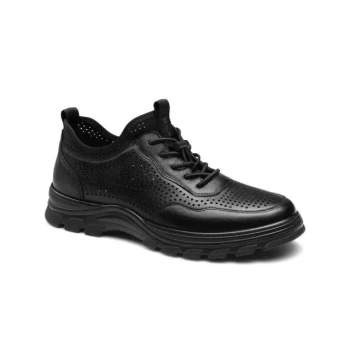
The value of a Goodyear-welted shoe is rooted in its unique and robust construction. This method creates footwear that is exceptionally durable, water-resistant, and, most importantly, repairable. Unlike cheaper shoes that are thrown away when the sole wears out, a Goodyear-welted shoe can be resoled multiple times, allowing a single pair to last for decades and ultimately delivering a lower cost-per-wear.
A Goodyear-welted shoe is not just a purchase; it's an investment in a system of footwear designed for longevity. The high initial cost is a trade-off for a shoe that can be repeatedly repaired, becomes more comfortable over time, and outlasts its disposable counterparts many times over.
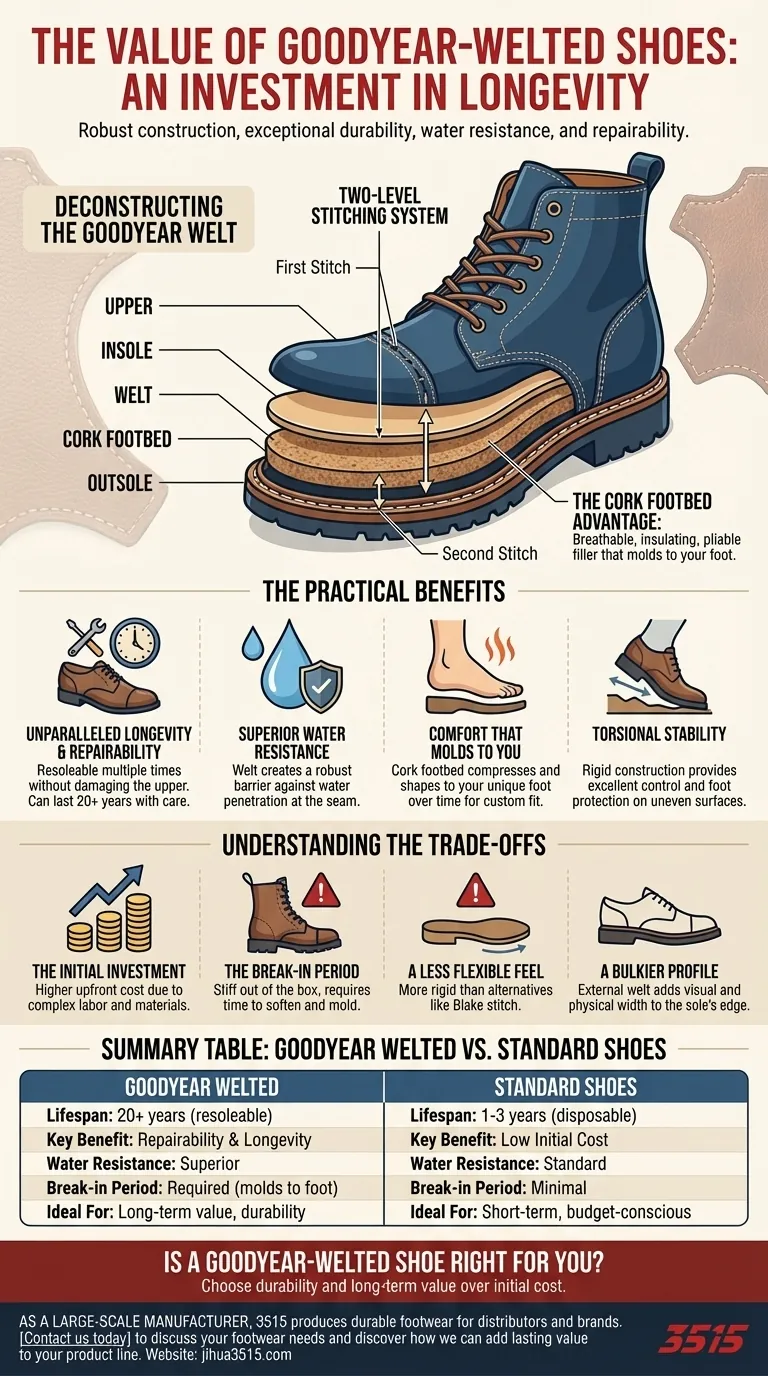
Deconstructing the Goodyear Welt
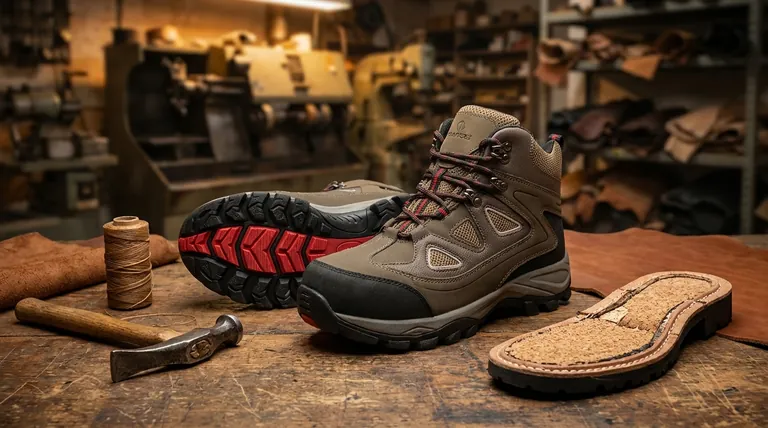
To understand the value, you must first understand the construction. A Goodyear welt is a method of attaching the shoe's upper to its sole using a strip of leather called a welt.
The Core Components
This construction involves three key parts: the insole (inside the shoe), the upper (the main body of the shoe), and the outsole (the part that hits the ground). The welt acts as the crucial intermediary.
A Two-Level Stitching System
First, the upper is stitched to the welt. Then, in a separate stitch, the welt is attached to the outsole. This two-step process is the defining feature of the construction.
The Cork Footbed Advantage
This method leaves a cavity between the insole and the outsole. This space is filled with a layer of cork, which is breathable, insulating, and, most importantly, pliable.
The Practical Benefits of This Construction
This seemingly complex process directly translates into tangible, long-term benefits for the owner.
Unparalleled Longevity and Repairability
Because the outsole is stitched to the welt and not directly to the upper, a skilled cobbler can remove the old sole and stitch on a new one without ever touching the shoe's main structure. This is the single biggest factor in their longevity, with well-cared-for pairs lasting 20 years or more.
Superior Water Resistance
The welt creates a robust, raised barrier around the edge of the shoe. This makes it significantly more difficult for water to penetrate the seam between the upper and the sole, keeping your feet drier than in most other shoe constructions.
Comfort That Molds to You
As you wear the shoes, your body heat and the pressure of your steps cause the cork footbed to compress and mold to the unique shape of your foot. Over time, this creates a personalized, custom-like fit that is exceptionally comfortable.
Torsional Stability
The rigid nature of the Goodyear welt provides excellent torsion control and foot protection. This makes them a stable platform, ideal for walking on uneven surfaces.
Understanding the Trade-offs
While the benefits are significant, Goodyear-welted shoes are not without their compromises. Objectivity requires acknowledging them.
The Initial Investment
The complexity of the construction process requires skilled labor and more materials. This results in a significantly higher upfront cost compared to shoes made with simpler methods like cement gluing.
The Break-in Period
The same features that make the shoes durable—multiple layers of thick leather, the welt, and a sturdy sole—also make them stiff out of the box. Most pairs require a break-in period before the cork molds and the leather softens.
A Less Flexible Feel
By its nature, this construction is more rigid than alternatives like a Blake stitch, where the outsole is stitched directly to the insole. This can result in a less flexible, heavier feel underfoot.
A Bulkier Profile
The external welt adds visual and physical width to the sole's edge. This often creates a more substantial, less sleek aesthetic compared to constructions where the upper is attached more directly to the sole.
Is a Goodyear-Welted Shoe Right for You?
The decision to invest in Goodyear-welted footwear comes down to your personal priorities and what you value in a shoe.
- If your primary focus is maximum longevity and the lowest cost-per-wear over many years: The unparalleled repairability of a Goodyear welt makes it the definitive choice.
- If your primary focus is immediate, out-of-the-box comfort and a flexible feel: You might prefer a Blake-stitched or high-quality cemented shoe, accepting a shorter lifespan.
- If your primary focus is a sleek, close-cut, and lightweight aesthetic: The inherent bulk of the welt may not suit your style, and a Blake-stitched or cemented shoe would be a better fit.
Choosing a Goodyear-welted shoe is a deliberate decision to prioritize durability and long-term value over initial cost and convenience.
Summary Table:
| Aspect | Goodyear Welted | Standard Shoes |
|---|---|---|
| Lifespan | 20+ years (resoleable) | 1-3 years (disposable) |
| Key Benefit | Repairability & Longevity | Low Initial Cost |
| Water Resistance | Superior | Standard |
| Break-in Period | Required (molds to foot) | Minimal |
| Ideal For | Long-term value, durability | Short-term, budget-conscious |
As a large-scale manufacturer, 3515 produces a comprehensive range of durable footwear for distributors, brand owners, and bulk clients.
Are you looking to source high-quality, long-lasting shoes that your customers will value for years? Our production capabilities encompass all types of Goodyear-welted and other constructed shoes and boots, designed for maximum durability and customer satisfaction.
Contact us today to discuss your footwear needs and discover how we can add lasting value to your product line.
Visual Guide
Related Products
- Durable Goodyear Welt Leather Work Boots for Wholesale & Private Label
- Durable Rubber Sole Outdoor Shoes Wholesale & Custom Manufacturing
- Wholesale Breathable Athletic Sneakers - Custom Lightweight Cushioned Footwear Manufacturer
- Premium Lightweight Safety Shoes for Wholesale & Bulk Orders
- Custom OEM Training Shoes Wholesale Manufacturer Durable & Breathable
People Also Ask
- What is the difference between full-grain and top-grain leather? Premium Material Guide for Boot Manufacturers
- What are the advantages of leather as an upper material for work boots? Unmatched Durability & Custom Comfort
- Why is it important to waterproof leather work boots? Protect Your Investment and Performance
- How should new leather work boots be broken in? A Guide to Comfort and Durability
- What are the advantages of leather uppers in work boots? Unmatched Durability & Protection