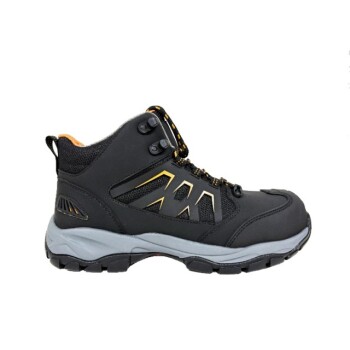
At their core, composite toe boots are suitable for electrical work because the toe cap is made from non-metallic materials like carbon fiber, Kevlar, or plastic. This lack of metal is critical because it makes the toe cap non-conductive, eliminating a potential pathway for electricity and significantly reducing the risk of electric shock compared to a steel toe.
The most important safety feature for electrical work is not the composite toe itself, but the boot's official Electrical Hazard (EH) rating. This rating certifies that the entire boot, particularly the sole, is constructed to insulate you from the ground.
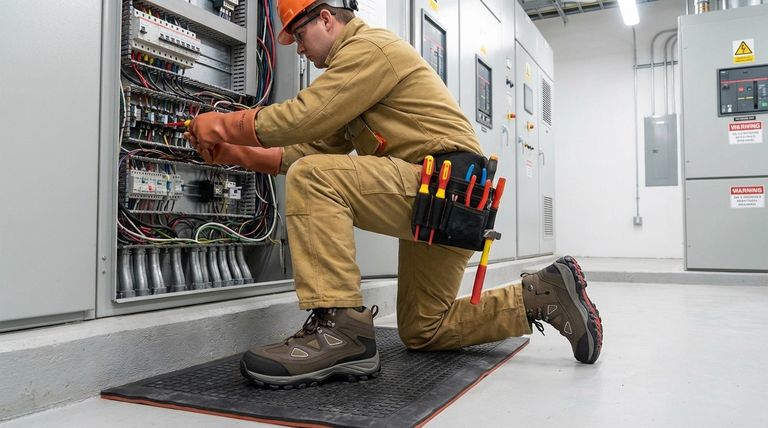
The Real Source of Electrical Protection
A common misconception is that the composite toe provides the primary protection against electrical hazards. While it plays a role, the boot's sole is the true workhorse of electrical safety.
The Critical EH Rating
The Electrical Hazard (EH) rating is a safety standard certifying that the footwear provides a secondary source of protection against accidental contact with live electrical circuits.
EH-rated boots are tested to withstand the application of 18,000 volts at 60 hertz for one minute with no current flow or leakage current in excess of one milliampere under dry conditions.
How the Outsole Provides Insulation
The primary barrier between you and an electrical current is the boot's outsole. These soles are made from thick, non-conductive materials like rubber or polyurethane.
This construction is designed to prevent your body from completing an electrical circuit with the ground, which is what causes a severe shock. The composite toe cap simply ensures there are no conductive elements in the front of the boot that could compromise this system.
Key Features of a Proper EH-Rated Boot
While the EH rating is paramount, several other features work together to create a genuinely safe boot for electrical environments.
Non-Conductive Materials
Every component, from the leather upper to the eyelets, must be non-conductive to maintain the integrity of the insulation. Using a composite toe instead of a steel toe is a logical part of this complete non-metallic design.
Slip-Resistant Soles
Electrical safety is only one part of job site awareness. A rugged outsole with deep treads is essential for maintaining grip and preventing slips, trips, and falls, which are common causes of injury.
Overall Durability
A safe boot must also be a durable one. Features like full-grain leather, abrasion-resistant fabrics, and chemical-resistant materials ensure the boot can withstand the demands of the job without compromising its protective features.
Understanding the Limitations and Risks
No piece of equipment is infallible. Understanding the limitations of your boots is just as important as knowing their features.
EH Boots are a Secondary Defense
EH-rated footwear should never be your primary source of protection from electricity. Always follow established safety protocols, de-energize circuits when possible, and use appropriate primary protective equipment.
The "Dry Conditions" Caveat
The EH rating is only valid in dry conditions. Water is an excellent conductor of electricity and can completely negate the insulating properties of your boots. If your boots are wet, they will not protect you from electric shock.
Wear and Tear Compromises Safety
The protective qualities of your boot's sole can be diminished by cuts, punctures, or excessive wear. Regularly inspect your boots for damage, as a compromised sole no longer offers reliable EH protection.
Making the Right Choice for Your Goal
Selecting the correct boot requires you to look past marketing and focus on certified safety features.
- If your primary focus is meeting safety compliance: Always look for the official EH rating on the boot's tag or label; this is the only way to verify it's suitable for electrical hazard protection.
- If your primary focus is all-around job site safety: Choose an EH-rated boot that also features a highly slip-resistant outsole and durable, waterproof construction.
- If your primary focus is maximum protection from shock: Treat your EH-rated footwear as a last line of defense and always rely on primary safety procedures and equipment first.
Ultimately, choosing the right boot means understanding it as a complete safety system designed to protect you from the ground up.
Summary Table:
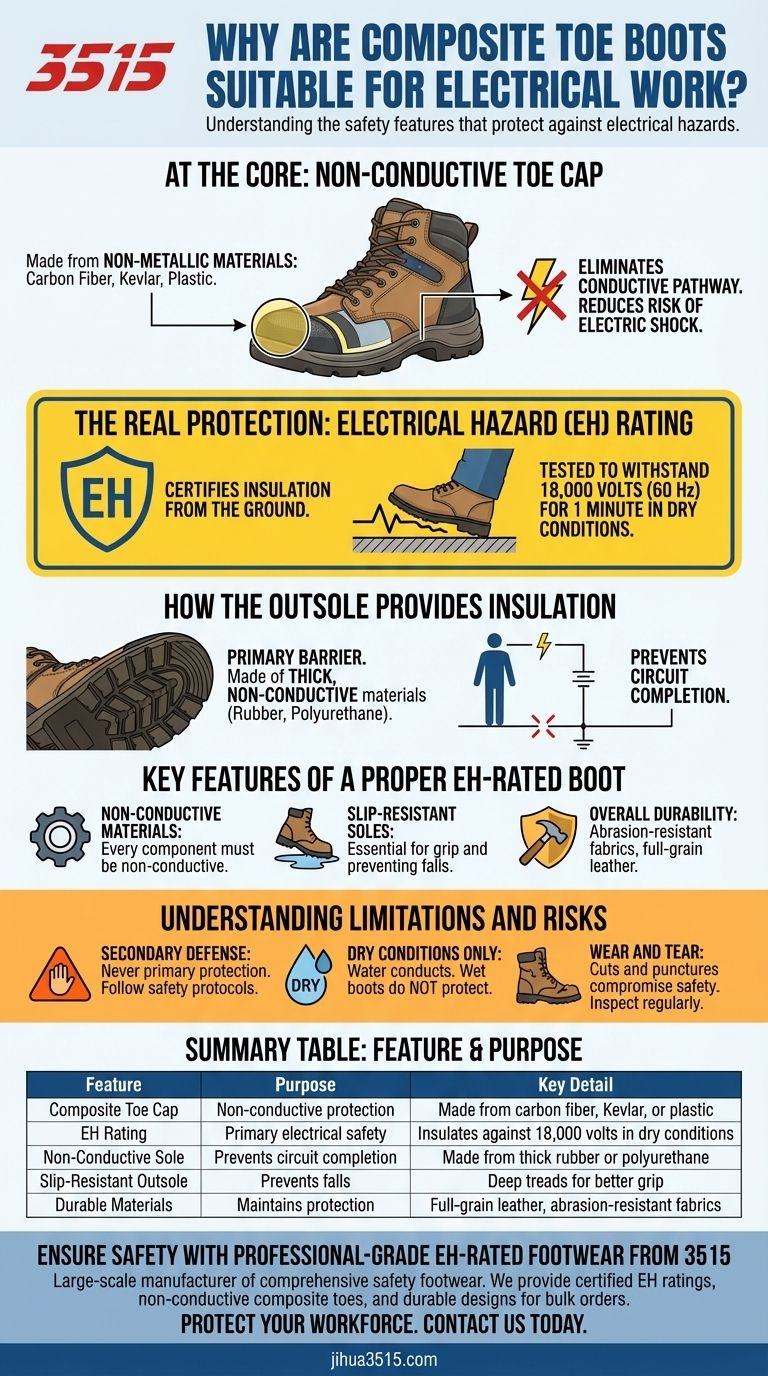
| Feature | Purpose | Key Detail |
|---|---|---|
| Composite Toe Cap | Non-conductive protection | Made from carbon fiber, Kevlar, or plastic |
| EH Rating | Primary electrical safety | Insulates against 18,000 volts in dry conditions |
| Non-Conductive Sole | Prevents circuit completion | Made from thick rubber or polyurethane |
| Slip-Resistant Outsole | Prevents falls on job sites | Deep treads for better grip |
| Durable Materials | Maintains protection over time | Full-grain leather, abrasion-resistant fabrics |
Ensure Your Team's Safety with Professional-Grade EH-Rated Footwear
As a large-scale manufacturer, 3515 produces a comprehensive range of safety footwear for distributors, brand owners, and bulk clients. Our production capabilities encompass all types of EH-rated boots and shoes, designed to meet the highest safety standards for electrical work.
We provide:
- Boots with certified EH ratings for reliable electrical hazard protection
- Non-conductive composite toes and full non-metallic construction
- Durable, slip-resistant outsoles built for demanding job sites
- Customizable options for large-volume orders to fit your specific needs
Protect your workforce with footwear engineered for safety and durability.
Contact us today to discuss your requirements and request a quote for your next order.
Visual Guide
Related Products
- Wholesale Durable Safety Boots Manufacturer Customizable Steel Toe Work Boots
- Durable Leather Moc Toe Work Boots for Wholesale & Custom Manufacturing
- Wholesale Mesh Steel Toe Safety Shoes with Dial Closure Factory Production
- Wholesale Durable Breathable Safety Boots Custom OEM Manufacturer
- Wholesale Customizable Safety Boots Durable & Protective Footwear Manufacturing
People Also Ask
- What are the pros and cons of steel toe work boots? A Guide to Maximum Protection vs. Comfort
- What are the different types of steel toe work boots? Choose the Right Boot for Your Job
- What is the history of steel toe work boots? From German Invention to Modern Safety Standard
- How much weight can steel toe work boots withstand? Unpacking the 3,372 lb. Safety Standard
- What are some common myths about steel toe work boots? Debunked for Modern Workers