
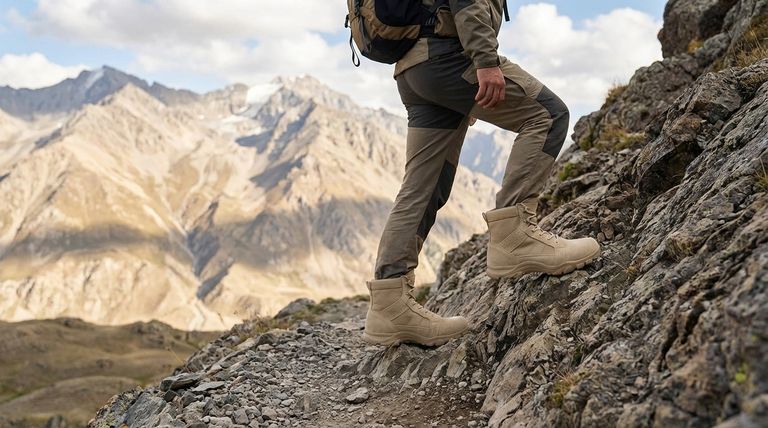
In certain demanding conditions, combat boots can be suitable for hiking due to their exceptional durability, high ankle support, and aggressive tread patterns. These features, engineered for harsh military environments, provide stability and protection on rugged, unpredictable trails where lesser footwear might fail.
The core principle to understand is that while combat boots offer unparalleled durability and support, they represent a trade-off. They exchange the specialized comfort, lighter weight, and breathability of modern hiking boots for rugged, all-purpose construction.
Why Combat Boots Are Considered for Hiking
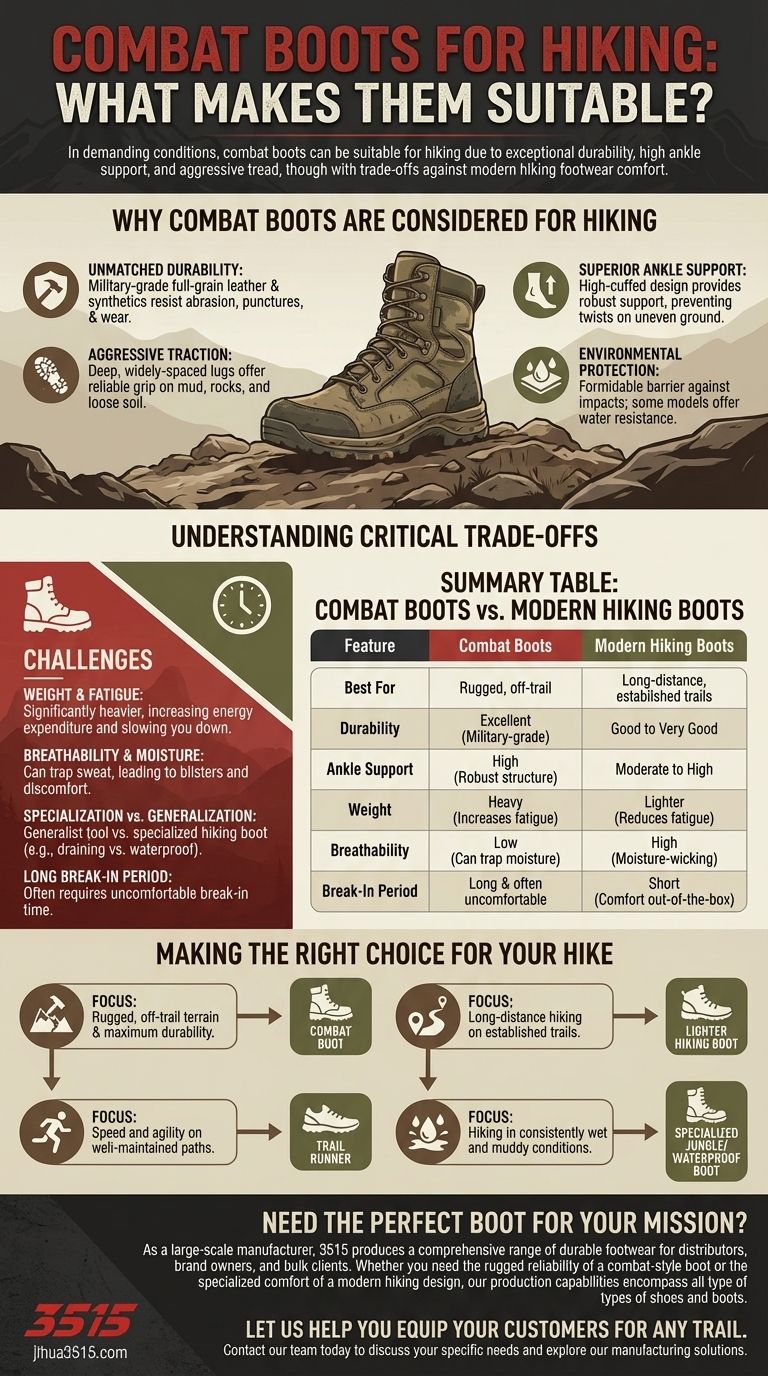
Combat boots are engineered as a general-purpose tool for survival in extreme conditions. Several of these design characteristics overlap with the demands of challenging hiking.
The Foundation: Unmatched Durability
Military boots are built with high-quality materials like full-grain leather and tough synthetic fabrics. This construction is designed to resist abrasion, punctures, and the general wear-and-tear of harsh environments, making them extremely long-lasting on the trail.
The Structure: Superior Ankle Support
The high-cuffed design is a defining feature of most combat boots. This structure provides robust ankle support, which is critical for preventing twists and sprains when navigating uneven ground, loose rock, or steep inclines.
The Grip: Aggressive Outsole Traction
The outsoles of combat boots feature deep, widely-spaced lugs. This aggressive tread pattern is designed to provide reliable traction across a wide variety of surfaces, from thick mud and loose soil to rocky paths.
The Shield: Environmental Protection
These boots act as a formidable barrier between your feet and the trail. Their sturdy construction protects against impacts from rocks and roots, while many models offer a degree of water resistance to keep feet dry in damp conditions.
Understanding the Critical Trade-offs
Despite their strengths, using combat boots for hiking involves significant compromises that are often addressed better by purpose-built hiking footwear.
Weight and Fatigue
Combat boots are typically much heavier than modern hiking boots or trail runners. This extra weight increases fatigue over long distances, requiring more energy with every step and potentially slowing you down.
Breathability and Moisture Management
Many traditional combat boots, especially older leather or waterproof models, lack breathability. This can trap sweat, leading to moisture buildup, which is a primary cause of blisters and discomfort on extended hikes.
Specialization vs. Generalization
A combat boot is a generalist, designed to perform adequately in many situations. A dedicated hiking boot is a specialist. For example, a "jungle boot" is designed to drain water quickly but isn't waterproof, a different approach than a Gore-Tex hiking boot designed to keep all water out.
The "Break-In" Period
Many combat boots, particularly all-leather models, require a lengthy and often uncomfortable break-in period to conform to your feet. Most modern hiking boots are designed for comfort right out of the box.
Making the Right Choice for Your Hike
Selecting the proper footwear is one of the most critical decisions a hiker can make. Your choice should be dictated by your specific goals and the environment you plan to face.
- If your primary focus is rugged, off-trail terrain and maximum durability: A well-fitted combat boot can be a reliable choice, offering excellent protection where other boots might wear out.
- If your primary focus is long-distance hiking on established trails: A lighter, more flexible hiking shoe or backpacking boot will provide superior comfort and reduce fatigue.
- If your primary focus is speed and agility on well-maintained paths: A trail runner is the optimal choice, offering the least weight and greatest flexibility.
- If your primary focus is hiking in consistently wet and muddy conditions: A specialized jungle boot (for drainage) or a modern waterproof-breathable hiking boot is far superior to a standard-issue combat boot.
Ultimately, matching your footwear to your specific mission is the key to ensuring comfort, safety, and performance on any trail.
Summary Table:
| Feature | Combat Boots | Modern Hiking Boots |
|---|---|---|
| Best For | Rugged, off-trail terrain | Long-distance, established trails |
| Durability | Excellent (military-grade materials) | Good to Very Good |
| Ankle Support | High (robust structure) | Moderate to High |
| Weight | Heavy (increases fatigue) | Lighter (reduces fatigue) |
| Breathability | Low (can trap moisture) | High (moisture-wicking) |
| Break-In Period | Long and often uncomfortable | Short (comfort out-of-the-box) |
Need the Perfect Boot for Your Mission?
As a large-scale manufacturer, 3515 produces a comprehensive range of durable footwear for distributors, brand owners, and bulk clients. Whether you need the rugged reliability of a combat-style boot or the specialized comfort of a modern hiking design, our production capabilities encompass all types of shoes and boots.
Let us help you equip your customers for any trail. Contact our team today to discuss your specific needs and explore our manufacturing solutions.
Visual Guide
Related Products
- Durable Military Combat Boots with Water Drainage for Wholesale & OEM
- Durable Leather Tactical Boots Wholesale & Custom Manufacturing for Brands
- High-Traction Suede Tactical Boots Wholesale & Custom Manufacturing
- Wholesale Lightweight Tactical Boots Custom Manufacturer for Desert & Combat Use
- Durable Mid-Cut Tactical Boots for Wholesale & Private Label
People Also Ask
- Why must gait validation for military applications be conducted in combat boots? Ensure Data Accuracy for Soldiers
- What are the common types of combat boots? Find the Right Boot for Your Mission
- What factors should be considered when choosing military boots for hiking? Durability vs. Weight for Your Terrain
- What are the key considerations when choosing military boots? Prioritize Compliance, Environment & Fit
- How should the midfoot and heel fit in military boots? Achieve a Snug, Secure Fit for Blister Prevention

















