
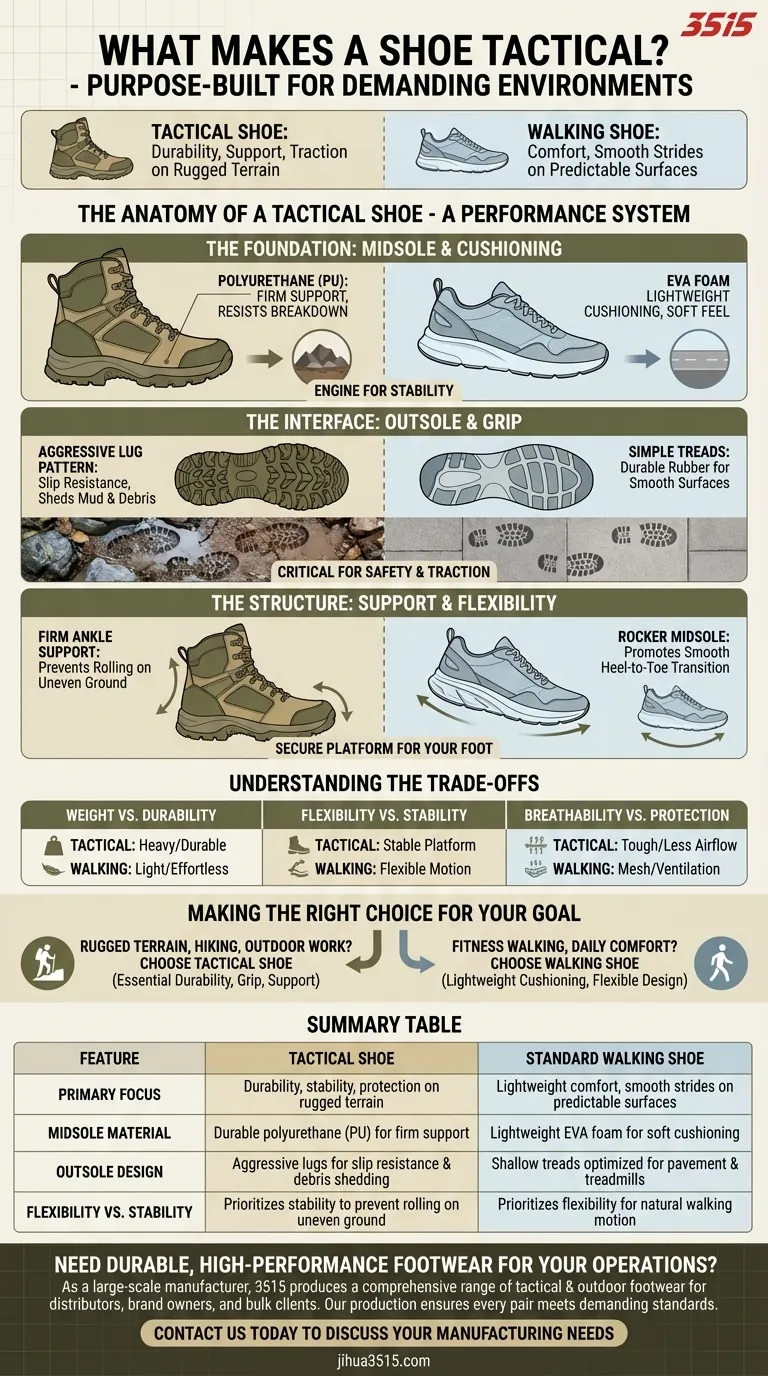
In short, a tactical shoe is purpose-built for performance in demanding environments. Unlike a standard walking shoe, its design prioritizes durability, support, and traction over lightweight comfort for casual use. Key features include rugged materials, aggressive outsoles for slip resistance, and enhanced cushioning designed to absorb shock on rough terrain.
The core difference lies in the design philosophy: a standard walking shoe is built for comfort and smooth strides on predictable surfaces, whereas a tactical shoe is engineered for stability, protection, and grip on unpredictable and rugged terrain.

The Anatomy of a Tactical Shoe
A tactical shoe is a system where each component is chosen for performance under stress. It's not about a single feature, but how several key elements work together to provide a stable and protective platform.
The Foundation: Midsole and Cushioning
The midsole is the engine of the shoe, responsible for absorbing shock and providing stability.
Tactical shoes use robust materials like polyurethane (PU) for the midsole. PU is dense and highly durable, offering firm support that resists breakdown under heavy loads or on uneven ground.
In contrast, most walking shoes use EVA foam, which is much lighter and provides softer cushioning. While excellent for shock absorption on pavement, EVA can compress and degrade faster under the demanding conditions a tactical shoe is built for.
The Interface: Outsole and Grip
The outsole is where the shoe meets the world, making grip a critical safety and performance feature.
A tactical outsole is defined by its slip resistance and aggressive lug patterns. These deep, widely-spaced treads are designed to shed mud and debris while gripping tightly on varied surfaces like dirt, rock, and wet ground.
Walking shoe outsoles are simpler. They typically have shallower treads and focus on providing durable rubber on high-wear areas, optimized for smooth, consistent surfaces like sidewalks and treadmills.
The Structure: Support and Flexibility
Support in a tactical shoe is about creating a secure platform for your foot and ankle.
These shoes often feature firm yet flexible ankle support and a structured upper. This design prevents your foot from rolling on uneven terrain while still allowing for a necessary range of motion.
A walking shoe prioritizes a different kind of flexibility. Features like a rocker midsole shape are designed to promote a smooth heel-to-toe transition for an efficient walking stride, which is less critical in a tactical context.
Understanding the Trade-offs
Choosing a tactical shoe over a standard one involves a clear set of compromises. Understanding these is key to selecting the right tool for the job.
Weight vs. Durability
The robust materials used in tactical footwear, like dense PU midsoles and thick rubber outsoles, inevitably add weight. This is a deliberate trade-off for enhanced durability and protection. A walking shoe sheds this weight for a more effortless feel during repetitive, low-impact activity.
Flexibility vs. Stability
A tactical shoe is designed to be a stable platform. Its structure limits excessive foot flexion to protect you on unpredictable surfaces. A walking shoe is built for the opposite, encouraging a natural and flexible stride on flat ground. Using a tactical shoe for a brisk walk can feel stiff and cumbersome.
Breathability vs. Protection
While many tactical shoes incorporate breathable materials, their primary focus on durability often means using thicker, tougher fabrics. This can result in less airflow compared to a lightweight mesh walking shoe, which prioritizes ventilation for comfort during exercise.
Making the Right Choice for Your Goal
Your activity dictates your footwear needs. There is no single "best" shoe, only the best shoe for a specific purpose.
- If your primary focus is fitness walking or daily comfort: A dedicated walking shoe is the superior choice for its lightweight cushioning and flexible design.
- If your primary focus is hiking, outdoor work, or rugged terrain: A tactical shoe provides the essential durability, grip, and support needed for safety and performance.
Ultimately, choosing the right shoe is about matching its engineered purpose to your intended use.
Summary Table:
| Feature | Tactical Shoe | Standard Walking Shoe |
|---|---|---|
| Primary Focus | Durability, stability, and protection on rugged terrain | Lightweight comfort and smooth strides on predictable surfaces |
| Midsole Material | Durable polyurethane (PU) for firm support | Lightweight EVA foam for soft cushioning |
| Outsole Design | Aggressive lugs for slip resistance and debris shedding | Shallow treads optimized for pavement and treadmills |
| Flexibility vs. Stability | Prioritizes stability to prevent rolling on uneven ground | Prioritizes flexibility for a natural walking motion |
Need durable, high-performance footwear for your operations?
As a large-scale manufacturer, 3515 produces a comprehensive range of tactical and outdoor footwear for distributors, brand owners, and bulk clients. Our production capabilities ensure that every pair is built to meet the demanding standards of professionals who rely on their gear in challenging environments.
Let us help you equip your team or customers with footwear that delivers on durability, support, and traction. Contact us today to discuss your specific needs and explore our manufacturing solutions.
Visual Guide
Related Products
- Durable Leather Tactical Boots Wholesale & Custom Manufacturing for Brands
- Durable Leather High-Ankle Tactical Boots for Wholesale & Custom Manufacturing
- Durable High-Ankle Tactical Boots Wholesale Manufacturer for Custom & Bulk Orders
- Wholesale Waterproof Tactical Boots Custom Suede & High-Traction Soles
- Wholesale Lightweight Tactical Boots with Dial Closure OEM & Bulk Orders
People Also Ask
- What specialized protections do tactical boots offer? Maximize Endurance with High-Performance Footwear
- What features should law enforcement officers look for in tactical boots? Essential Guide for Safety & Performance
- Importance of Professional Tactical Boots in Loess Gully Regions: Ensure Safety and Precision for Field Monitoring
- What is rucking, and why are tactical boots suitable for it? Discover the Ultimate Footwear for Heavy Loads
- What makes the traction of tactical boots superior? Unlock the Science of Unbeatable Grip



















