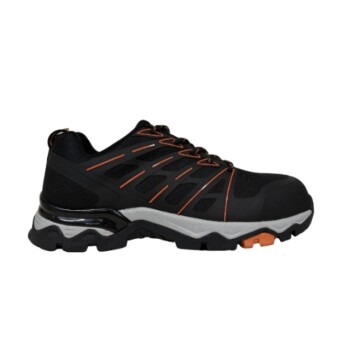
High-precision timing provides a direct, objective metric for assessing agility and movement confidence in safety shoe design. By measuring exact time differences during complex movements, researchers can quantify how specific design features—particularly lace tightness—impact a wearer's ability to navigate environments efficiently. This turns subjective user feedback into hard data regarding ankle control and stability.
By correlating time differences with specific shoe adjustments, manufacturers can isolate the effectiveness of ankle control systems. This data drives the optimization of lace layouts and materials to maximize safety and performance.
Quantifying User Agility
Measuring Movement Confidence
High-precision timing is not just about speed; it is a proxy for confidence. When a user feels stable and secure in their footwear, they navigate obstacles faster.
Reflecting Complex Environments
Safety shoes are often used in unpredictable terrain. Obstacle walk tests simulate these complex environments, and precise timing captures the user's ability to react and adapt.
Evaluating Ankle Control
The primary driver of agility in these tests is often ankle support. Timing data reveals how well the shoe supports the joint during dynamic movements, providing a clear baseline for performance.
Optimizing the Lacing System
The Impact of Lace Tightness
Researchers use timing to compare performance across various lace tightness levels. Significant time differences indicate how much the tightening system contributes to actual foot stability.
Refining Lace Hole Layouts
Data derived from these tests allows engineers to adjust the position and spacing of lace holes. The goal is to find the layout that maximizes ankle control without sacrificing comfort.
Material Selection Strategy
Beyond the layout, timing results influence the choice of materials used for the upper and the laces themselves. Materials that maintain tension and structure yield better timing results, indicating superior safety performance.
Understanding the Trade-offs
Speed vs. Safety
While faster times generally indicate better agility, relying solely on timing can be misleading. A shoe optimized purely for speed in an obstacle test must still provide adequate protection and comfort for static tasks.
Contextual Limitations
High-precision timing excels at measuring dynamic performance but does not reflect long-term durability or fatigue. It is a specific metric for agility and should be balanced with other testing methodologies.
Applying This to Shoe Design
To effectively use high-precision timing in your development process, focus on the specific goals of your safety shoe line.
- If your primary focus is Structural Optimization: Use timing variances between tightness levels to determine the most effective lace hole configuration for ankle stability.
- If your primary focus is Material Validation: Compare timing results across different upper materials to identify which composites offer the best balance of flexibility and control.
High-precision timing transforms the vague concept of "agility" into a measurable engineering target, ensuring the final product delivers proven movement confidence.
Summary Table:
| Metric Category | Key Impact on Safety Shoe Design | Engineering Benefit |
|---|---|---|
| Movement Confidence | Direct proxy for user stability and security | Validates ergonomic comfort |
| Ankle Control | Measures dynamic support during complex turns | Optimizes lacing and upper structure |
| System Tightness | Quantifies the performance gap between lace settings | Identifies ideal lace hole layouts |
| Material Response | Evaluates tension retention in uppers and laces | Guides selection of high-performance composites |
Partner with 3515 for Data-Backed Footwear Excellence
As a premier large-scale manufacturer serving global distributors and brand owners, 3515 leverages advanced engineering insights to deliver superior performance. Our flagship Safety Shoes series is built on rigorous testing, ensuring that every pair provides the agility and ankle stability demanded by professional environments.
From tactical boots and training shoes to formal dress footwear, we offer comprehensive production capabilities tailored to your bulk requirements. Let us bring precision-engineered safety to your product line.
Contact Us Today to Discuss Your Bulk Production Needs
References
- S.-P. Cho, Won-Seob Shin. Effect of Shoelace Tightness in Safety Shoes on Static and Dynamic Balance and Gait Ability in Industrial Workers. DOI: 10.14474/ptrs.2024.13.4.416
This article is also based on technical information from 3515 Knowledge Base .
Related Products
- Premium Suede Sport Safety Shoes for Wholesale & Bulk Orders
- Premium Lightweight Safety Shoes for Wholesale & Bulk Orders
- Wholesale Anti-Smash & Puncture-Proof Safety Shoes Custom Manufacturing for Brands
- Premium KPU Injection Athletic Style Safety Shoes
- Premium Safety Shoes with Rotating Buckle Safety Sneakers
People Also Ask
- What industries have specific OSHA footwear requirements? Ensure Compliance & Protect Your Workforce
- What are the primary functions of professional safety shoes? Maximize Safety in Water Supply Confined Spaces
- What role do specialized safety shoes play in preventing falls? Engineering Stability in Industrial Environments
- What are the main safety features of S1-S5 shoes? The 3 Essential Protections Explained
- How do specialized safety shoes protect against battery maintenance injuries? Prevent Impact and Chemical Burns