
Ultimately, the lifespan of motorcycle boots is a function of their quality and your care. With regular use and proper maintenance, a well-made pair of motorcycle boots will typically last between two and five years. However, this is not a fixed timeline, as factors like riding frequency, conditions, and the materials used can significantly extend or shorten their usable life.
The core principle to understand is that motorcycle boots are critical safety equipment. Their lifespan isn't measured in years, but by their continued ability to protect you in a crash. Once their structural integrity or protective features are compromised, they must be replaced, regardless of age.
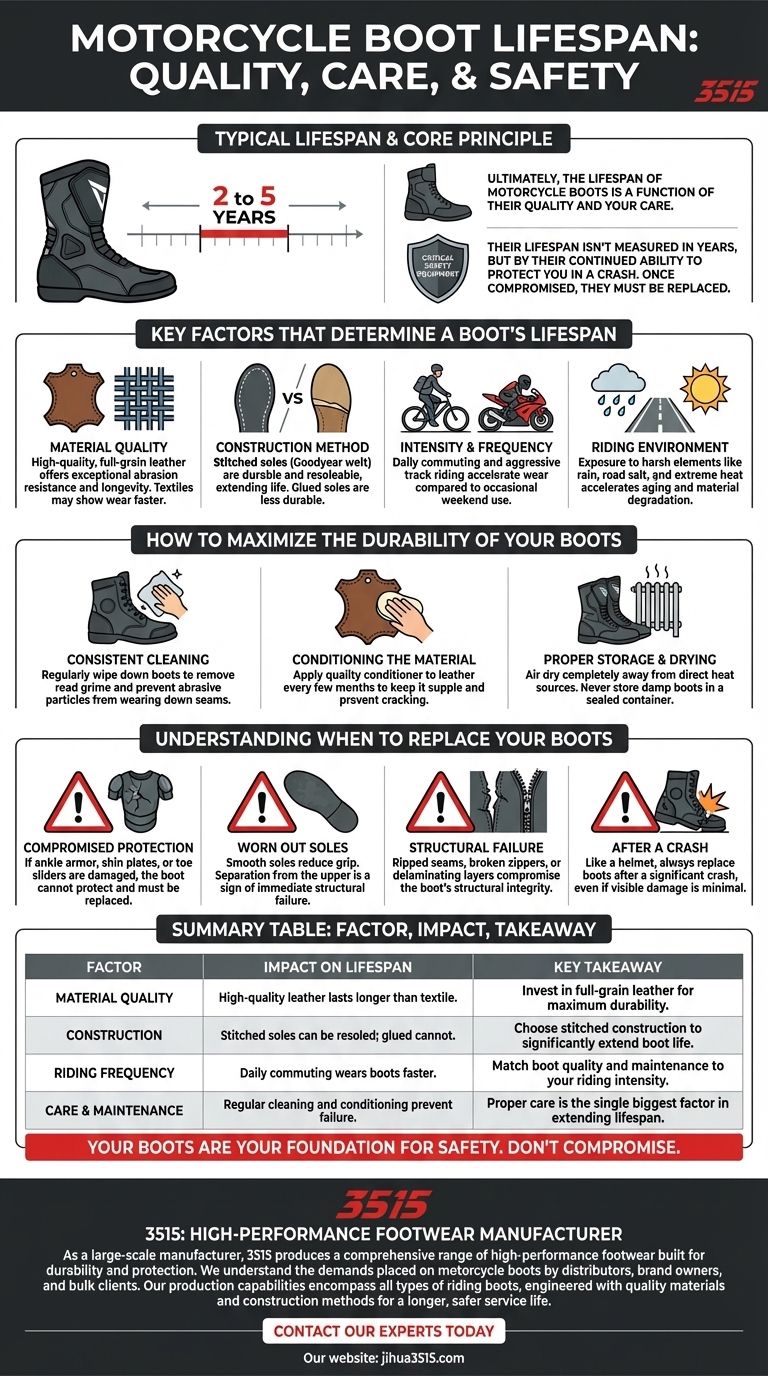
Key Factors That Determine a Boot's Lifespan
The durability of your boots is not accidental; it is determined by a few key variables. Understanding these will help you both in your initial purchase and in your long-term maintenance.
The Quality of Materials
High-quality, full-grain leather is exceptionally abrasion-resistant and, with proper conditioning, can last for many years. Textile and microfiber alternatives can offer excellent protection and comfort but may show wear more quickly in high-stress areas.
The Method of Construction
How a boot is assembled is critical. Stitched soles, such as a Goodyear welt, are far more durable than glued or cemented soles. This type of construction allows the boot to be resoled, significantly extending its overall life.
The Intensity and Frequency of Use
A daily commuter who rides in all weather will wear out boots much faster than a weekend rider. Likewise, the aggressive body positioning and high stresses of track riding will degrade boots more quickly than casual cruising.
The Riding Environment
Exposure to harsh elements like rain, road salt, and extreme heat accelerates the aging process. Rain can saturate leather, causing it to become brittle if not dried correctly, while road salt is corrosive to nearly all materials.
How to Maximize the Durability of Your Boots
Proper care is the single most effective way to extend the service life of your gear. A few simple, consistent habits can easily add years to your boots.
Consistent Cleaning
Regularly wipe down your boots to remove road grime, dirt, and bug residue. This prevents abrasive particles from wearing down seams and materials over time.
Conditioning the Material
For leather boots, applying a quality leather conditioner every few months is essential. This keeps the leather supple and prevents it from drying out and cracking, which is a common point of failure.
Proper Storage and Drying
Never store boots in a sealed container when damp. Always allow them to air dry completely, but away from direct heat sources like radiators, which can damage adhesives and make leather brittle.
Understanding When to Replace Your Boots
Knowing when to retire a pair of boots is a crucial safety decision. Pay close attention to these signs of wear.
Compromised Protective Features
Your boot's primary job is protection. If the ankle armor is cracked, the shin plate is damaged, or the toe sliders are worn through, the boot can no longer perform its function and must be replaced.
Worn Out Soles
When the soles become smooth, your grip on the pegs and on the pavement is significantly reduced. If the sole begins to separate from the boot's upper, it is an immediate sign of structural failure.
Structural Failure
Look for ripped seams, broken or malfunctioning zippers, and delaminating layers of material. These are clear indicators that the boot's overall structure is compromised and will not hold up in a crash.
After a Significant Crash
Like a helmet, the protective integrity of a boot can be compromised in a crash, even if visible damage is minimal. The internal structure and stitching may be weakened. It is always safest to replace your boots after any significant impact.
Making the Right Choice for Your Riding Style
Your boots are an investment in your safety. Tailor your choice and maintenance routine to how you ride.
- If your primary focus is daily commuting: Invest in boots with robust waterproofing and stitched soles, and be diligent about cleaning and drying them.
- If your primary focus is occasional weekend riding: You can expect a long lifespan from a quality pair, but your main focus should be proper storage between rides to prevent material degradation.
- If your primary focus is performance or track riding: Accept that your boots are consumable items and prioritize models with replaceable components and the highest level of certified protection.
Treat your boots as the essential safety equipment they are, and they will protect you for many miles to come.
Summary Table:
| Factor | Impact on Lifespan | Key Takeaway |
|---|---|---|
| Material Quality | High-quality leather lasts longer than textile. | Invest in full-grain leather for maximum durability. |
| Construction Method | Stitched/Goodyear welt soles can be resoled; glued soles cannot. | Choose stitched construction to significantly extend boot life. |
| Riding Frequency | Daily commuting wears boots faster than occasional use. | Match boot quality and maintenance to your riding intensity. |
| Care & Maintenance | Regular cleaning and conditioning prevents premature failure. | Proper care is the single biggest factor in extending lifespan. |
Your boots are your foundation for safety. Don't compromise.
As a large-scale manufacturer, 3515 produces a comprehensive range of high-performance footwear built for durability and protection. We understand the demands placed on motorcycle boots by distributors, brand owners, and bulk clients. Our production capabilities encompass all types of riding boots, engineered with quality materials and construction methods for a longer, safer service life.
Ready to equip riders with gear that lasts? Contact our experts today to discuss your footwear needs and discover how we can deliver value and reliability to your business.
Visual Guide
Related Products
- Wholesale Tactical Boots High-Traction & Reflective for Bulk & Brand Orders
- High Performance Fire-Retardant Waterproof Safety Boots
- Durable Goodyear Welt Leather Work Boots for Wholesale & Private Label
- Wholesale High-Traction Camo Boots - Custom Manufacturer for Brands
- Heavy-Duty Waterproof Nubuck Safety Boots Safety Shoes for Bulk Supply
People Also Ask
- How do tactical boots protect against injuries? Discover the Integrated Safety System
- How do sturdy uppers enhance tactical boots? Boosting Ankle Stability and Protection
- What factors should be considered when choosing between tactical boots and sneakers for daily activities? Find Your Perfect Fit
- What role does repairable design play in tactical boots? Extend Lifespan & Cut Total Ownership Costs
- What are the different types of tactical boots available? Find the Right Boot for Your Mission



















