The primary significance of water-resistance in outdoor shoes is to create a barrier that protects your feet from external moisture. This function is crucial for preventing the discomfort and performance degradation that occurs when feet get wet from rain, puddles, or stream crossings.
The core purpose of water-resistance is not just about staying dry; it's about maintaining a stable internal environment for your feet. Managing moisture is fundamental to ensuring comfort, preventing injury, and preserving the shoe's integrity during outdoor activities.
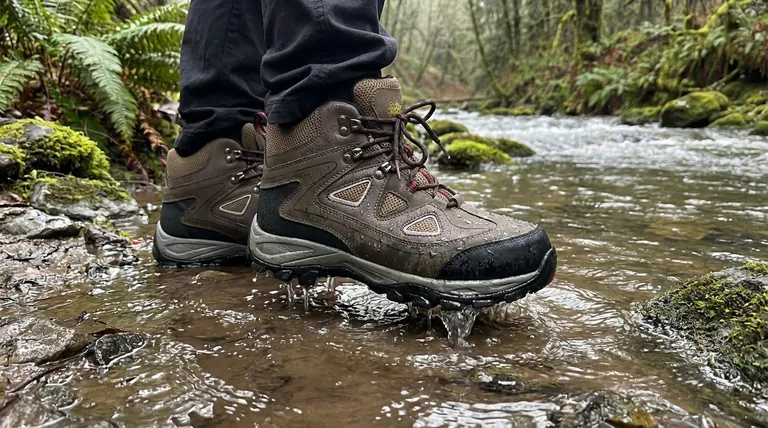
The Core Function: A Barrier Against Moisture
Water-resistance is the first line of defense against the elements. Its effectiveness is rooted in the materials and construction of the shoe.
How Water-Resistant Materials Work
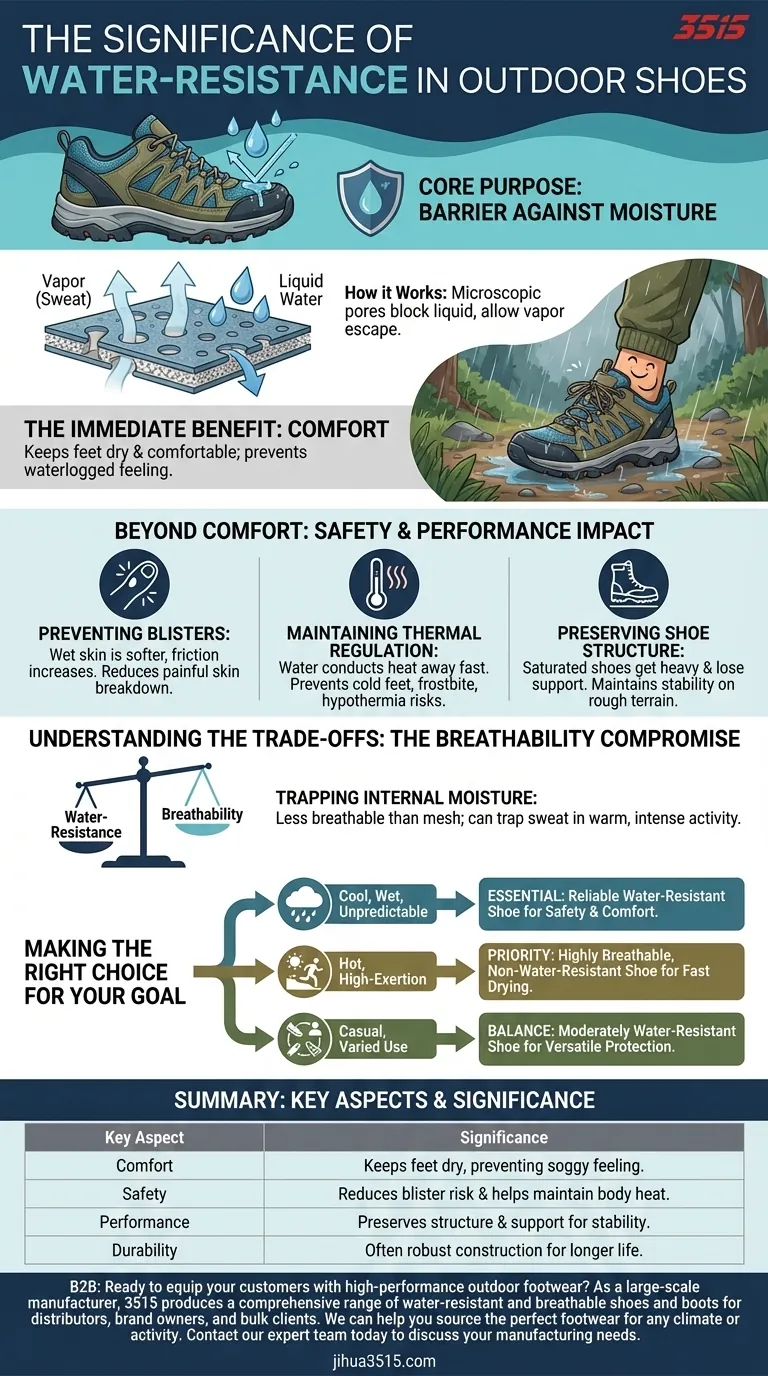
Modern outdoor shoes typically use a membrane or a coating with microscopic pores. These pores are large enough to let water vapor (sweat) escape but too small for liquid water droplets to penetrate from the outside.
The Immediate Benefit: Comfort
The most obvious advantage is keeping your feet dry and comfortable. This prevents the soggy, heavy feeling of waterlogged footwear, allowing you to focus on your activity rather than your discomfort.
Beyond Comfort: The Impact on Safety and Performance
While comfort is a significant factor, the true importance of water-resistance lies in its impact on your physical well-being and ability to perform.
Preventing Blisters and Skin Breakdown
Wet skin is significantly softer and more prone to friction than dry skin. This drastically increases the likelihood of developing painful blisters and chafing, which can cut an outdoor excursion short.
Maintaining Thermal Regulation
Water conducts heat away from the body about 25 times faster than air. Wet feet quickly become cold feet, which can be uncomfortable in mild conditions and dangerously increase the risk of frostbite or hypothermia in cold environments.
Preserving Shoe Structure and Support
When shoes become saturated with water, they get heavier and their structural materials can lose rigidity. This compromises the support and stability the shoe is designed to provide, potentially leading to slips or twisted ankles.
Understanding the Trade-offs: The Breathability Compromise
No feature exists in a vacuum. The primary trade-off for water-resistance is a reduction in breathability, which is a critical consideration.
Trapping Internal Moisture
While water-resistant membranes are designed to be breathable, they are always less breathable than a simple mesh upper. In warm conditions or during intense activity, they can trap sweat, leading to damp feet from the inside.
When Breathability Is More Important
For activities in hot, dry climates or for high-output sports like trail running, maximum breathability is often more important. In these cases, a non-water-resistant shoe that can dry very quickly is often the superior choice.
The Link to Durability
High-quality water-resistant shoes often feature more robust construction and materials designed to withstand harsh environments. This contributes to the overall durability and longevity of the footwear, protecting your investment.
Making the Right Choice for Your Goal
The decision to prioritize water-resistance depends entirely on your intended use.
- If your primary focus is hiking in cool, wet, or unpredictable climates: A reliable water-resistant shoe is essential for safety and comfort.
- If your primary focus is high-exertion activity (like trail running) in warm conditions: Prioritize a highly breathable, non-water-resistant shoe that drains and dries quickly.
- If your primary focus is casual day hiking or varied use: A moderately water-resistant shoe offers a versatile balance of protection and comfort for most situations.
Choosing the right footwear is about selecting the appropriate tool for the environment you intend to face.
Summary Table:
| Key Aspect | Significance of Water-Resistance |
|---|---|
| Comfort | Keeps feet dry, preventing the heavy, soggy feeling of wet footwear. |
| Safety | Reduces blister risk and helps maintain body heat to prevent cold-related injuries. |
| Performance | Preserves shoe structure and support, ensuring stability on rough terrain. |
| Durability | Often correlates with robust construction, leading to longer-lasting footwear. |
Ready to equip your customers with high-performance outdoor footwear?
As a large-scale manufacturer, 3515 produces a comprehensive range of water-resistant and breathable shoes and boots for distributors, brand owners, and bulk clients. We can help you source the perfect footwear to meet the demands of any climate or activity.
Contact our expert team today to discuss your manufacturing needs and elevate your product line.
Visual Guide
Related Products
- Heavy-Duty Waterproof Nubuck Safety Boots Safety Shoes for Bulk Supply
- Wholesale Waterproof Tactical Boots Custom Suede & High-Traction Soles
- Durable Waterproof Rain Boots | Custom Manufacturer for Wholesale & Brands
- Wholesale Premium Waterproof Nubuck Safety Shoes Boots
- Durable Rubber Sole Outdoor Shoes Wholesale & Custom Manufacturing
People Also Ask
- What primary protective functions do professional safety boots provide in urban solid waste recovery and waste picking processes? Discover Dual-Layer Protection.
- How do safety boots reduce cutting hazards? Essential Protection for Your Workforce
- Which organizations develop safety standards for work boots? Ensure Compliance & Worker Safety
- What are the common types of safety boots and their primary uses? A Guide to Industrial Footwear
- Why is ankle and arch support important in safety footwear? Prevent Injury & Fatigue