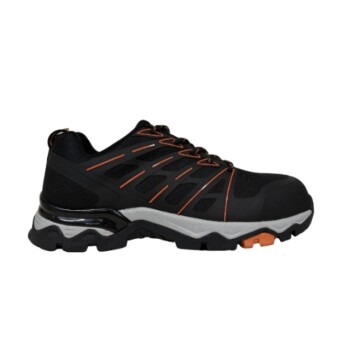
Professional industrial safety shoes act as the final, critical barrier in the Risk Control phase of the HIRARC process. While they do not remove hazards from the environment, they serve as essential Personal Protective Equipment (PPE) designed to drastically mitigate the severity of unavoidable physical threats. By incorporating reinforced protection against heavy impacts and sharp object penetration, these shoes are fundamental to achieving zero-accident goals in complex manufacturing and construction settings.
Within the HIRARC framework, safety footwear functions not as hazard elimination, but as a vital risk mitigation tool. It provides a specialized physical defense system against impact, puncture, and environmental hazards, ensuring operational continuity when engineering or administrative controls cannot fully eliminate dangers.
Addressing Identified Hazards
In the Hazard Identification (HI) phase, you identify potential sources of harm. Professional safety shoes are engineered to address specific, high-frequency industrial threats.
Impact and Compression Hazards
Manufacturing environments, such as furniture workshops or molding plants, are rife with heavy, moving objects. Workers face risks from falling timber, molds, or mechanical crushing from equipment. Safety shoes mitigate this by using reinforced toe caps (steel or composite) to absorb energy and provide a physical shield for the toes.
Penetration and Puncture Risks
Floors in industrial sites often harbor sharp debris, such as nails, wood splinters, or scrap metal. Without protection, these objects can easily penetrate standard footwear, causing debilitating injury. Professional footwear integrates puncture-resistant midsoles (often steel or woven fabric) to prevent sharp objects from piercing the sole and reaching the foot.
Environmental Surface Hazards
Slips and falls are common in areas covered with sawdust, fluids, or uneven terrain. Standard footwear often lacks the necessary traction for these variable surfaces. Specialized anti-slip outsoles are essential for maintaining stability on wet, oily, or debris-covered workshop floors.
Implementing Risk Control
Once risks are assessed, the Control (RC) phase dictates how to manage them. Safety shoes serve as a versatile control measure across multiple categories.
The Physical Barrier
The primary role of the shoe is to act as an armored shell between the worker and the hazard. This includes resistance to electric shocks in environments with exposed wiring or high-voltage equipment. It also mitigates chemical exposure by preventing harmful substances from penetrating the footwear or adhering to it, reducing the risk of skin burns or absorption.
Preventing Secondary Contamination
In logistics or chemical handling, footwear can become a vector for transporting toxins. Professional footwear acts as a barrier that stops contaminants from adhering to the skin. This prevents the transfer of hazardous materials (such as forklift emissions or chemical leaks) into clean zones, such as break rooms or offices.
Mitigating Fatigue and Long-Term Health Risks
Risk assessment also includes ergonomic hazards, such as prolonged standing. Fatigue can lead to reduced concentration, increasing the likelihood of other accidents. High-quality safety shoes utilize comfortable inner linings and shock-absorbing soles to alleviate physical strain, directly contributing to sustained alertness and long-term joint health.
Understanding the Trade-offs
While safety shoes are indispensable, relying on them requires an understanding of their limitations within the hierarchy of controls.
The "Last Line of Defense" Reality
In HIRARC, PPE is considered the least effective control method because it does not remove the hazard. Safety shoes mitigate the consequence of an accident, but they do not prevent the accident itself (e.g., the falling object still falls). They must always be paired with administrative controls (training) and engineering controls (machine guards) for a complete safety strategy.
Balancing Protection and Agility
Heavier protection (like steel toes and midsoles) can sometimes add weight to the footwear. If the shoe is too heavy, it may increase fatigue over long shifts, potentially counteracting the ergonomic benefits. Selecting composite materials can often provide similar protection with less weight, offering a balance between safety and comfort.
Making the Right Choice for Your Safety Protocol
Selecting the correct safety footwear depends entirely on the specific hazards identified in your unique environment.
- If your primary focus is Heavy Material Handling: Prioritize shoes with steel or composite toe caps to withstand significant impact and compression forces.
- If your primary focus is Sharp Debris (e.g., Construction/Carpentry): Ensure footwear includes a certified puncture-resistant midsole to block nails and splinters.
- If your primary focus is Chemical or Biological Safety: Select footwear with impermeable materials to prevent absorption and secondary contamination of clean areas.
- If your primary focus is Ergonomics and Shift Endurance: Choose models with advanced anti-fatigue linings to maintain worker alertness and reduce long-term strain.
Ultimately, integrating professional safety shoes into your HIRARC strategy is not just about compliance; it is an investment in preventing legal liabilities and ensuring the continuous, safe operation of your workforce.
Summary Table:
| HIRARC Stage | Role of Safety Footwear | Key Protection Features |
|---|---|---|
| Hazard Identification | Addresses physical threats | Reinforced toe caps, puncture-resistant midsoles |
| Risk Assessment | Reduces severity of injury | Impact absorption, anti-slip traction, electrical insulation |
| Risk Control | Final line of defense (PPE) | Chemical-resistant shells, ergonomic shock absorption |
| Operational Safety | Maintains workforce continuity | Breathable linings, lightweight composite materials |
Secure Your Workforce with 3515 Safety Solutions
As a large-scale manufacturer serving distributors and brand owners, 3515 offers comprehensive production capabilities for all footwear types, anchored by our flagship Safety Shoes series. Our extensive portfolio covers work and tactical boots, outdoor shoes, training shoes, and sneakers, as well as Dress & Formal shoes to meet diverse bulk requirements.
Integrating the right footwear into your HIRARC strategy is critical for reducing liability and ensuring long-term worker health. Partner with a manufacturer that understands the technical demands of industrial safety.
Contact us today to discuss your bulk manufacturing needs
References
- Happy Nihayatul Afroh, Fransisca Tiur Basaria. Reducing Environmental and Health Risks in Construction Projects Through Hazard Identification and Risk Assessment. DOI: 10.1051/e3sconf/202338801028
This article is also based on technical information from 3515 Knowledge Base .
Related Products
- Premium Suede Sport Safety Shoes for Wholesale & Bulk Orders
- Premium Lightweight Safety Shoes for Wholesale & Bulk Orders
- Wholesale Anti-Smash & Puncture-Proof Safety Shoes Custom Manufacturing for Brands
- Premium KPU Injection Athletic Style Safety Shoes
- Premium Safety Shoes with Rotating Buckle Safety Sneakers
People Also Ask
- What are the primary functions of professional safety shoes? Maximize Safety in Water Supply Confined Spaces
- What industries have specific OSHA footwear requirements? Ensure Compliance & Protect Your Workforce
- What role do specialized safety shoes play in preventing falls? Engineering Stability in Industrial Environments
- Why are customized foot sensors or professional safety shoes incorporated into biomechanical testing? Precision Insights
- What are the main safety features of S1-S5 shoes? The 3 Essential Protections Explained