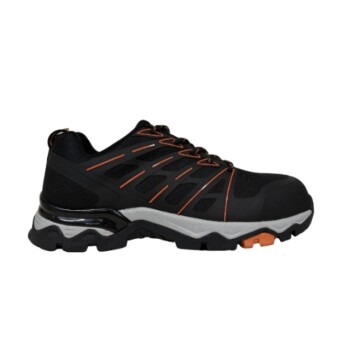
Conductive silver paint and conductive epoxy resin serve as the critical interface that electrically bonds flexible textile sensors to rigid metal wiring. Their primary role is to bridge the gap between soft materials and hard electronics, ensuring a stable connection that eliminates signal noise and prevents data loss, which is essential for the reliable performance of high-intensity gear like safety shoes and tactical boots.
The most vulnerable point in smart footwear is the junction between the soft sensor and the hard wire. Conductive adhesives solve this by creating a unified, robust bond that withstands physical stress, ensuring that critical monitoring data remains accurate even during rigorous activity.
The Challenge of Connectivity in Smart Footwear
Bridging Dissimilar Materials
Integrating technology into footwear requires connecting two fundamentally different materials. You are attempting to bond industrial-grade conductive threads—which are knitted or embroidered into the fabric—with standard metal wiring.
The Failure Point of Traditional Methods
Traditional soldering often fails in this application because it cannot adhere well to soft textiles. Without a specialized interface, the connection becomes the "weak link," leading to intermittent contact as the shoe flexes.
The Role of the Conductive Medium
Silver paint and epoxy act as a conductive "glue." They penetrate the texture of the fabric sensor while bonding firmly to the metal wire, creating a seamless electrical pathway that mechanical fasteners cannot match.
Ensuring Data Integrity Under Stress
Preventing Signal Noise
In tactical and safety scenarios, data accuracy is paramount. A loose connection introduces signal noise, which can corrupt the reading of gait analysis or pressure distribution.
Stabilizing Interface Conductivity
Conductive epoxy resin maintains a constant, low-resistance connection. By eliminating micro-movements between the wire and the thread, it ensures the "real-time monitoring data" referenced in your specs is a true reflection of the user's movement, not an artifact of a loose wire.
Withstanding High-Intensity Use
Safety shoes and tactical boots are subjected to extreme physical stress. The two-component nature of conductive epoxy creates a hardened shell around the connection, protecting it from the mechanical wear and tear typical of long-term field use.
Understanding the Trade-offs
Rigidity at the Connection Point
While the sensor itself is flexible, the epoxy joint is rigid. This creates a localized "hard point" on the textile that does not stretch, which must be placed strategically to avoid creating pressure points against the foot.
Permanence of the Bond
Conductive epoxy creates a permanent chemical and physical bond. Unlike a mechanical connector, this cannot be easily unplugged or repaired if the wire is damaged; the connection is intended to last for the lifecycle of the shoe.
Making the Right Choice for Your Goal
- If your primary focus is Data Accuracy: Prioritize the use of high-quality silver paint to minimize resistance at the contact point, ensuring the cleanest possible signal for gait and pressure analysis.
- If your primary focus is Durability: Rely on the structural strength of two-component conductive epoxy to encapsulate the wire, protecting the connection from the harsh impacts of tactical environments.
By treating the connection point as a critical structural component rather than an afterthought, you ensure your smart footwear delivers consistent, actionable intelligence in the field.
Summary Table:
| Feature | Conductive Silver Paint | Conductive Epoxy Resin |
|---|---|---|
| Primary Function | Enhances signal conductivity | Provides structural bonding & protection |
| Key Benefit | Minimizes electrical resistance/noise | High mechanical strength & durability |
| Material Property | Thin, high-silver content layer | Hardened, permanent chemical bond |
| Best For | High-precision gait & pressure data | High-intensity tactical & industrial use |
| Flexibility | Moderate (integrated into fabric) | Low (creates a rigid protective joint) |
Partner with 3515 for Advanced Smart Footwear Solutions
As a large-scale manufacturer serving distributors and brand owners, 3515 offers comprehensive production capabilities for all footwear types, anchored by our flagship Safety Shoes series. Our extensive portfolio covers work and tactical boots, outdoor shoes, training shoes, and sneakers, as well as Dress & Formal shoes to meet diverse bulk requirements.
We understand the technical challenges of integrating smart sensors into rugged gear. By choosing 3515, you gain access to our industrial expertise in ensuring data integrity and long-term durability for high-intensity applications.
Ready to elevate your product line with cutting-edge smart footwear?
Contact us today to discuss your bulk manufacturing needs
References
- Kaleb Burch, Jill S. Higginson. Estimating ground reaction force with novel carbon nanotube-based textile insole pressure sensors. DOI: 10.1017/wtc.2023.2
This article is also based on technical information from 3515 Knowledge Base .
Related Products
- Premium Safety Shoes with Rotating Buckle Safety Sneakers
- Premium Wholesale Tactical Style Safety Shoes Boots with Quick Lacing
- Premium KPU Injection Athletic Style Safety Shoes
- Advanced KPU Athletic Safety Shoe with Steel Toe Cap Anti-Slip Rotary Lacing System
- Premium Lightweight Safety Shoes for Wholesale & Bulk Orders
People Also Ask
- How do the 3R principles influence green footwear design? Master Sustainable Safety Shoe Manufacturing
- How do I choose the best safety shoes? Match Certified Features to Your Hazards
- What role do specialized safety shoes play in preventing falls? Engineering Stability in Industrial Environments
- How Specialized Footwear Impacts Side-Cutting Performance and Injury Risk Assessment
- What are the technical advantages of integrating sensors into safety shoes? Achieve Superior Motion Capture Precision