
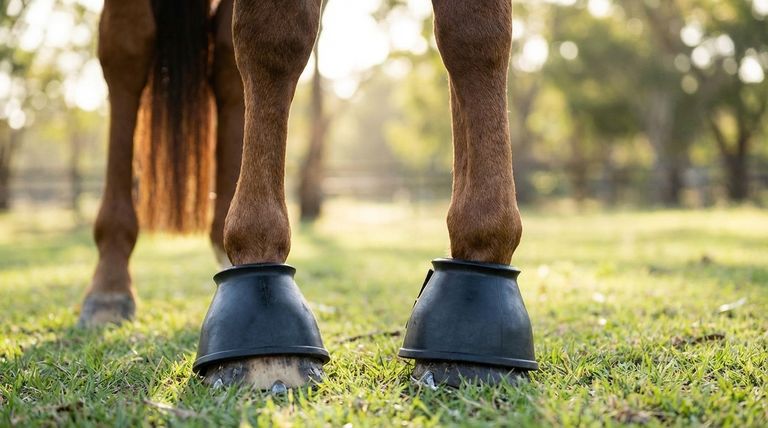
Bell boots are a fundamental piece of protective equine gear designed to prevent a specific type of self-inflicted injury known as an "overreach." Also called overreach boots, they are worn on a horse's front pasterns and flare out like a bell to cover the entire hoof, including the sensitive heel bulbs.
The primary role of bell boots is to shield a horse's front heels from being struck and injured by the toes of its own back feet, an action that can cause painful wounds or pull off a shoe.
The Core Problem: Understanding Overreaching
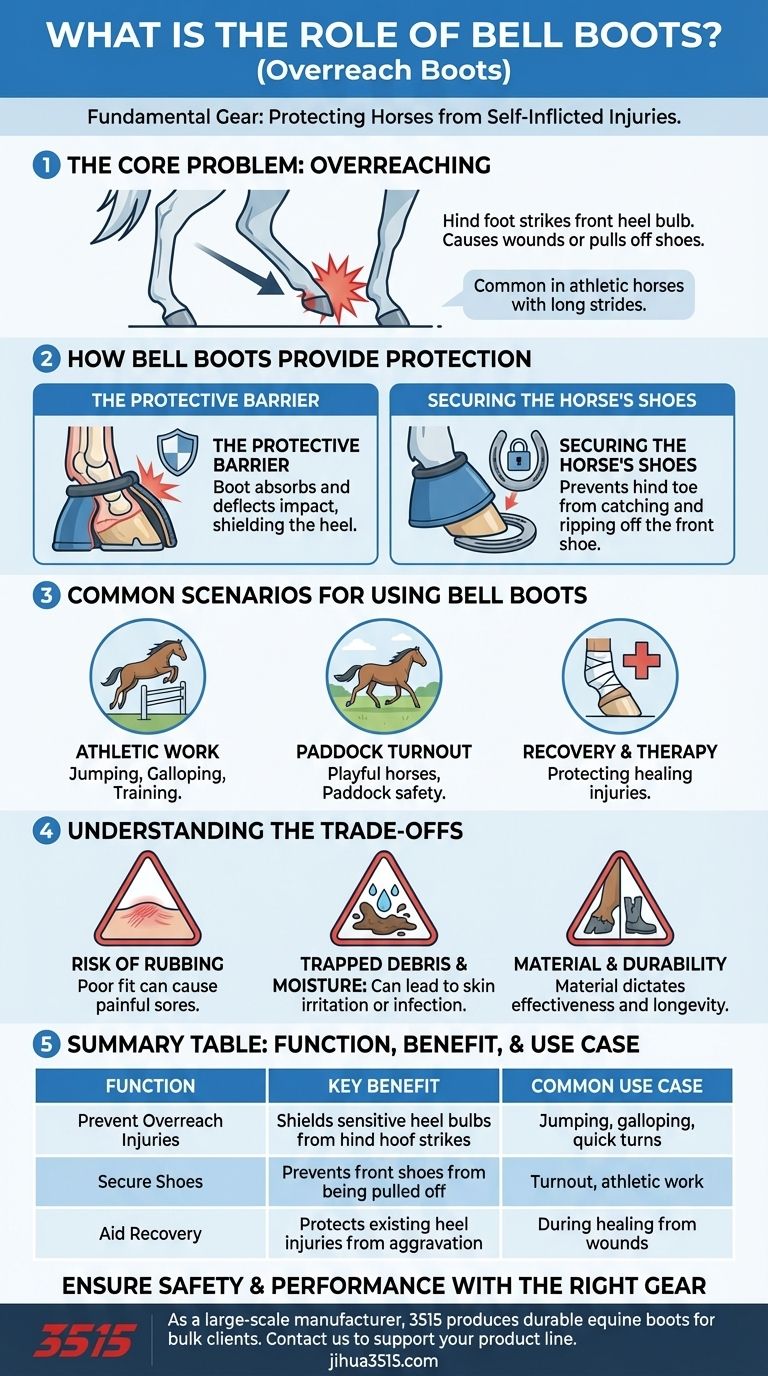
To appreciate the function of bell boots, you must first understand the problem they solve. Overreaching is a common biomechanical issue in many horses.
What is an Overreach Injury?
An overreach occurs when a horse's hind foot steps forward and strikes the soft, sensitive heel bulb of the corresponding front foot.
This impact can cause anything from minor scrapes and bruises to deep cuts that are difficult to heal. It is also a primary cause of a horse stepping on the heel of its front shoe and pulling it off.
Why Does Overreaching Happen?
This action happens when the horse's hind legs have a longer, more powerful stride than its front legs.
It is especially common during athletic activities like jumping, galloping, or quick turns where the horse is engaged and driving from behind. However, some horses are simply built in a way that makes them prone to overreaching even during simple turnout in a paddock.
How Bell Boots Provide Protection
Bell boots act as a simple yet highly effective shield, mitigating the risk of an overreach injury in two key ways.
The Protective Barrier
The boot itself, typically made of rubber, neoprene, or another durable polymer, creates a physical barrier.
When the hind hoof strikes forward, it makes contact with the bell boot instead of the horse's flesh or hoof wall. The boot absorbs and deflects the force of the impact, preventing injury.
Securing the Horse's Shoes
For shod horses, bell boots provide an extra layer of security.
By covering the heel of the front hoof, they prevent the toe of the hind hoof from catching the edge of the front shoe and ripping it off. This saves on costly farrier visits and protects the hoof from damage.
Common Scenarios for Using Bell Boots
While some horses may need them constantly, bell boots are most often used in specific situations where the risk of overreaching is highest.
During Athletic Work
This is the most common application. Bell boots are crucial during riding, lunging, or any training that involves speed, jumping, or complex lateral movements.
During Paddock Turnout
Horses that are playful or particularly active in their pasture often benefit from wearing bell boots. This is especially true for horses known to pull shoes frequently.
For Recovery and Therapy
While specialty medical boots exist, a simple bell boot can sometimes be used to help protect a healing heel injury from being aggravated.
Understanding the Trade-offs
While highly beneficial, bell boots are not without their considerations. Proper selection and management are key to avoiding problems.
The Risk of Rubbing
A poorly fitting bell boot can be disastrous. If it's too tight or the material is too stiff, it can chafe the pastern and create painful sores.
Trapped Debris and Moisture
Bell boots can trap mud, sand, or moisture against the skin. This can lead to skin irritation or infections like "scratches" if not cleaned and monitored regularly.
Material and Durability
The material dictates the boot's effectiveness and longevity. Thin rubber boots are inexpensive but tear easily, while boots made of ballistic nylon or high-grade polymers offer more protection but at a higher cost.
Making the Right Choice for Your Horse
Deciding whether to use bell boots depends entirely on your horse's conformation, occupation, and history of injury.
- If your primary focus is high-impact activity like jumping or eventing: Bell boots are a non-negotiable piece of safety equipment to prevent performance-ending injuries.
- If your primary focus is protecting against lost shoes in the pasture: A durable, "pull-on" style rubber bell boot is often the most effective and long-lasting choice.
- If your primary focus is general riding for a horse with no history of overreaching: They may not be necessary, but it is wise to regularly check the front heels for any nicks or scrapes that might indicate a need for them.
Ultimately, using bell boots is a simple and proactive measure to ensure your horse's soundness and safety.
Summary Table:
| Function | Key Benefit | Common Use Case |
|---|---|---|
| Prevent Overreach Injuries | Shields sensitive heel bulbs from hind hoof strikes | Jumping, galloping, quick turns |
| Secure Shoes | Prevents front shoes from being pulled off | Turnout, athletic work |
| Aid Recovery | Protects existing heel injuries from aggravation | During healing from wounds |
Ensure your horse's safety and performance with the right protective gear. As a large-scale manufacturer, 3515 produces a comprehensive range of durable equine boots and footwear for distributors, brand owners, and bulk clients. Our production capabilities ensure high-quality, reliable protection tailored to your needs. Contact us today to discuss how we can support your equine product line with gear that promotes soundness and prevents injury.
Visual Guide
Related Products
- Wholesale Lightweight Tactical Boots with Dial Closure OEM & Bulk Orders
- Durable Leather Tactical Boots Wholesale & Custom Manufacturing for Brands
- High-Traction Suede Tactical Boots Wholesale & Custom Manufacturing
- Premium Wholesale Tactical Style Safety Shoes Boots with Quick Lacing
- Durable High-Ankle Tactical Boots Wholesale Manufacturer for Custom & Bulk Orders
People Also Ask
- What are the consequences of wearing ill-fitting tactical boots? Avoid Injury and Boost Performance
- What features enhance breathability and comfort in tactical boots? A Guide to Superior Footwear Performance
- What factors should be considered when choosing between tactical boots and sneakers for daily activities? Find Your Perfect Fit
- What role does repairable design play in tactical boots? Extend Lifespan & Cut Total Ownership Costs
- What is the role of professional 3D medical imaging software in optimizing tactical boot design and performance?



















