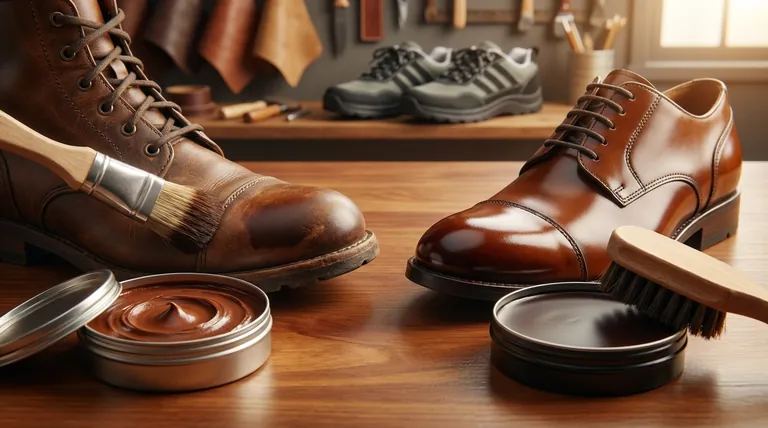
Choosing between cream and wax polish comes down to a fundamental difference in purpose. Cream polishes are primarily for nourishing leather and restoring its color, resulting in a subtle, natural sheen. Wax polishes, in contrast, are used to create a protective, high-gloss shine by forming a hard layer on the surface of the leather.
The core principle is simple: cream polish is a conditioner for leather health, while wax polish is a finishing coat for aesthetic shine and surface protection. They are not interchangeable, but rather serve two distinct and complementary roles in proper shoe care.
The Primary Role of Cream Polish: Leather Health
Cream polish is the essential tool for maintaining the vitality of your leather shoes. Its formulation is designed to be absorbed by the leather rather than simply sitting on top of it.
Nourishment and Suppleness
Creams contain oils and conditioners that penetrate the leather's pores. This process replenishes lost moisture, keeping the material flexible and preventing it from drying out and cracking over time.
Color Restoration
Rich in pigments, cream polishes are exceptional at reviving faded color. They fill in minor scuffs and scratches, restoring a uniform and vibrant appearance to the shoe.
The Resulting Finish
After applying and buffing a cream polish, the result is a sophisticated, low-luster glow. It provides a rich, natural look rather than a glassy, high-gloss shine.
The Primary Role of Wax Polish: Protection and Shine
Wax polish is your final step for achieving a classic, polished look and adding a layer of defense against the elements.
Creating a Surface Layer
Unlike creams, wax polish primarily sits on the surface of the leather. When buffed, the wax hardens into a protective shell that shields the leather underneath.
The High-Gloss Finish
This hardened wax layer is what allows you to achieve a brilliant, high-gloss shine. With enough buffing, you can create the "mirror shine" often seen on formal dress shoes.
Water and Dirt Resistance
The wax barrier provides a moderate degree of water resistance, causing water to bead up and roll off. It also protects the shoe from surface-level dirt and minor abrasions.
Understanding the Trade-offs
Neither product is a complete solution on its own. Using them correctly means understanding their limitations and how they work together.
Cream Polish Limitations
While essential for leather health, cream polish offers minimal water resistance and will not produce a high-gloss shine. Its primary purpose is conditioning, not finishing.
Wax Polish Limitations
Wax polish offers very little in the way of nourishment. Over-application without proper conditioning can lead to a thick wax buildup that seals the leather, preventing it from breathing and eventually causing it to dry out.
The Professional Approach
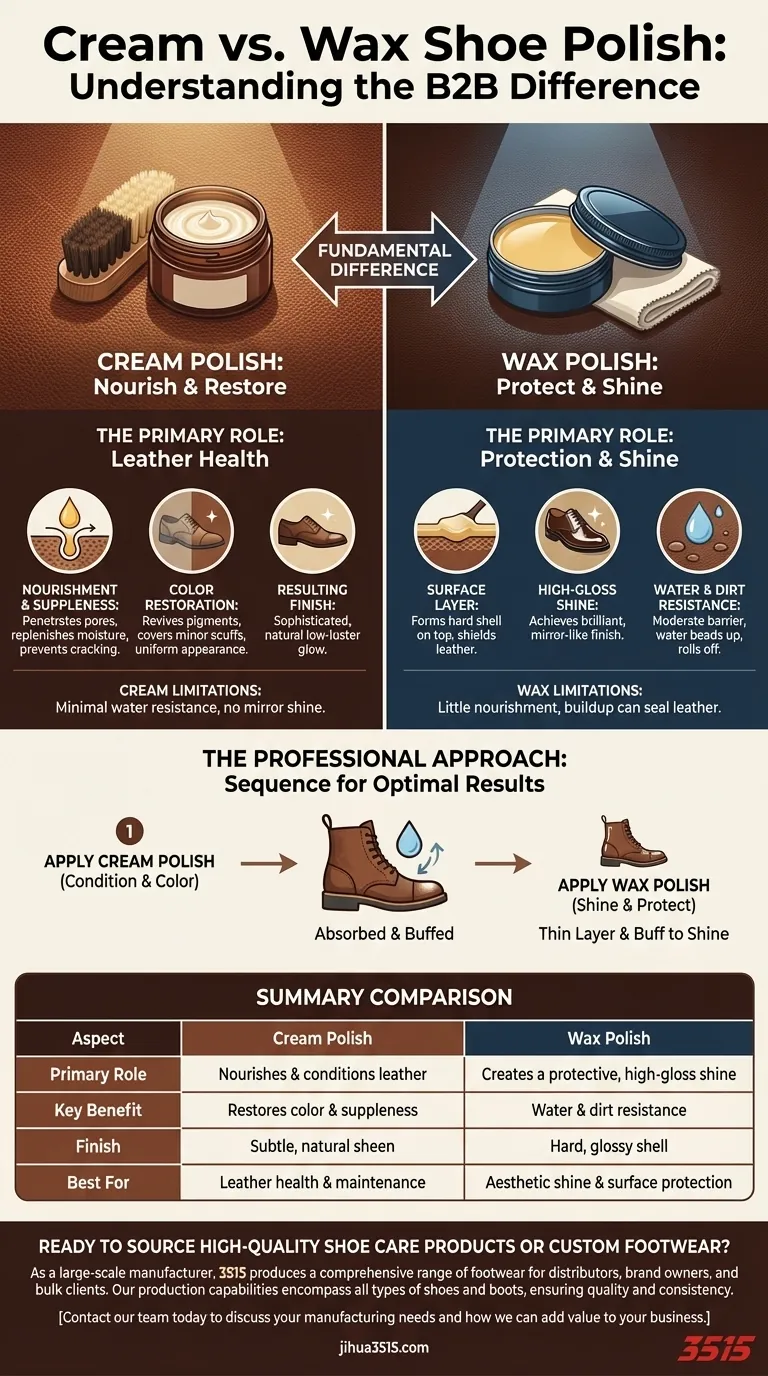
For optimal results, the two are used in sequence. First, apply a cream polish to nourish the leather and restore its color. After it has been absorbed and buffed, apply a thin layer of wax polish to add shine and protection.
Making the Right Choice for Your Goal
Your shoe care routine should be dictated by the condition of your shoes and your desired outcome.
- If your primary focus is restoring old, dry, or scuffed shoes: A cream polish is your essential first step to nourish the leather and revive its color.
- If your primary focus is achieving a formal, high-gloss shine: Use a wax polish as the finishing step after the shoe has been cleaned and conditioned.
- If your primary focus is routine maintenance for healthy shoes: Use cream polish regularly for conditioning, and apply wax polish only when you need extra shine or protection.
Ultimately, using both cream and wax in their proper sequence is the definitive way to preserve the health and enhance the appearance of your leather footwear.
Summary Table:
| Aspect | Cream Polish | Wax Polish |
|---|---|---|
| Primary Role | Nourishes & conditions leather | Creates a protective, high-gloss shine |
| Key Benefit | Restores color & suppleness | Water & dirt resistance |
| Finish | Subtle, natural sheen | Hard, glossy shell |
| Best For | Leather health & maintenance | Aesthetic shine & surface protection |
Ready to source high-quality shoe care products or custom footwear?
As a large-scale manufacturer, 3515 produces a comprehensive range of footwear for distributors, brand owners, and bulk clients. Our production capabilities encompass all types of shoes and boots, ensuring you get the quality and consistency your customers expect.
Contact our team today to discuss your manufacturing needs and how we can add value to your business.
Visual Guide
Related Products
- Custom Safety Shoe Manufacturer for Wholesale & OEM Brands
- Wholesale Modern Perforated Leather Derby Shoes with Chunky Sole for Custom Branding
- Durable Rubber Sole Outdoor Shoes Wholesale & Custom Manufacturing
- Wholesale Breathable Perforated Leather Derby Shoes with Modern Comfort Sole
- Wholesale Perforated Comfort Dress Shoes | Custom Derby Shoe Manufacturer
People Also Ask
- What are the advantages of water-based polyurethane spray coatings for safety shoe slip resistance? Enhanced Traction
- What makes a safety shoe a safety shoe? Essential Protection for Hazardous Work
- What additional features can a good safety shoe offer? Maximize Protection and Comfort
- What type of safety shoe is recommended for workers exposed to heavy machinery? Steel Toe Boots for Ultimate Protection
- What are the main materials used in steel toe safety shoes? A Guide to Protective Footwear Construction