
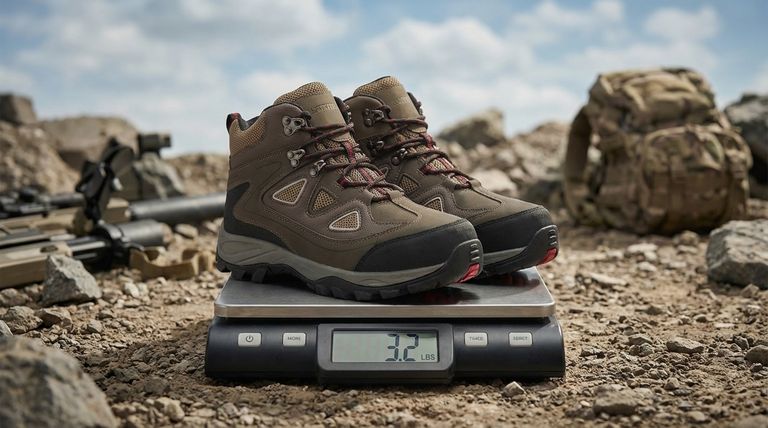
As a general rule, a pair of lightweight tactical boots will weigh between 2 and 4 pounds. This range is specifically engineered to enhance agility and reduce fatigue, making them a preferred choice for professionals who depend on speed and endurance.
The core principle to understand is that boot weight is a direct trade-off between agility and durability. Lighter boots prioritize speed and reduce fatigue, while heavier boots offer greater support and protection. The "right" weight is therefore determined by your specific mission and environment, not by a single number.
Why Boot Weight is a Critical Factor
The weight of your footwear has a significant impact on your energy expenditure and overall performance. A few ounces on your feet can feel like pounds on your back over the course of a long day, making weight a primary consideration for any tactical professional or outdoor enthusiast.
The Advantage of Lighter Weight: Agility
Lighter boots require less effort to lift with each step, which translates directly to reduced fatigue and increased speed.
This makes them ideal for situations demanding rapid movement, such as urban law enforcement, security patrols on predictable terrain, or fast-paced training exercises.
The Benefit of Heavier Weight: Durability
Heavier boots are typically constructed with more robust materials, thicker soles, and stiffer shanks.
This added weight provides superior foot and ankle support on uneven or rugged ground, greater protection from environmental hazards, and increased overall durability for long-term use in harsh conditions.
Breaking Down the Lightweight Spectrum
Not all "lightweight" boots are created equal. Understanding the nuances within the 2-to-4-pound range helps you align the boot's characteristics with your operational needs.
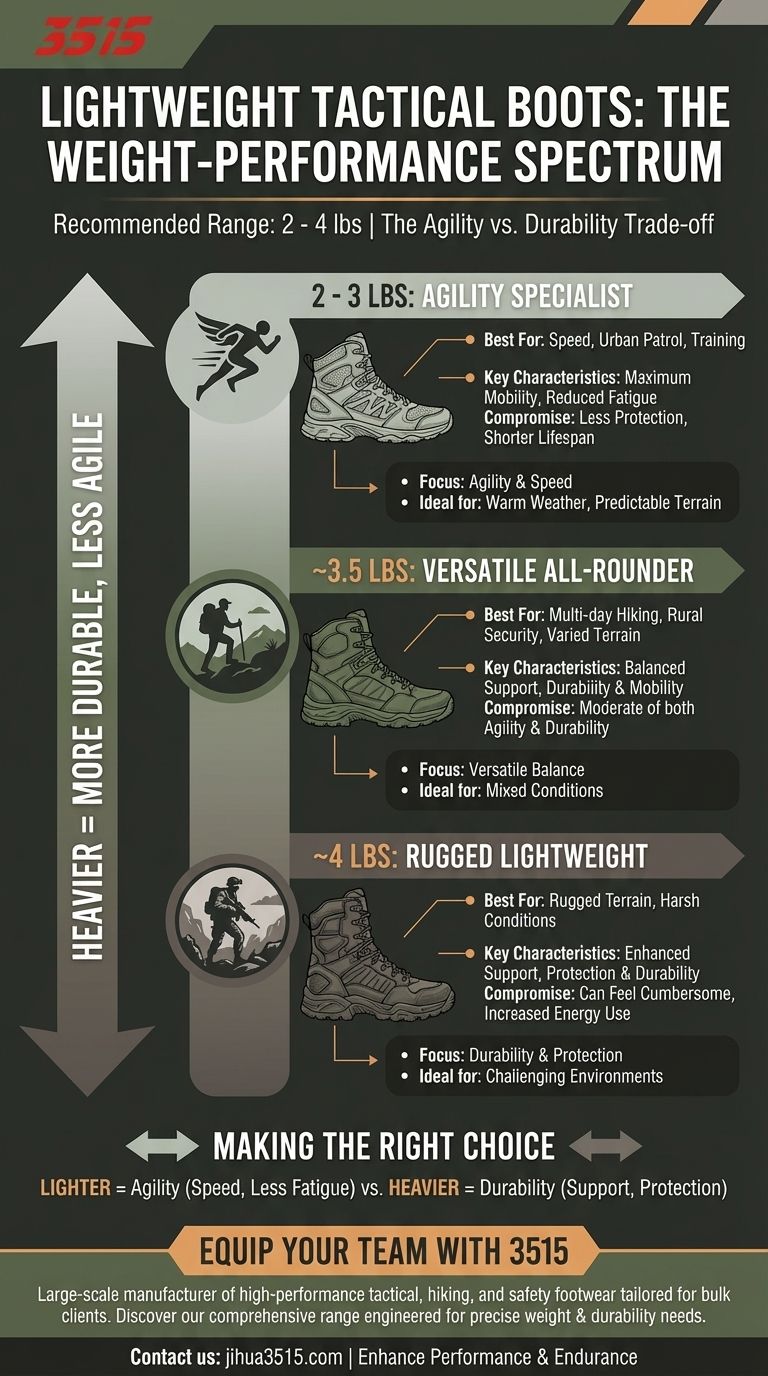
The 2-Pound Mark: The Agility Specialist
Boots at the low end of the spectrum feel more like athletic footwear. They are built for maximum speed and are best suited for warm weather and mild, predictable terrain. Their primary advantage is performance, often at the expense of long-term robustness.
The 3.5-Pound Benchmark: The All-Rounder
This mid-range weight represents a versatile balance point. It offers a noticeable improvement in agility over traditional, heavy boots while retaining significant durability and support. This is a common weight for all-purpose hunting or hiking boots that need to perform in varied conditions.
The 4-Pound Threshold: The Rugged Lightweight
At the upper limit of the category, these boots prioritize durability while still providing a weight advantage. They are ideal for users who face rugged terrain but want to mitigate the fatigue associated with truly heavy-duty tactical boots (which can exceed 5-6 pounds).
Understanding the Trade-offs
Choosing a boot based on weight alone is a common mistake. You must consider the compromises inherent in any design.
Lighter Boots: Compromising on Protection
To reduce weight, manufacturers often use synthetic materials and less substantial soles. This can lead to reduced protection from sharp objects, less ankle support on rocky ground, and a shorter overall lifespan under heavy use.
Heavier Boots: Compromising on Performance
While durable, heavier boots can feel cumbersome and slow you down. The increased energy required to move can lead to premature fatigue, which can be a critical disadvantage in a tactical situation.
Making the Right Choice for Your Mission
Your final decision should be based on a clear assessment of your most common operational environment.
- If your primary focus is speed and agility (e.g., urban patrol, training): Aim for the lower end of the range, around 2-3 pounds, for maximum performance and minimal fatigue.
- If your primary focus is versatile use across varied terrain (e.g., multi-day hiking, rural security): A mid-range weight of around 3.5 pounds offers the most reliable balance of support, durability, and mobility.
- If your primary focus is durability in rugged conditions: Target the upper end of the lightweight range, around 4 pounds, to gain crucial support without the penalty of traditional heavy-duty boots.
Ultimately, understanding this balance empowers you to select a boot that functions as a true tool for your specific needs.
Summary Table:
| Weight Range | Best For | Key Characteristics |
|---|---|---|
| 2 - 3 lbs | Speed & Agility | Maximum mobility, reduced fatigue, ideal for urban patrols and training. |
| ~3.5 lbs | Versatile All-Rounder | Balanced support and agility for varied terrain and multi-day use. |
| ~4 lbs | Rugged Durability | Enhanced support and protection for harsh conditions without excessive weight. |
Ready to equip your team with the perfect tactical boots?
As a large-scale manufacturer, 3515 produces a comprehensive range of high-performance footwear tailored for distributors, brand owners, and bulk clients. Our production capabilities encompass all types of tactical, hiking, and safety boots, engineered to meet the precise weight and durability requirements of professionals.
We help you provide your customers with gear that enhances performance and endurance. Contact our experts today to discuss your specific needs and discover how we can support your business with reliable, high-quality footwear.
Visual Guide
Related Products
- Wholesale Lightweight Tactical Boots with Dial Closure OEM & Bulk Orders
- Wholesale Lightweight Tactical Boots Custom Manufacturer for Desert & Combat Use
- Durable Leather Tactical Boots Wholesale & Custom Manufacturing for Brands
- Durable Mid-Cut Tactical Boots for Wholesale & Private Label
- Wholesale Durable Mid-Cut Tactical Boots for Custom & Private Label Brands
People Also Ask
- What are some tips for breaking in new tactical boots? Achieve a Perfect, Pain-Free Fit
- What special features can enhance the performance of tactical boots? Key Features for Superior Support & Protection
- What are the advantages and disadvantages of tactical boots? Lightweight Comfort vs. Rugged Durability
- What features do tactical boots typically have? A Guide to Rugged Durability & Performance
- What are the structural advantages of durable tactical boots? Elevate Performance in Rugged & Non-Standard Terrains


















