
When choosing military boots for hiking, the most important factors are the specific terrain, climate, and duration of your hikes. You must evaluate how the inherent characteristics of a military boot—namely its exceptional durability and support—align with the demands of your intended environment and your personal comfort needs.
Military boots can be a superb choice for certain types of hiking, but they are a specialized tool, not a universal solution. Their primary strengths in durability and ankle support excel on rugged, unpredictable terrain or when carrying heavy loads, often at the cost of increased weight and reduced flexibility compared to modern hiking footwear.
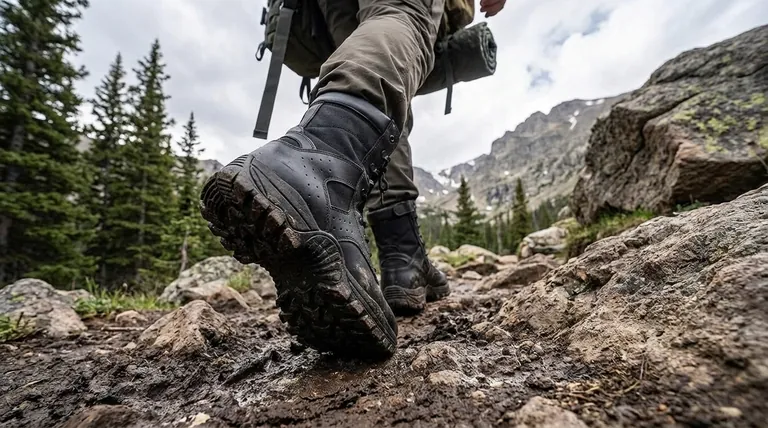
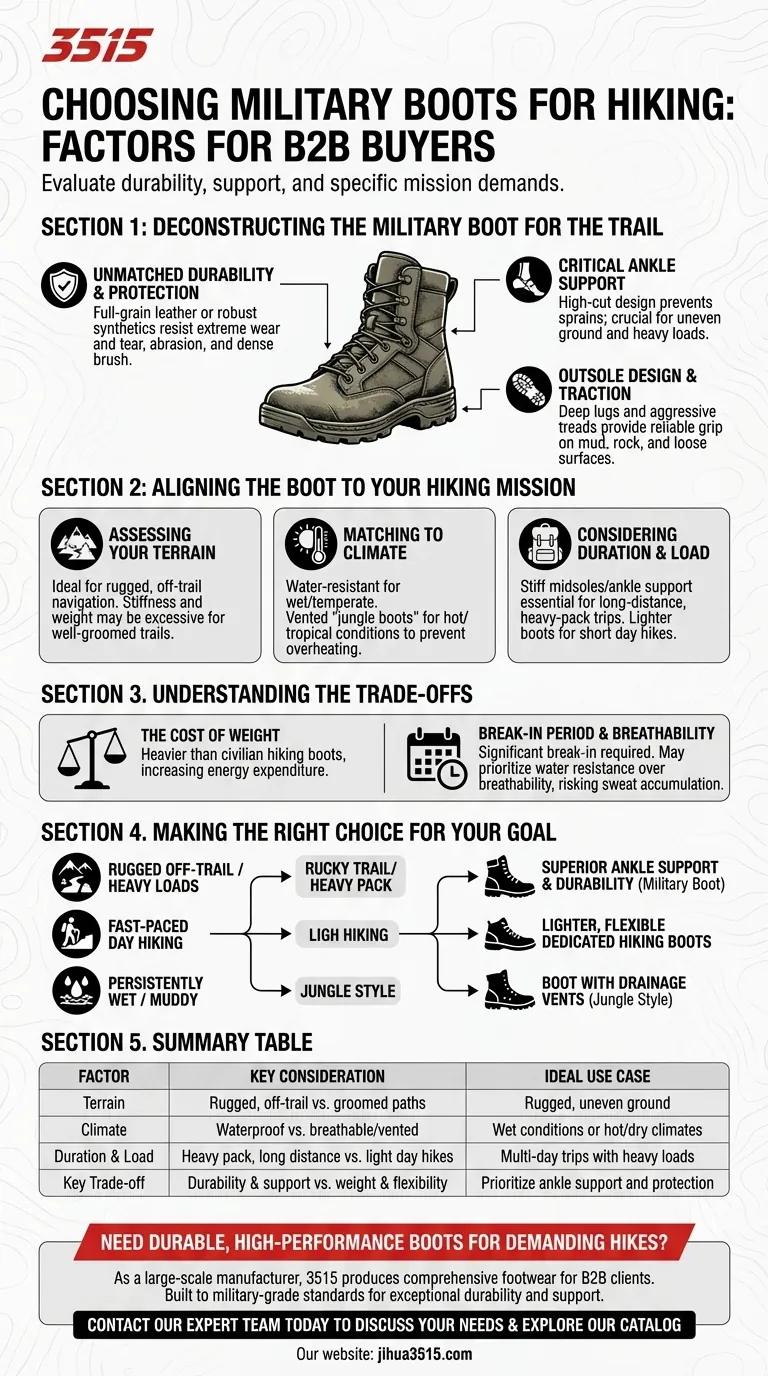
Deconstructing the Military Boot for the Trail
To make an informed decision, you must first understand the core components that define a military boot and how they function in a hiking context.
Unmatched Durability and Protection
Military boots are engineered for extreme wear and tear. They typically use high-quality full-grain leather or robust synthetic fabrics designed to resist abrasion from rock, scree, and dense brush.
This rugged construction provides a level of protection for your feet that is often a step above standard hiking boots.
The Critical Role of Ankle Support
Perhaps the most notable feature is the high-cut design, which provides exceptional ankle support. This is crucial for preventing sprains and twists when navigating uneven ground or unstable surfaces.
This level of support becomes particularly valuable when you are carrying the extra weight of a heavy backpack, which can alter your center of gravity and increase the risk of injury.
Outsole Design and Traction
The outsoles of military boots feature deep lugs and aggressive tread patterns. This design is meant to provide a reliable grip across a wide variety of surfaces.
Whether you are on a muddy trail, a rocky path, or loose gravel, the outsole is designed to bite into the ground and provide stable footing.
Aligning the Boot to Your Hiking Mission
A boot is only as good as its suitability for the task at hand. You must rigorously assess your specific hiking plans to determine if a military boot is the optimal choice.
Assessing Your Terrain
Consider the nature of your trails. For rugged, off-trail navigation or poorly maintained paths, the durability and support of a military boot are significant assets.
However, for well-groomed, relatively flat trails, their stiffness and weight may be unnecessary and could lead to premature fatigue.
Matching to Climate Conditions
The boot's materials directly impact its performance in different climates. A water-resistant or waterproof leather boot is excellent for keeping feet dry in wet, temperate conditions.
Conversely, in a hot and dry climate, that same boot can trap heat and sweat, leading to blisters. In persistently wet or tropical environments, a "jungle boot" with drainage vents may be superior to a waterproof one, as it allows water to escape and the boot to dry faster.
Considering Hike Duration and Load
For long-distance backpacking with a heavy pack, boots with stiff midsoles and high ankle support are essential for stability and comfort over many miles.
For shorter day hikes with a light pack, a more flexible boot with softer cushioning will generally feel more comfortable and prevent soreness.
Understanding the Trade-offs
No piece of gear is without its compromises. An objective assessment requires acknowledging the potential downsides of using military boots for hiking.
The Cost of Weight
Durability comes at a price, and that price is often weight. Military boots are typically heavier than their civilian hiking boot counterparts.
This added weight increases the energy you expend with every step. A common backpacking adage states that a pound on your feet is like carrying five extra pounds on your back.
The Break-In Period
The same robust materials that make military boots so durable also make them stiff. They almost always require a significant break-in period to allow the leather and other materials to mold to the shape of your foot.
Wearing a new pair on a long hike without breaking them in first is a common and painful mistake.
Breathability and Heat Management
Many military boots prioritize water resistance over breathability. This can lead to an accumulation of sweat inside the boot, especially in warmer weather.
Moisture from sweat is a primary cause of friction and blisters, making proper sock selection and foot care even more critical.
Making the Right Choice for Your Goal
To select the appropriate footwear, you must first define your priority. Your decision should be guided by your primary hiking objective.
- If your primary focus is rugged, off-trail hiking or carrying heavy loads: A military boot's superior ankle support and durability are significant advantages that can enhance safety and performance.
- If your primary focus is fast-paced day hiking on established trails: Lighter, more flexible dedicated hiking boots will likely provide more comfort and reduce fatigue over the course of the day.
- If your primary focus is hiking in persistently wet or muddy conditions: Look for a military-style boot with drainage vents rather than a waterproof membrane to manage moisture more effectively and prevent waterlogging.
Ultimately, selecting the right footwear is about correctly diagnosing your needs and choosing the tool designed for that specific task.
Summary Table:
| Factor | Key Consideration | Ideal Use Case |
|---|---|---|
| Terrain | Rugged, off-trail vs. groomed paths | Rugged, uneven ground |
| Climate | Waterproof vs. breathable/vented | Wet conditions or hot/dry climates |
| Duration & Load | Heavy pack, long distance vs. light day hikes | Multi-day trips with heavy loads |
| Key Trade-off | Durability & support vs. weight & flexibility | Prioritize ankle support and protection |
Need Durable, High-Performance Boots for Demanding Hikes?
As a large-scale manufacturer, 3515 produces a comprehensive range of footwear for distributors, brand owners, and bulk clients. Our production capabilities encompass all types of rugged shoes and boots, built to military-grade standards for exceptional durability and support on the toughest trails.
Let us help you equip your customers with the right footwear for their mission. Contact our expert team today to discuss your specific needs and explore our catalog.
Visual Guide
Related Products
- Durable Military Combat Boots with Water Drainage for Wholesale & OEM
- High-Traction Suede Tactical Boots Wholesale & Custom Manufacturing
- Durable High-Ankle Tactical Boots for Wholesale & Custom Manufacturing
- Durable Mid-Cut Tactical Boots for Wholesale & Private Label
- Wholesale Waterproof Tactical Boots Custom Suede & High-Traction Soles
People Also Ask
- Why must gait validation for military applications be conducted in combat boots? Ensure Data Accuracy for Soldiers
- What are the common types of combat boots? Find the Right Boot for Your Mission
- What are the key considerations when choosing military boots? Prioritize Compliance, Environment & Fit
- How should the midfoot and heel fit in military boots? Achieve a Snug, Secure Fit for Blister Prevention
- What other boot brands are used by Bravo sporadically? Discover Their Tactical Footwear Strategy



















