
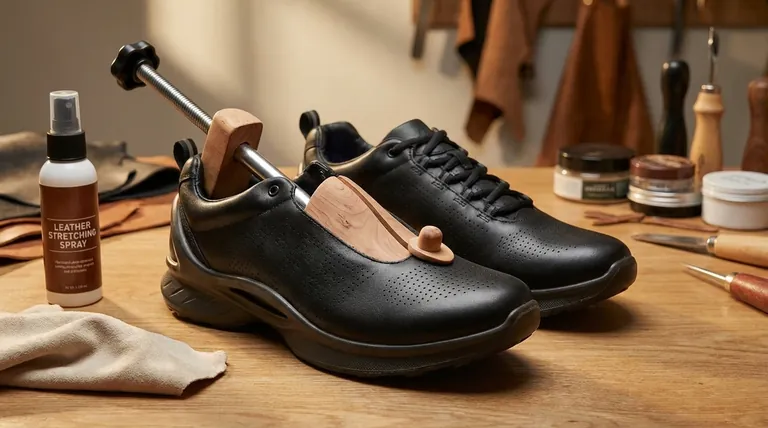
At its core, a shoe stretcher is a tool designed to relieve discomfort from tight footwear. It is a mechanical device used to permanently expand the width or length of a shoe, targeting specific pressure points to create a more customized and comfortable fit. By applying gradual, consistent pressure over several hours, it gently reshapes the shoe's material.
A shoe stretcher offers a controlled method for minor adjustments to solve specific fit issues, but its effectiveness is entirely dependent on the shoe's material and the nature of the discomfort.
How a Shoe Stretcher Works: The Mechanics of Reshaping
Understanding how a shoe stretcher functions is key to using it effectively and avoiding damage to your footwear. The process relies on a combination of mechanical force and the properties of the shoe's material.
The Core Mechanism
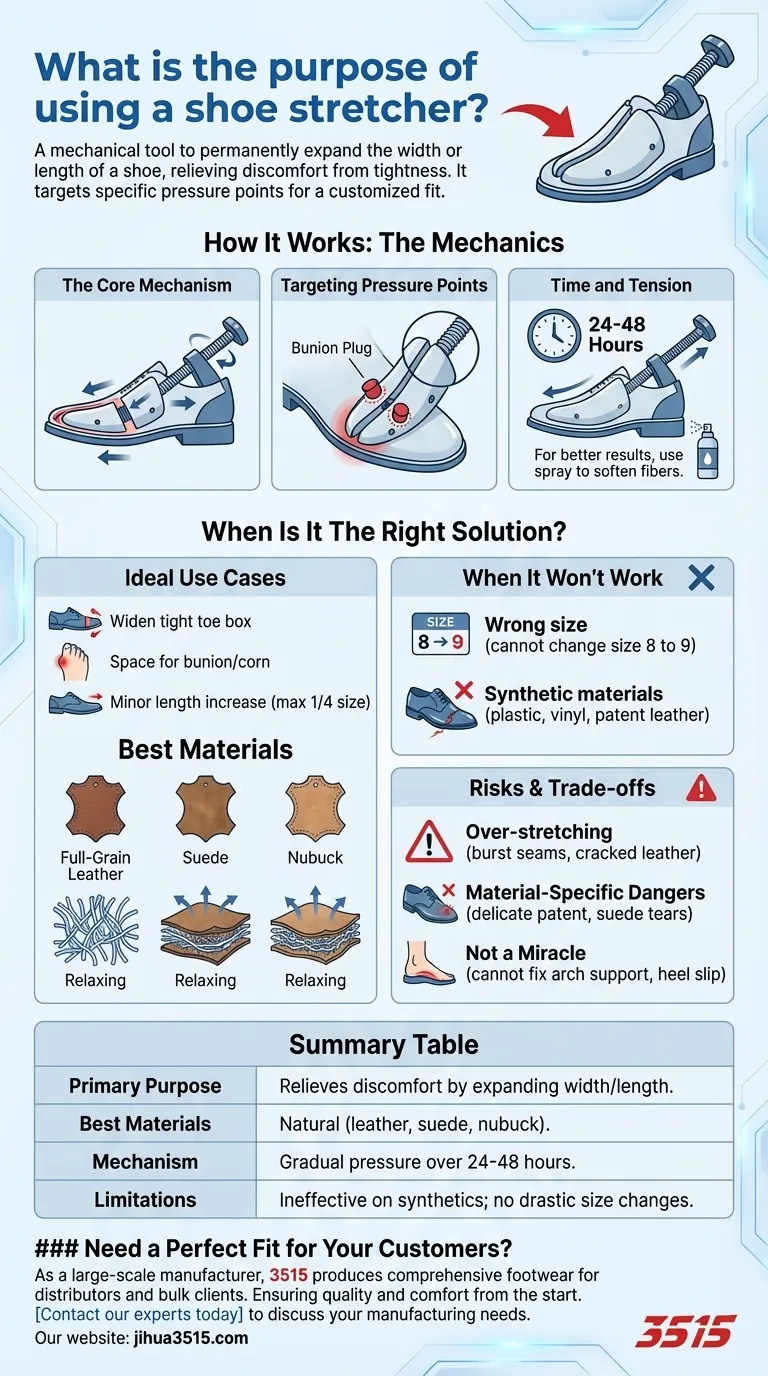
Most shoe stretchers use a threaded steel rod. Turning the handle expands two hinged, foot-shaped blocks inside the shoe, applying outward pressure to widen the toe box and instep area.
Targeting Specific Pressure Points
Many stretchers include small, removable plugs, often called "bunion plugs." These can be inserted into holes on the main block to create focused pressure on a specific spot, relieving pain from corns, bunions, or other irregularities.
The Importance of Time and Tension
Stretching is not an instant process. The device should be tightened until the material is taut and then left in place for at least 24 to 48 hours. This extended period allows the material's fibers—especially in leather—to relax and permanently reform in the new, expanded shape.
Using Stretching Sprays for Better Results
For materials like leather and suede, a shoe stretching spray or a leather conditioner is highly recommended. These solutions are formulated to soften and relax the material's fibers, making them more pliable and receptive to the stretching process.
When Is a Shoe Stretcher the Right Solution?
A shoe stretcher is a specific tool for a specific job. It excels in certain situations but is ineffective in others. Knowing the difference is crucial.
Ideal Use Cases
The most common and successful uses for a shoe stretcher are to widen a tight toe box, create space for a bunion or corn, or add a small amount of extra length (typically no more than a quarter of a size). It is perfect for addressing that "almost perfect" shoe that is just a bit too snug in one area.
Materials That Respond Best
Natural, porous materials are the best candidates for stretching. This includes full-grain leather, suede, and nubuck. These materials have a fibrous structure that can be safely and permanently repositioned with gradual tension.
When It Won't Work
A shoe stretcher cannot fix a shoe that is fundamentally the wrong size. It cannot change a size 8 into a size 9. Furthermore, most synthetic materials, such as plastic, vinyl, or patent leather, do not stretch effectively and may crack or simply revert to their original shape.
Understanding the Trade-offs and Risks
While highly effective when used correctly, a shoe stretcher can also damage your footwear if used improperly. Objectivity requires acknowledging the potential downsides.
The Risk of Over-stretching
The most common mistake is applying too much force too quickly. This can lead to burst seams, cracked leather, or a permanently misshapen shoe that is now too loose to wear comfortably. Always apply tension gradually.
Material-Specific Dangers
Delicate materials can be easily damaged. For example, the glossy finish on patent leather can crack under pressure, and thin suedes can tear if over-stressed. Always test in an inconspicuous area if you are unsure.
It's a Tool, Not a Miracle
A shoe stretcher can only address issues of width, length, and specific pressure points. It cannot fix other fit problems, such as a lack of arch support, a heel that slips, or a design that simply does not match your foot's anatomy.
Making the Right Choice for Your Footwear
To determine if a shoe stretcher is the right investment for you, consider the specific problem you are trying to solve.
- If your primary focus is relieving a tight toe box: A two-way stretcher that can expand both width and length is your most versatile and effective tool.
- If your primary focus is a specific pressure point (like a bunion): Ensure the stretcher you choose comes with spot-stretching plugs to target the exact area of discomfort.
- If your primary focus is breaking in new leather shoes: Use a stretcher in conjunction with a quality leather conditioner or stretching spray to gently and evenly ease the material into its final shape.
By understanding its function and limitations, you can use a shoe stretcher to transform uncomfortable footwear into a perfectly customized fit.
Summary Table:
| Aspect | Key Takeaway |
|---|---|
| Primary Purpose | Relieves discomfort by permanently expanding shoe width/length. |
| Best For Materials | Natural materials like leather, suede, and nubuck. |
| Mechanism | Applies gradual, consistent pressure over 24-48 hours. |
| Limitations | Ineffective on synthetic materials; cannot drastically change shoe size. |
Need a Perfect Fit for Your Customers?
As a large-scale manufacturer, 3515 produces a comprehensive range of footwear for distributors, brand owners, and bulk clients. Our production capabilities encompass all types of shoes and boots, ensuring quality and comfort are built-in from the start.
Let us help you deliver superior products that fit perfectly from day one.
Contact our experts today to discuss your manufacturing needs and how we can bring value to your business.
Visual Guide
Related Products
- Wholesale Breathable Training Shoes Custom Athletic Footwear Manufacturer
- Wholesale Durable & Breathable Training Shoes for Custom Brands
- Wholesale Durable Camouflage Canvas Shoes with High-Traction Cleated Rubber Sole
- Custom OEM Training Shoes Wholesale Manufacturer Durable & Breathable
- Customizable Slip-On Safety Shoes Direct from the Factory for Wholesale
People Also Ask
- Why are professional-grade training shoes essential for physical therapy? Ensure Patient Safety and Gait Stability
- Why are the slip-resistance and stability performance of training shoes critical in gait analysis? Ensure Data Accuracy
- What is the primary role of specialized training or orthopedic shoes? Enhance Safety in Elderly Balance Training
- Why is sole stiffness testing using a force gauge necessary? Build Superior Training Shoes with Precision
- Why is specialized athletic footwear necessary for ankle rehab? Unlock Safety and Stability in Recovery


















