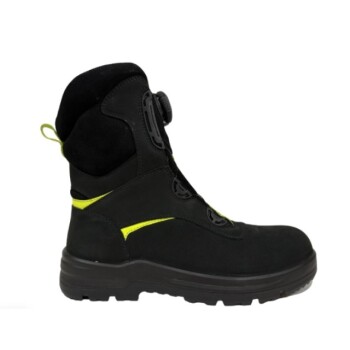
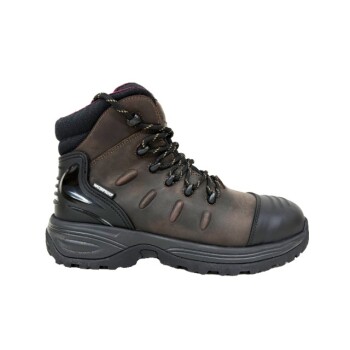
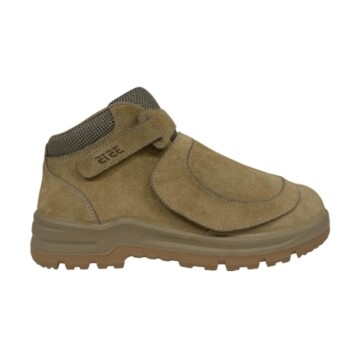
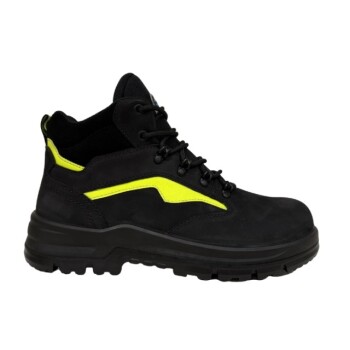
At its core, the purpose of a puncture-resistant work boot is to protect your feet from being pierced by sharp objects from below. These boots contain a specialized protective plate embedded in the sole, acting as a crucial barrier against hazards like nails, screws, sharp metal, or broken glass commonly found in high-risk work environments.
Puncture resistance is not just an added feature; it is a critical piece of personal protective equipment (PPE) designed to prevent debilitating foot injuries in environments where underfoot hazards are an unavoidable part of the job.

How Puncture Resistance Works
The protective technology in these boots is specifically engineered to stop sharp objects before they can penetrate the sole and injure your foot.
The Core Component: A Protective Plate
The key element is a puncture-resistant plate that is positioned between the boot's insole (what your foot rests on) and the outsole (what contacts the ground).
This strategic placement ensures that an object attempting to pierce the boot from the bottom is stopped by the plate before it can reach your foot.
Material Choices: Steel vs. Composite
Historically, these plates were made of steel, which is highly effective but adds weight and rigidity.
Modern boots often use non-metallic composite plates made from materials like Aramid fibers (such as Kevlar). These composite plates offer comparable protection while being significantly lighter, more flexible, and do not conduct heat, cold, or electricity.
Key Environments Where This Protection is Critical
Puncture-resistant boots are essential PPE in any occupation where the ground may be littered with sharp debris.
Construction and Demolition Sites
These are the most common environments for puncture hazards. Discarded nails, sharp pieces of scrap metal, and broken materials pose a constant threat.
Waste Management and Landscaping
Workers in these fields regularly encounter unpredictable hazards like broken glass, sharp plastics, and other debris hidden in trash or undergrowth.
Mining and Heavy Industry
Industrial and mining sites often have sharp metal shards, rock fragments, and other materials on the ground that can easily penetrate a standard boot sole.
Understanding the Trade-offs
While essential, the features that make a boot puncture-resistant also introduce considerations you must be aware of.
Flexibility and Comfort
Adding a protective plate, even a flexible composite one, will reduce the overall flexibility of the boot's sole compared to a standard boot. This can require a short break-in period.
It's Not Total Armor
Puncture resistance protects the sole of the foot. It does not protect against objects piercing the side or top of the boot, nor does it replace the need for a safety toe.
Puncture Plate vs. Safety Toe
It is critical to distinguish between these two features. A puncture-resistant plate protects the sole from upward piercing, while a safety toe (steel, alloy, or composite) protects the toes from downward impact and compression. Many safety boots feature both, but they are separate protective systems.
Making the Right Choice for Your Work
Selecting the right boot requires matching its specific safety features to the primary risks of your environment.
- If your primary focus is protection from underfoot hazards: Prioritize a boot with a certified puncture-resistant plate, choosing composite for flexibility or steel for maximum traditional protection.
- If your primary focus is stability on slick floors: Ensure your boot has a high-quality, slip-resistant outsole designed to grip wet or oily surfaces.
- If your primary focus is all-around safety in a dynamic environment: Look for a boot that combines multiple certified features, such as a safety toe, a puncture-resistant plate, and a slip-resistant sole.
Ultimately, choosing the right protective footwear is a foundational investment in your personal safety on the job.
Summary Table:
| Key Feature | Description |
|---|---|
| Primary Purpose | Protects the sole of the foot from being pierced by sharp objects from below. |
| Core Component | A protective plate (steel or composite) embedded between the insole and outsole. |
| Common Hazards | Nails, screws, sharp metal, broken glass, and other debris. |
| Key Environments | Construction, demolition, waste management, landscaping, mining, and heavy industry. |
| Important Note | Protects the sole only; does not replace the need for a safety toe cap. |
Ensure your workforce is fully protected. As a large-scale manufacturer, 3515 produces a comprehensive range of certified safety footwear for distributors, brand owners, and bulk clients. Our production capabilities encompass all types of puncture-resistant boots and shoes, engineered with the latest composite or steel plate technology to meet your specific safety standards. Let us help you equip your team with reliable, high-quality footwear that mitigates risk. Contact our experts today for a consultation and to discuss your requirements.
Visual Guide

Related Products
- Wholesale Durable Safety Boots | Custom Steel Toe & Puncture-Resistant Manufacturing
- Wholesale Durable Breathable Safety Boots Custom OEM Manufacturer
- Wholesale Customizable Suede Safety Boots - Puncture-Proof with Velcro Closure
- Premium High-Cut Waterproof Safety Boots Manufacturing & Wholesale Solutions
- Wholesale Durable 6-Inch Work Boots | Custom & Private Label Manufacturer
People Also Ask
- What are the risks of using ordinary rubber boots in forest clearing? Why professional safety boots are essential
- What materials are commonly used for outsoles in safety boots? A Guide to Durability, Grip, and Comfort
- How should safety boots be cleaned to avoid damage? A Gentle Guide to Preserve Your Boots
- What are the consequences of not wearing safety boots? Protect Your Finances and Career
- What are the key features of safety boots? Essential Protection for Hazardous Workplaces