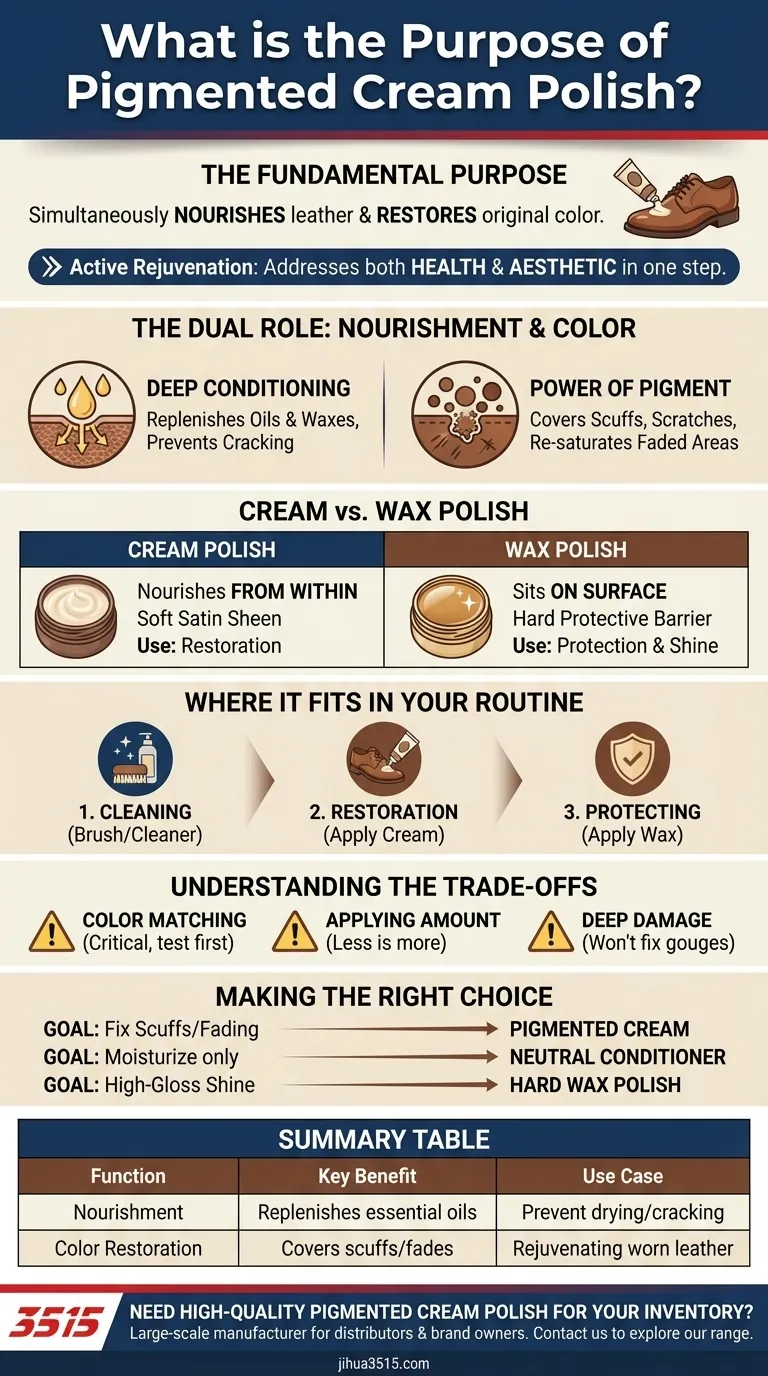
The fundamental purpose of a pigmented cream polish is to simultaneously nourish the leather and restore its original color. It penetrates the leather's pores to replenish essential oils while its pigments cover minor scuffs, scratches, and areas of fading.
Think of a pigmented cream polish as the single most effective tool for rejuvenation. While other products maintain or protect, a cream polish actively reverses the most common signs of wear by addressing both the leather's health and its aesthetic appearance in one step.
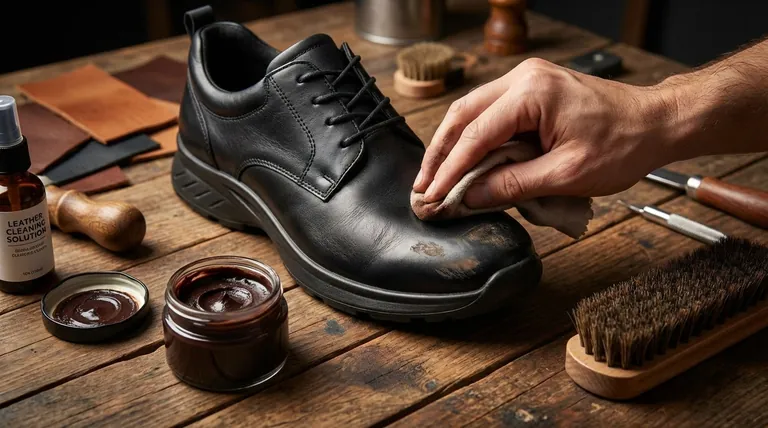
The Dual Role of Cream Polish: Nourishment and Color
To understand why cream polish is essential, you must see it as a two-part solution. It is fundamentally a conditioner that has been enhanced with color.
Deep Conditioning Properties
A quality cream polish is an emulsion of oils, waxes, and water. This composition allows it to penetrate deep into the leather's pores, replenishing the natural fats that keep the material supple and prevent it from drying out and cracking.
The Power of Pigment
Suspended within this conditioning base are fine pigments. These color particles fill in the microscopic damage on the leather's surface, such as scuffs and scratches, making them blend in with the surrounding area. They also re-saturate color in areas that have faded due to UV exposure or simple wear.
How It Differs from Wax Polish
Cream polish and wax polish serve entirely different functions. A cream nourishes from within and provides a soft, satin sheen. A wax polish sits on the surface of the leather, creating a hard, protective barrier that produces a high-gloss shine. They are not interchangeable; they are meant to be used together.
Where Cream Polish Fits in Your Routine
Using products in the correct order is critical for proper leather care. Cream polish is the primary step for restoration after the leather has been cleaned.
Step 1: Cleaning
Always begin by removing any surface dirt and old polish with a horsehair brush and a quality leather cleaner. This ensures the cream can penetrate the pores effectively.
Step 2: Restoration and Conditioning
This is where you apply the pigmented cream polish. Using a soft cloth or dauber, work a small amount of cream into the leather using small, circular motions. This delivers both moisture and color deep into the material.
Step 3: Protecting and Shining
After the cream has dried (typically 10-20 minutes) and been buffed with a brush, you can apply a wax polish. The wax will seal in the conditioning agents from the cream and provide a final layer of protection and shine.
Understanding the Trade-offs
While incredibly effective, pigmented creams require careful consideration to achieve the best results and avoid common mistakes.
The Importance of Color Matching
This is the most critical factor. Using a cream that is too dark can permanently alter the color of your leather goods. Always test the cream on an inconspicuous area, like the tongue of a shoe, before applying it to the entire item. When in doubt, choose a shade slightly lighter than the leather.
Applying the Right Amount
Less is more. Applying too much cream can saturate the leather, making it difficult to buff to a shine and potentially leading to color rubbing off on clothing. A thin, even layer is all that is required.
It Won't Fix Deep Damage
Pigmented cream is for scuffs, minor scratches, and fading. It cannot fill deep gouges or repair cracked leather. Those issues require more intensive repair with fillers and leather dyes.
Making the Right Choice for Your Goal
Select your leather care product based on the specific problem you need to solve.
- If your primary focus is to fix noticeable scuffs and fading: A pigmented cream polish is the exact tool you need to restore color and condition the leather.
- If your primary focus is to moisturize dry but well-colored leather: A neutral (colorless) conditioner is the better and safer choice, as it will nourish without altering the hue.
- If your primary focus is to achieve a high-gloss, protective shine: Use a hard wax polish after you have cleaned and conditioned the leather, either with a neutral conditioner or a pigmented cream.
Ultimately, using a pigmented cream polish is the key to actively restoring your leather's health and vibrancy, not just passively maintaining it.
Summary Table:
| Function | Key Benefit |
|---|---|
| Nourishment | Replenishes essential oils to prevent drying and cracking. |
| Color Restoration | Covers minor scuffs, scratches, and fades with fine pigments. |
| Use Case | Best for rejuvenating worn leather after cleaning, before waxing. |
Need High-Quality Pigmented Cream Polish for Your Inventory?
As a large-scale manufacturer, 3515 produces a comprehensive range of footwear care products for distributors, brand owners, and bulk clients. Our expertise ensures you receive effective, reliable polishes that your customers trust.
Let's discuss your supply needs: Contact our team today to explore our product range and competitive pricing.
Visual Guide
Related Products
- Lightweight Breathable Sneakers with Wet-Traction Grip for Wholesale & Private Label
- Wholesale Modern Perforated Leather Derby Shoes with Chunky Sole for Custom Branding
- Lightweight Breathable Training Shoes for Wholesale & Custom OEM Manufacturing
- Wholesale Durable Camouflage Canvas Shoes with High-Traction Cleated Rubber Sole
- Wholesale Lightweight Cushioned Athletic Sneakers for Custom Bulk Production
People Also Ask
- Why are breathable sneakers necessary for tropical commuting? Stay Cool and Dry in High Humidity
- What role do lightweight training shoes play in urban traffic? Boost Agility and Reaction for Safer City Navigation
- How do lightweight shoes provide support? The Science of Efficient Cushioning & Stability
- How do lightweight shoes improve breathability? Discover the Science of Cool, Dry Feet
- How do lightweight shoes contribute to healthier feet? Reduce Fatigue & Prevent Foot Problems