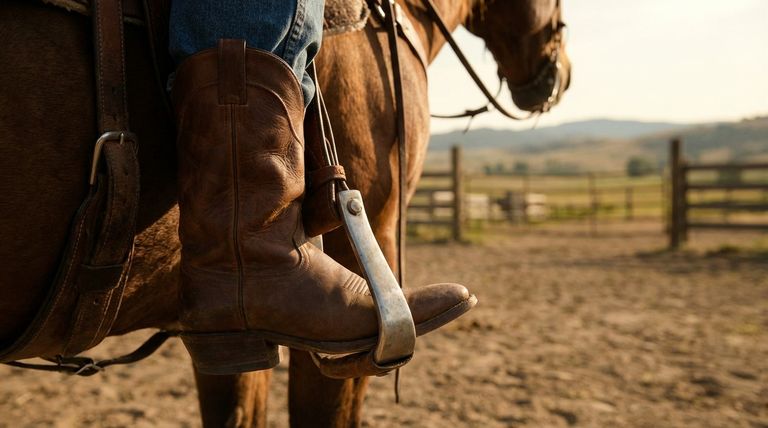
The primary function of cowboy riding boots is to ensure the rider's safety and stability while maneuvering a horse. Every element of the boot is engineered to interact specifically with the stirrup and the rugged environment of ranch work.
The underslung heel anchors the foot to prevent it from sliding through the stirrup, while the smooth leather sole allows the rider to slide their foot out instantly in an emergency. Additionally, the tall leather shaft protects the lower leg from chafing against the saddle, stiff brush, or other environmental hazards.
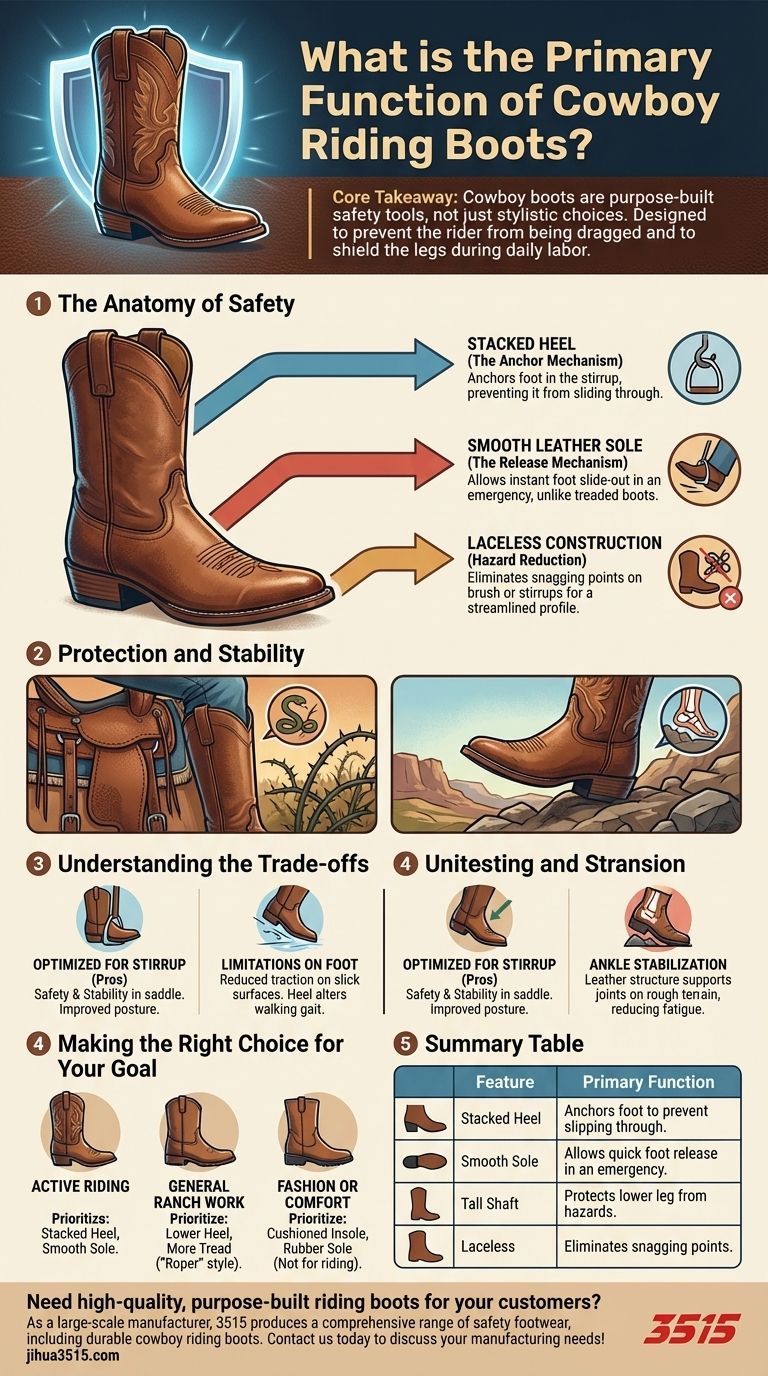
Core Takeaway Cowboy boots are purpose-built safety tools, not just stylistic choices. Their specific anatomy—heels, smooth soles, and high shafts—is designed to prevent the rider from being dragged during a fall and to shield the legs during daily labor.
The Anatomy of Safety
To understand the boot's function, you must analyze how its specific components solve distinct mechanical problems faced by the rider.
The Anchor Mechanism
The most critical feature is the stacked heel. Its primary purpose is to "hook" onto the bottom of the stirrup.
This prevents the foot from sliding all the way through the stirrup iron. Without this stop, a rider's foot could become trapped, creating a dangerous situation if the horse panics or the rider is unseated.
The Release Mechanism
While the heel provides stability, the smooth leather sole ensures a clean exit.
Unlike modern hiking boots with heavy tread, a cowboy boot is intentionally slick. This allows the foot to slide easily out of the stirrup when dismounting or falling, preventing the rider from getting hung up and dragged.
Hazard Reduction
The design eliminates external snagging points, specifically through a laceless, pull-on construction.
Laces present a significant tripping hazard and can get caught on brush or stirrups. By removing them, the boot creates a streamlined profile that improves safety both in the saddle and on the ground.
Protection and Stability
Beyond the stirrup interface, the boot functions as a protective shield for the lower leg during long hours of physical labor.
Tibial and Calf Protection
The high shaft of the boot serves as armor for the rider's legs.
It prevents painful chafing caused by the constant friction of the legs rubbing against the stirrup leathers and the horse's barrel. It also offers a barrier against snakes, thorns, and rough terrain when the rider is working on the ground.
Ankle Stabilization
Working on uneven ranch terrain or managing livestock requires substantial joint support.
The leather construction acts similarly to a work boot, stabilizing the ankle and foot. This structure helps maintain the correct leg position while riding and reduces fatigue during long workdays.
Understanding the Trade-offs
While cowboy boots are highly optimized for riding, their specialized design creates specific limitations in other contexts.
Reduced Traction on Foot
The smooth sole that saves your life in a stirrup can be a liability on slick surfaces.
Standard cowboy boots often lack the grip required for snow, ice, or steep mud. They are designed primarily for the saddle or dry dirt, not for traversing slippery, technical terrain on foot.
Walking Ergonomics
The elevated heel alters the wearer's center of gravity and gait.
While this slight elevation can improve posture in the saddle, it may cause discomfort during extensive walking or standing if the user is accustomed to flat footwear.
Making the Right Choice for Your Goal
When selecting boots, you must decide if your priority is functional riding safety or casual comfort, as the features often conflict.
- If your primary focus is Active Riding: Prioritize a boot with a distinct, stacked heel and a smooth leather outsole to ensure safe interaction with the stirrup.
- If your primary focus is General Ranch Work: Look for "Roper" style boots, which typically feature a lower heel and a slightly more aggressive tread for better walking stability.
- If your primary focus is Fashion or Comfort: Choose boots with cushioned insoles and rubberized bottoms, accepting that they may not be safe for actual horseback riding.
Select the tool that matches your terrain; a boot designed for the stirrup will always perform differently than one designed for the sidewalk.
Summary Table:
| Feature | Primary Function |
|---|---|
| Stacked Heel | Anchors foot in the stirrup to prevent slipping through |
| Smooth Leather Sole | Allows quick, easy foot release in an emergency |
| Tall Shaft | Protects lower leg from chafing and environmental hazards |
| Laceless Construction | Eliminates snagging points for a streamlined, safe profile |
Need high-quality, purpose-built riding boots for your customers?
As a large-scale manufacturer, 3515 produces a comprehensive range of footwear for distributors, brand owners, and bulk clients. Our production capabilities encompass all types of safety-focused shoes and boots, including durable cowboy riding boots designed for performance and protection.
Let us help you equip your customers with reliable footwear that meets the highest standards of safety and functionality. Contact us today to discuss your manufacturing needs!
Visual Guide
Related Products
- Durable Spiked Camouflage Boots Wholesale & Factory Production
- Wholesale High-Traction Camo Boots - Custom Manufacturer for Brands
- Heavy-Duty Goodyear Welted Pull-On Safety Rigger Boot
- Wholesale Lightweight Tactical Boots Custom Manufacturer for Desert & Combat Use
- Wholesale Waterproof Tactical Boots Custom Suede & High-Traction Soles
People Also Ask
- How does boot height affect waterproofing? Choose the Right Height for Ultimate Protection
- What are the best types of shoes for different gardening conditions? Find Your Perfect Match.
- What role does camouflage play in hunting boots? It's More Than Just a Pattern
- What should you look for to ensure boots are fully waterproof? The Essential 2-Part System
- How does boot construction affect waterproofing? The Science Behind Truly Dry Feet