
The fundamental rule for styling lace-up boots is to match the boot's character—whether it's rugged, sleek, or casual—to the formality and fit of your outfit. The goal is to create a cohesive silhouette where the boots complement your clothing rather than competing with it.
Lace-up boots are incredibly versatile, but their specific design dictates how they should be worn. The key isn't just the boot itself, but how its shape and material interact with the cut of your pants to create a balanced, intentional look.
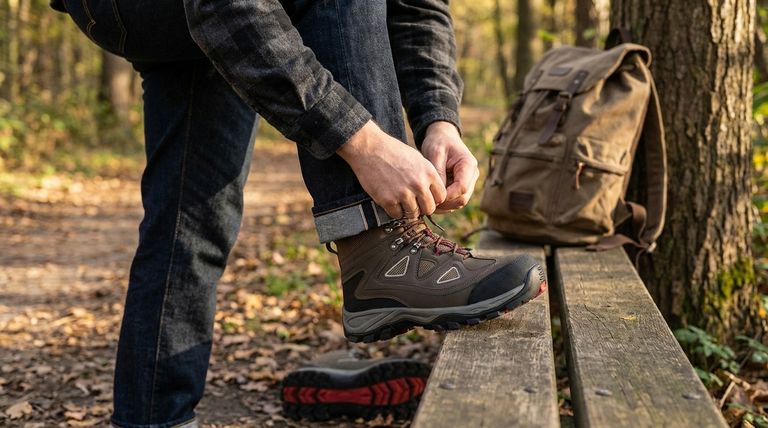
First, Identify Your Boot's Character
Not all lace-up boots are created equal. The most common styling errors occur when the boot's inherent style clashes with the rest of the outfit. Start by identifying which category your boots fall into.
The Rugged Work Boot
These are boots built for durability, like classic combat boots, moc-toes, or heavy-duty work styles. Their bulky shape and tough materials define their look.
Pair them with equally robust and casual fabrics like denim, canvas, flannel, or corduroy. They create a grounded, utilitarian aesthetic.
The Sleek Dress Boot
These boots feature a slimmer profile, often with details like a cap-toe or broguing. They are typically made from smooth, polished leather.
Wear these with more tailored clothing. They pair perfectly with chinos, wool trousers, and even modern, slim-fit suits. The goal is a sharp, streamlined leg line.
The Casual Everyday Boot
This category sits between rugged and dressy, including styles like desert boots or chukkas. They often feature softer materials like suede.
This is your most versatile option. Style them with dark-wash jeans, casual button-downs, sweaters, and unstructured blazers for a reliable smart-casual look.
Mastering the Pant-and-Boot Interaction
How your pants meet your boots is the single most important detail in styling them correctly. This junction point determines whether your outfit looks sharp or sloppy.
The Cuff Method
Rolling the hem of your pants once or twice is the most reliable way to style lace-up boots. A clean cuff draws attention to the boots and creates a deliberate visual break.
This works best with slim or straight-leg jeans and chinos. The cuff should sit just at the top of the boot, showcasing its full height without bunching.
The Stacking Method
Stacking involves letting the fabric of your pants bunch up naturally on top of the boot. This creates a more relaxed, rugged appearance.
This technique is best suited for rugged boots and slim-fit jeans. The narrower leg opening allows the denim to stack neatly instead of puddling over the boot.
The Tucked-In Method
Tucking your pants into your boots is a bold, military-inspired style statement. It is the most difficult to execute well.
Reserve this look for skinny-fit pants and taller, more structured boots (like combat boots). Tucking wider pants will create a puffy, unflattering "blousing" effect around the ankle.
Common Pitfalls to Avoid
Building a great look is often about avoiding common mistakes. Being mindful of these potential issues will elevate your style immediately.
Mismatched Formality
The most jarring error is a formality clash. Do not wear heavy, scuffed work boots with a fine wool suit. Conversely, a sleek dress boot can look out of place with torn, light-wash denim.
Ignoring Proportions
Bulky boots paired with very wide-leg pants can make you appear shorter, as the boot gets lost and the leg line is broken. The goal is balance—let the boot either anchor a slim pant or be cleanly covered by a wider one.
Overlooking the Details
The laces and socks matter. Contrasting laces can add a pop of personality to a rugged boot. If you cuff your pants, your socks become part of the outfit, so choose a color or pattern that complements the look.
Making the Right Choice for Your Goal
Your intention should guide your styling choices. Use these principles as a clear starting point.
- If your primary focus is a rugged, casual look: Pair work-style boots with durable fabrics like denim and flannel, using a cuff or stack to highlight the boot.
- If your primary focus is a smart, business-casual style: Choose a sleeker dress boot and pair it with tailored chinos or wool trousers for a clean, uninterrupted leg line.
- If your primary focus is maximum versatility: Opt for a classic everyday boot like a chukka or desert boot and pair it with dark-wash jeans and layered tops.
By understanding your boot's character and managing how it meets your pants, you can confidently integrate any lace-up boot into your wardrobe.
Summary Table:
| Boot Type | Best For | Key Styling Tip |
|---|---|---|
| Rugged Work Boot | Casual, Utilitarian Looks | Pair with denim, flannel; use cuff or stack method. |
| Sleek Dress Boot | Smart, Business-Casual Style | Wear with tailored chinos/wool trousers for a clean line. |
| Casual Everyday Boot | Versatile, Smart-Casual Outfits | Style with dark-wash jeans, sweaters, and blazers. |
Ready to build your perfect boot collection? As a large-scale manufacturer, 3515 produces a comprehensive range of rugged, sleek, and casual lace-up boots for distributors, brand owners, and bulk clients. Our production capabilities ensure high-quality footwear for every style. Contact us today to discuss your needs and elevate your product line!
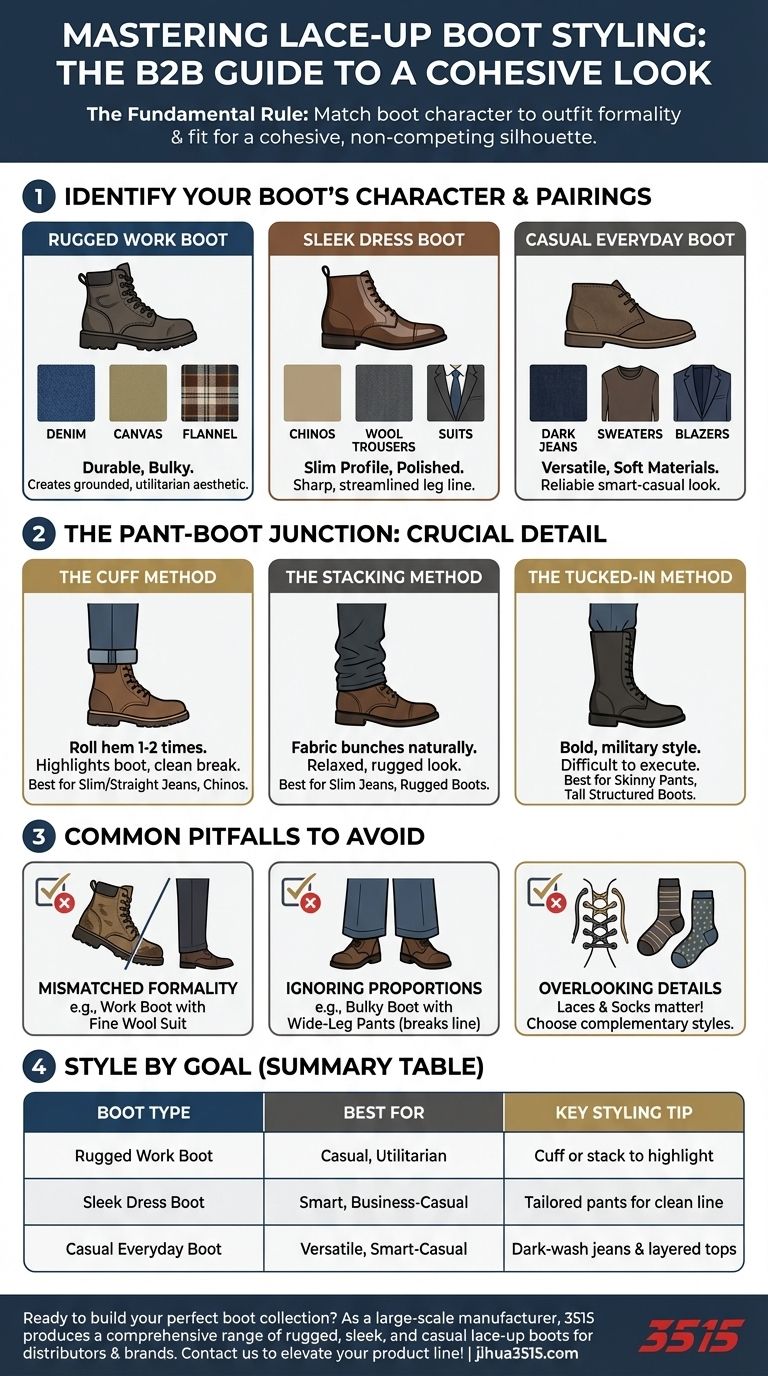
Visual Guide
Related Products
- Wholesale Classic Leather Lace-Up Ankle Boots for Brand Manufacturing
- Premium Wholesale Tactical Style Safety Shoes Boots with Quick Lacing
- Durable Goodyear Welt Leather Work Boots for Wholesale & Private Label
- Wholesale Training Shoes with Dial Lacing System Custom OEM Manufacturing
- Wholesale Lightweight Tactical Boots with Dial Closure OEM & Bulk Orders
People Also Ask
- How are oils used to waterproof leather boots? A Guide to Deep Conditioning & Protection
- Why is regular maintenance necessary for the performance of leather boots? Boost Durability & Brand Reputation
- Why might it be beneficial to pre-heat the boots before applying wax? Achieve Deeper, Longer-Lasting Protection
- How can leather boots maintain their water resistance? A Guide to Lasting Protection
- What is the biggest enemy of leather boots? Protect Your Investment from Water Damage

















