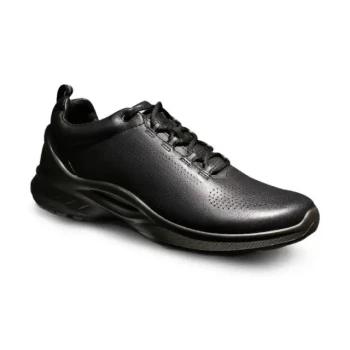
The best walking shoes for seniors are often highly-cushioned, supportive running shoes that prioritize stability and comfort. Models from brands like Brooks, New Balance, and Asics are consistently recommended because they are engineered to absorb impact and guide the foot, which is critical for protecting joints and maintaining balance.
The most important takeaway is that the "best" shoe is not about a specific brand, but about finding the right features. For seniors, this means prioritizing stability to prevent falls, cushioning to protect joints, and a proper fit above all else.

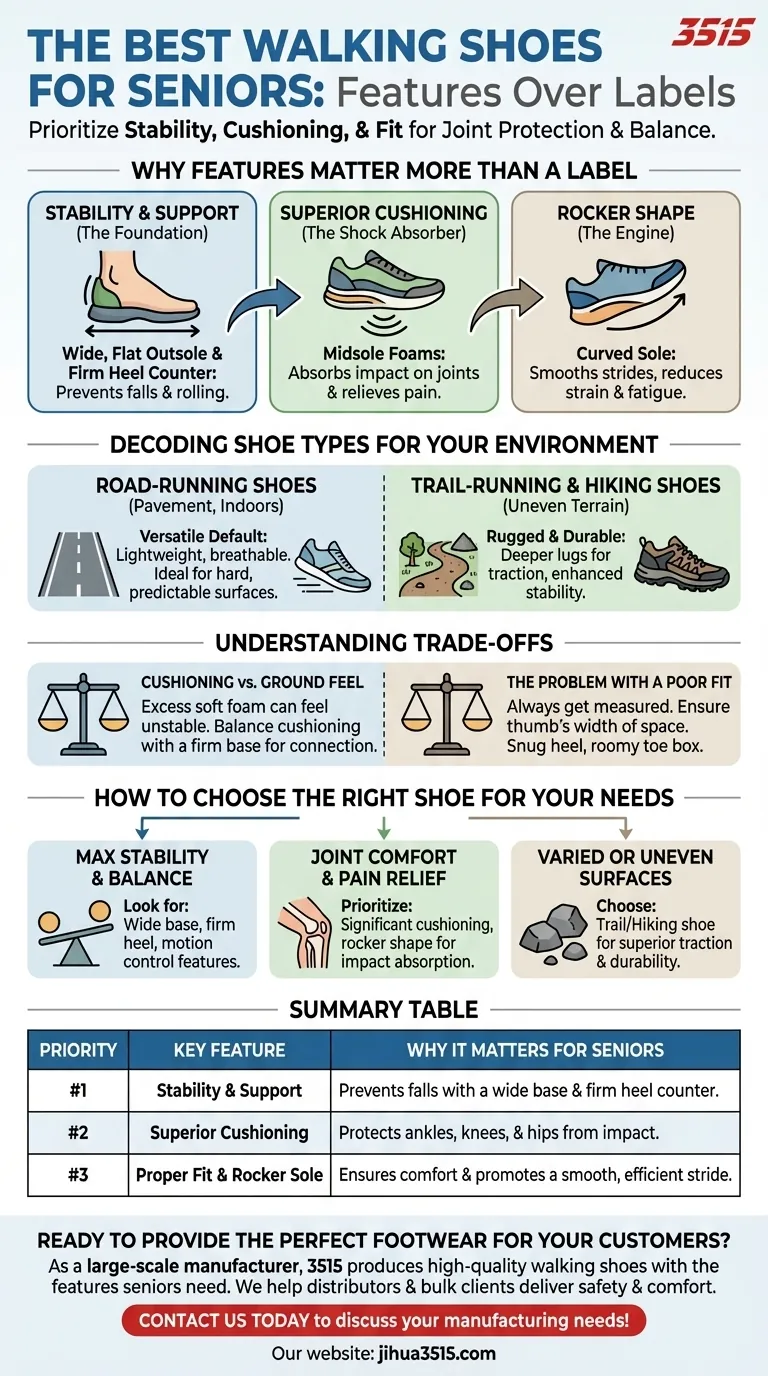
Why the Right Features Matter More Than a Label
As we age, our feet and gait change. We may experience a loss of natural padding, reduced balance, and increased joint sensitivity. A shoe labeled simply as a "walking shoe" may not address these specific needs.
Instead, the goal is to find a shoe with features designed to compensate for these changes, ensuring every step is as safe and comfortable as possible.
The Foundation: Stability and Support
Stability is the single most important feature for preventing trips and falls. A stable shoe provides a firm, reliable base for your entire body.
Look for shoes with a wide, flat outsole that makes full contact with the ground. You should also seek a firm heel counter—the part that cups your heel—which prevents your foot from rolling inward or outward.
The Shock Absorber: Superior Cushioning
Walking on hard surfaces like pavement sends repetitive impact shocks up through your ankles, knees, and hips. Over time, this can aggravate arthritis and cause pain.
Excellent cushioning, typically found in the shoe's midsole, acts as a shock absorber. Quality running shoes often use advanced foams that are both soft and supportive, mitigating the impact of daily movement.
The Engine: A Rocker Shape for Smooth Strides
Many of the best shoes for walking feature a "rocker" midsole. This means the sole is curved upwards at the heel and toe.
This shape helps your foot roll smoothly from heel-strike to toe-off. It reduces the strain on your foot and ankle joints and creates a more efficient, less fatiguing stride.
Decoding Shoe Types for Your Environment
The right shoe also depends on where you plan to walk. The "best" shoe for a treadmill is different from the best shoe for a gravel park path.
Road-Running Shoes: The Versatile Default
For walking on pavement, sidewalks, or indoor tracks, a road-running shoe is almost always the ideal choice.
They are lightweight, breathable, and have the perfect balance of cushioning and support for hard, predictable surfaces. Most top-rated "walking shoes" for seniors fall into this category.
Hiking and Trail-Running Shoes: For Uneven Terrain
If your walks take you through parks with dirt paths, gravel trails, or cobblestone streets, you may need more durability.
Trail-running shoes or light hiking shoes offer more rugged outsoles with deeper lugs for better traction. They also provide enhanced stability to handle uneven ground.
Understanding the Trade-offs
No shoe is perfect for every person or situation. Being aware of the potential downsides of certain features is key to making an informed decision.
Cushioning vs. Ground Feel
While heavy cushioning is excellent for joint protection, some people find that excessively soft shoes can feel slightly unstable.
If balance is your primary concern, look for a shoe that balances its cushioning with a firm, wide base. You need to feel connected to the ground to maintain stability.
The Problem with a Poor Fit
Even the most technologically advanced shoe is useless—or even harmful—if it doesn't fit correctly.
Feet can change shape and size over time. Always get measured professionally, and make sure there is a thumb's width of space between your longest toe and the end of the shoe. A snug heel and a roomy toe box are non-negotiable.
How to Choose the Right Shoe for Your Needs
Your personal goals should guide your final selection.
- If your primary focus is maximum stability and balance: Look for a shoe with a wide, flat outsole, a firm heel, and supportive features designed to control foot motion.
- If your primary focus is joint comfort and pain relief: Prioritize a shoe with significant midsole cushioning and a rocker shape to absorb impact and promote a smooth stride.
- If your primary focus is walking on varied or uneven surfaces: Choose a trail-running or light hiking shoe that offers superior traction and durability.
Ultimately, the right shoe empowers you to walk with confidence and comfort, helping you stay active and independent.
Summary Table:
| Priority | Key Feature | Why It Matters for Seniors |
|---|---|---|
| #1 | Stability & Support | Prevents falls with a wide base and firm heel counter. |
| #2 | Superior Cushioning | Protects ankles, knees, and hips from impact on hard surfaces. |
| #3 | Proper Fit & Rocker Sole | Ensures comfort and promotes a smooth, efficient stride. |
Ready to provide the perfect footwear for your customers?
As a large-scale manufacturer, 3515 produces a comprehensive range of high-quality walking shoes, including models with the stability, cushioning, and support features seniors need. We help distributors, brand owners, and bulk clients deliver footwear that promotes safety and comfort.
Contact us today to discuss your manufacturing needs and bring reliable, senior-friendly footwear to your market!
Visual Guide
Related Products
- Wholesale Durable Camouflage Canvas Shoes with High-Traction Cleated Rubber Sole
- Premium Suede Sport Safety Shoes for Wholesale & Bulk Orders
- Premium Lightweight Safety Shoes for Wholesale & Bulk Orders
- Premium KPU Athletic Safety Shoes for Wholesale
- Wholesale Durable Camo Canvas Shoes with High-Traction Rubber Soles
People Also Ask
- Why is the selection of high-strength fabric materials necessary in the production of canvas shoes and training shoes?
- What are the properties of canvas as a shoe material? A Guide to Lightweight Comfort & Style
- Can canvas shoes be worn in rainy conditions? The Truth About Water Resistance
- What are some examples of vulcanized shoes? Discover the Flexibility and Board Feel of Classic Sneakers
- What are the characteristics of canvas as a shoe material? A Guide to Lightweight, Breathable Footwear